West and Central Africa: Construction's Next Frontier
West and Central Africa represent some of the continent's most dynamic construction markets. Driven by rapid urbanisation, expanding middle classes, major infrastructure investment, and growing commercial real estate development, countries like Nigeria, Ghana, Cameroon, and their neighbours are building at an unprecedented pace. This growth is creating significant demand for quality building materials — including natural granite for commercial buildings, hospitality projects, residential developments, and public infrastructure.
South African granite is uniquely positioned to serve these markets. The combination of established production capacity, consistent quality, competitive intra-African pricing, and maritime logistics connecting South African ports to West African destinations makes Afrika National Granite a natural supply partner for the region's construction industry.
The Opportunity in West African Construction
Nigeria
Nigeria is Africa's largest economy and its most significant construction market. Lagos, Abuja, and Port Harcourt are experiencing sustained commercial and residential development. Premium commercial buildings, hotels, banking headquarters, and luxury residential estates increasingly specify natural stone finishes as a quality differentiator. The demand for polished granite slabs, floor tiles, facade cladding, and countertops is growing as the market matures beyond basic construction materials.
Ghana
Ghana's stable economic environment and growing real estate sector make it an attractive market for natural stone. Accra's commercial district is expanding with Grade A office buildings and mixed-use developments that specify granite flooring and facade cladding. The hospitality sector (hotels, conference facilities) adds further demand. Ghana's Tema port provides efficient import access.
Cameroon
Cameroon serves as a gateway to Central Africa. Douala and Yaoundé are experiencing commercial growth that drives demand for premium building materials. Cameroon's port at Douala also serves as an import point for landlocked Central African countries (Chad, Central African Republic).
Other Growth Markets
Senegal (Dakar's expanding commercial sector), Côte d'Ivoire (Abidjan's economic hub status), Angola (Luanda's ongoing development), and the Republic of Congo (Brazzaville/Pointe-Noire infrastructure) all represent growing demand for quality granite products.
Products for West African Markets
Polished Granite Slabs
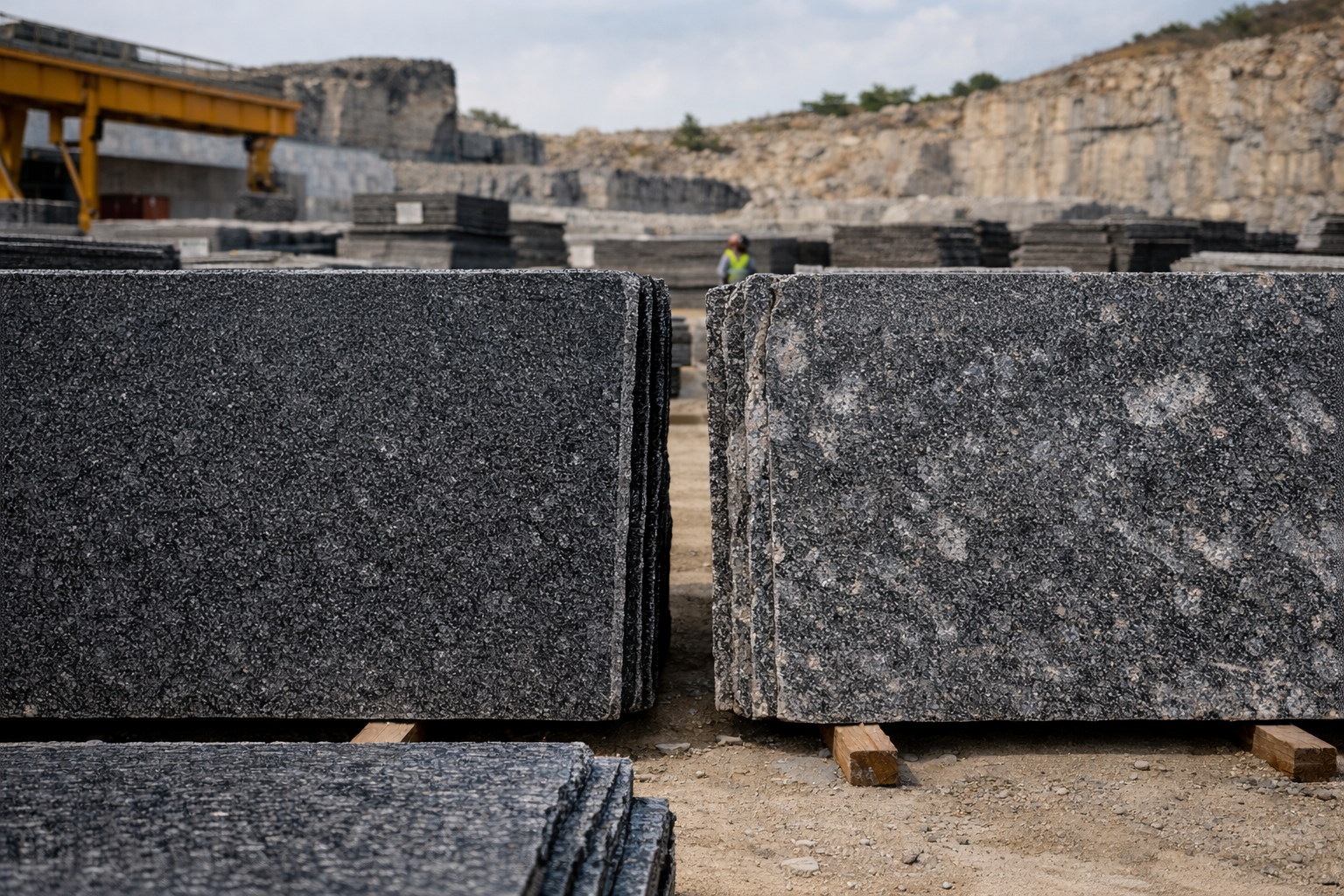
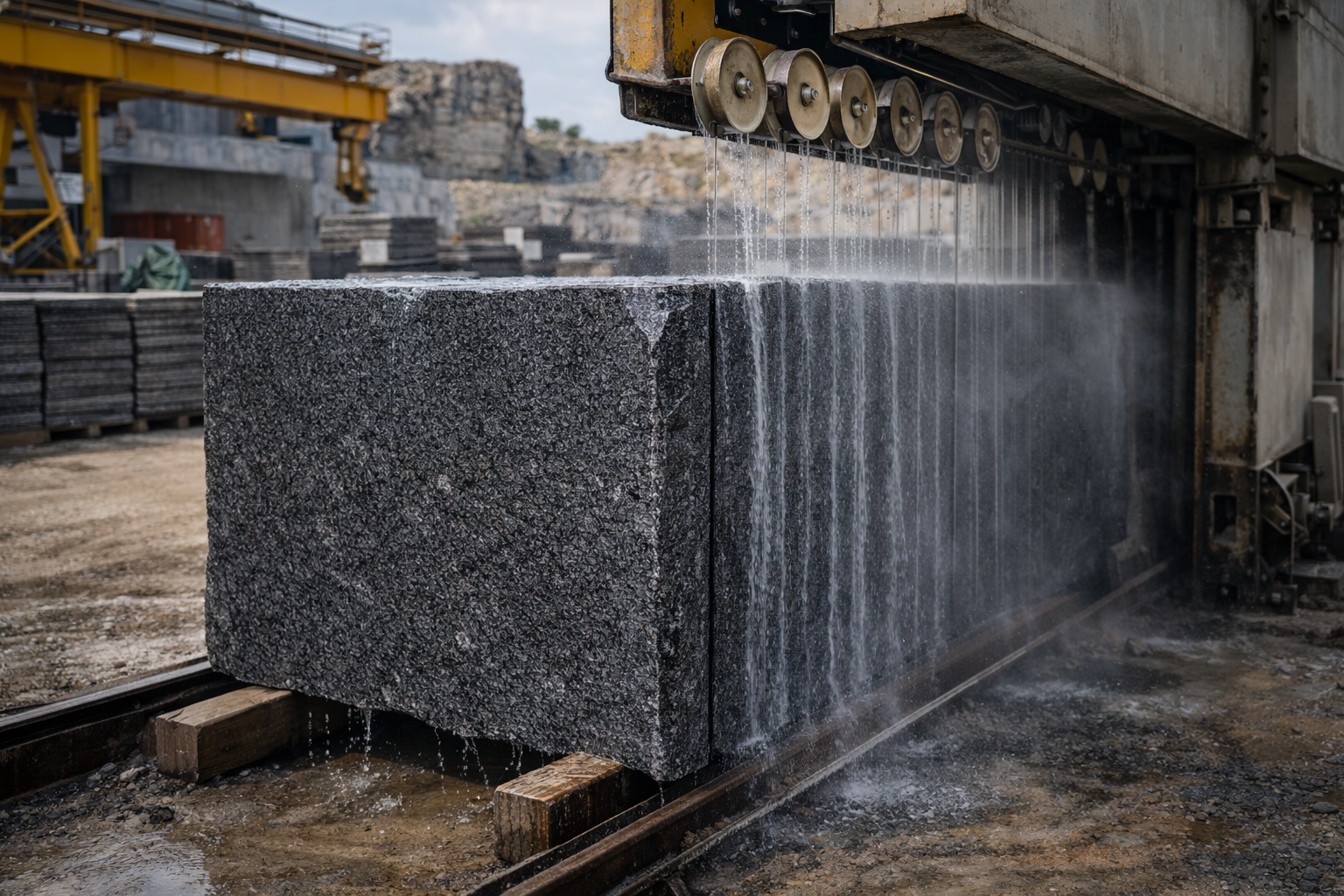
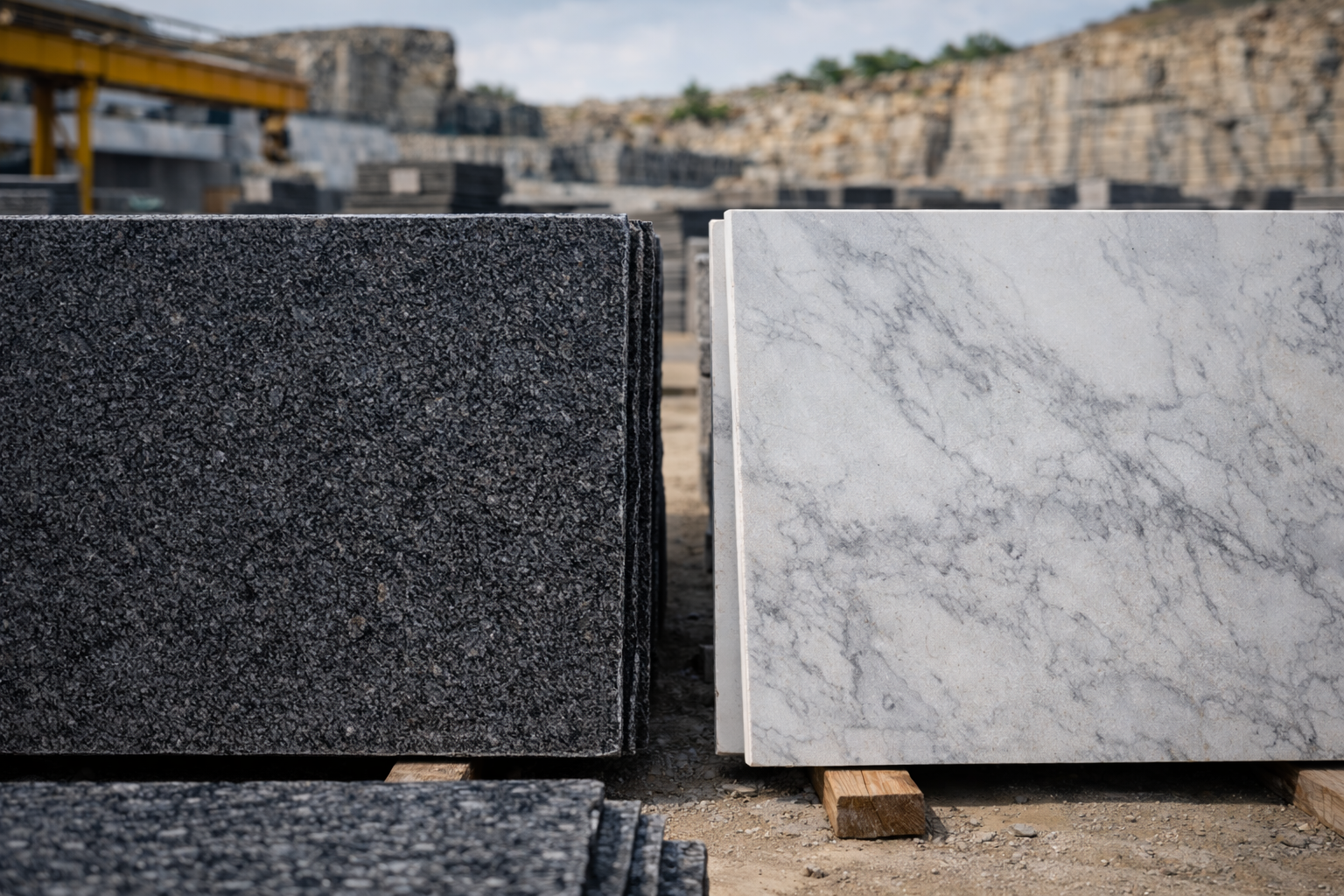
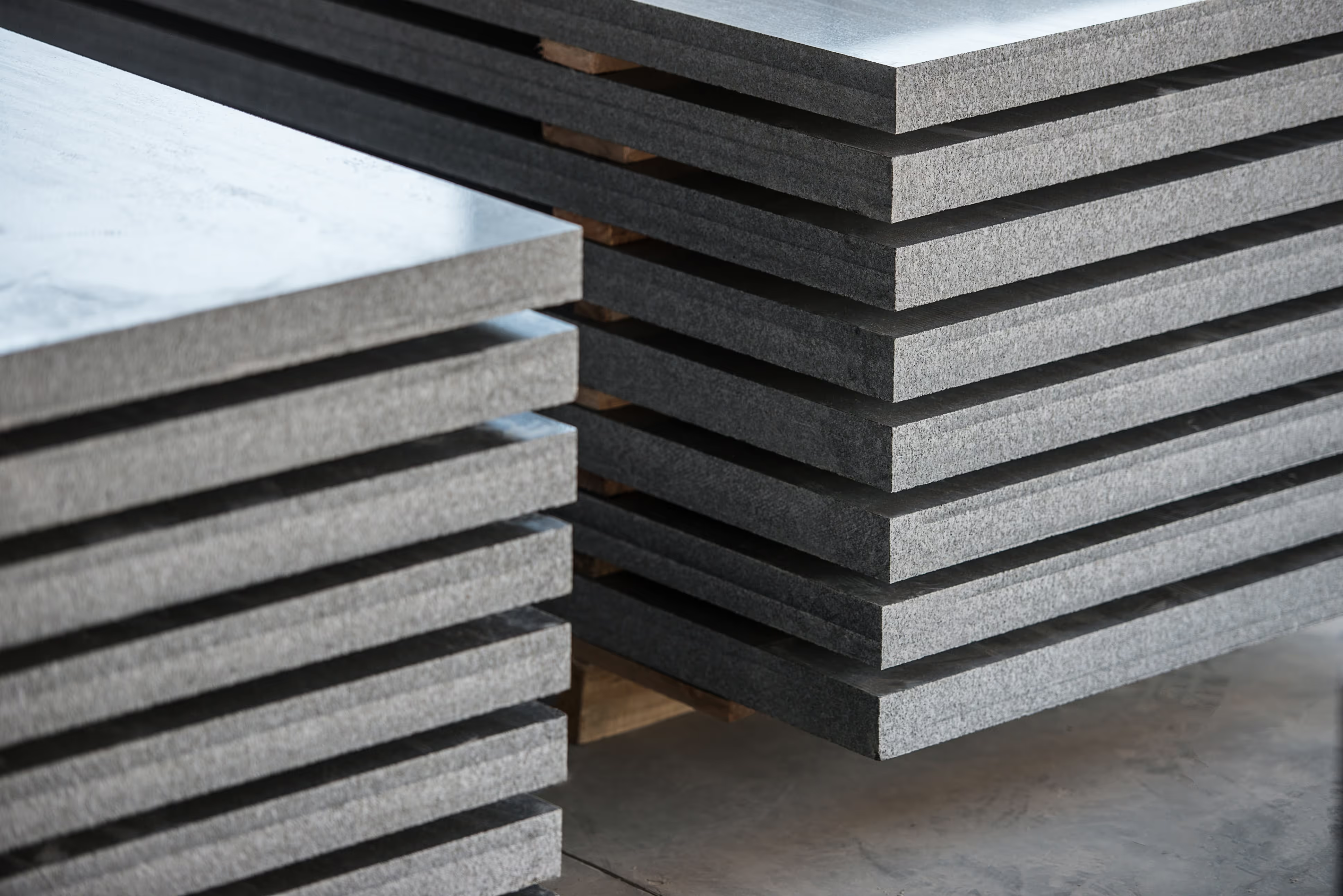
The primary product for West African markets. Polished Rustenburg granite slabs in 20 mm and 30 mm for:
- Commercial building lobbies and reception areas in Lagos, Accra, Douala, and other major cities
- Hotel and hospitality projects — lobby floors, bathroom vanities, and reception counters
- Kitchen countertop fabrication for the growing residential market
- Memorial and monument applications
Floor Tiles
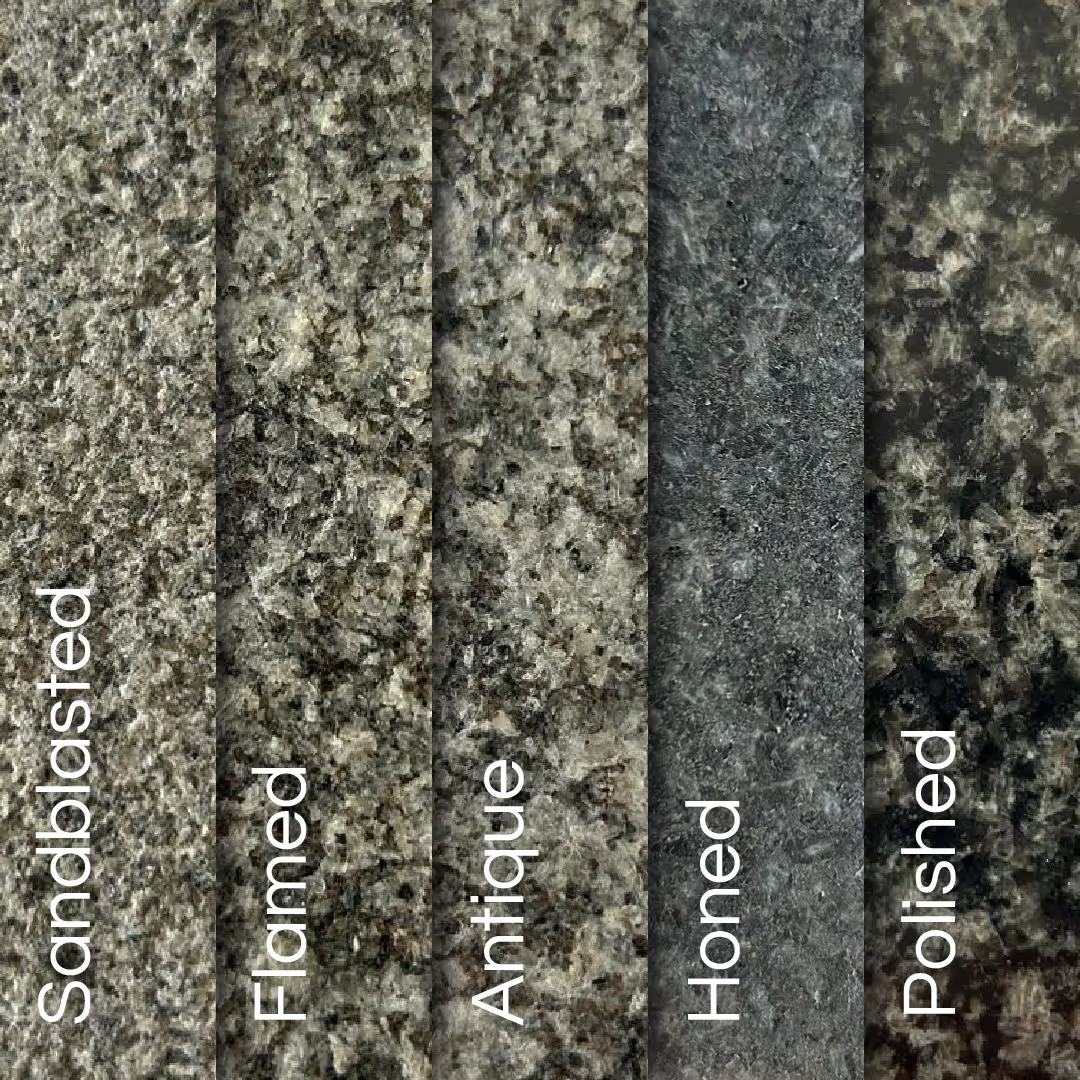
Polished and honed granite tiles (600 x 600 mm, 600 x 300 mm) for commercial flooring. As commercial building standards in West Africa advance, natural stone flooring is becoming the expected specification for Grade A buildings.
Facade Cladding
Honed and flamed granite panels for building facades. Premium commercial developments in Lagos, Accra, and Abuja are increasingly using natural stone cladding to distinguish their buildings in competitive property markets.
Landscaping Products
Cobblestones, pavers, and kerb stones for estate driveways, commercial entrances, and public realm paving. As urban infrastructure develops, the demand for quality external paving is growing across the region.
Logistics: South Africa to West Africa
Maritime Shipping Routes
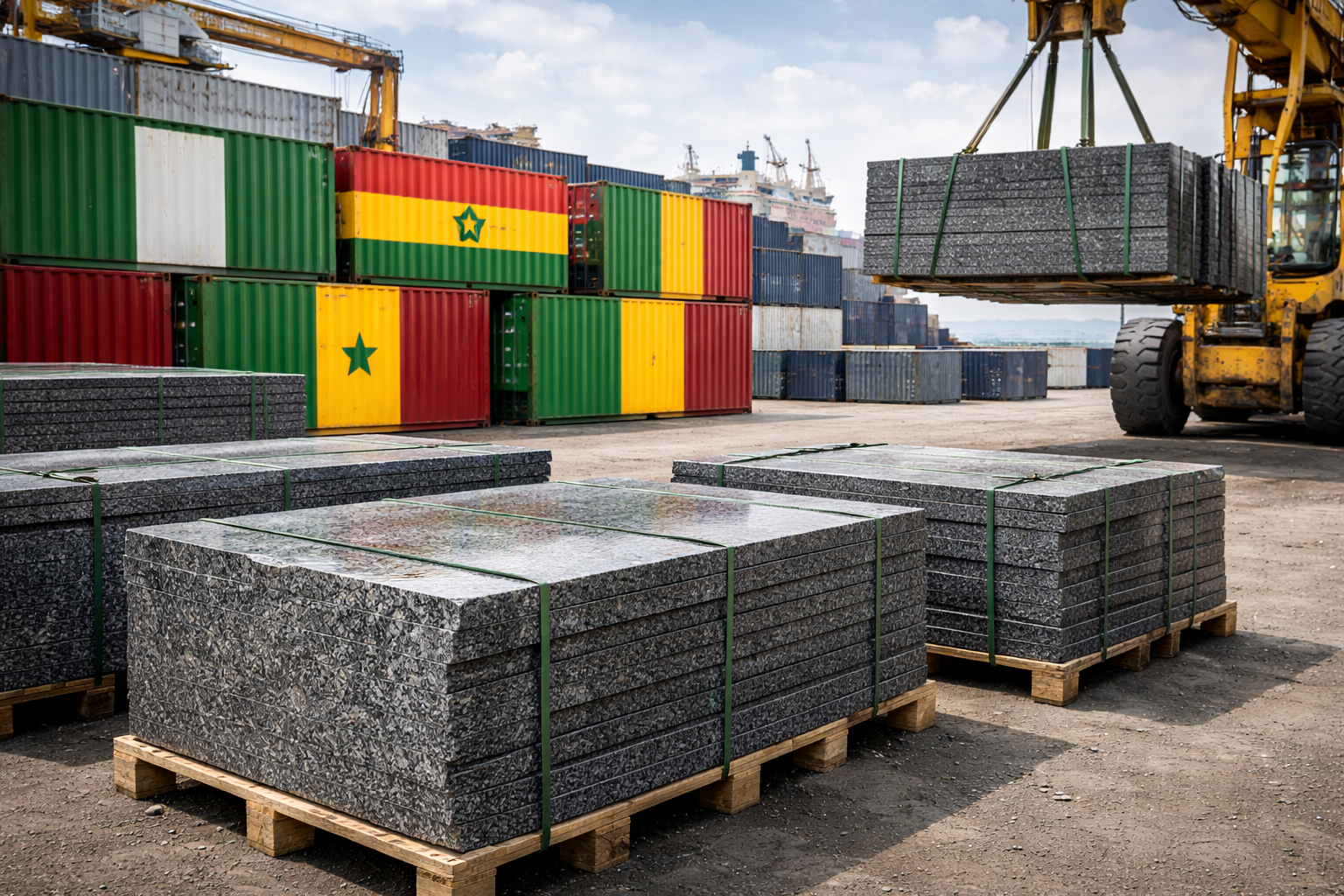
Container shipments from Durban port to West African ports:
- Lagos (Apapa/Tin Can), Nigeria: 18-25 days transit
- Tema, Ghana: 16-22 days transit
- Douala, Cameroon: 18-25 days transit
- Dakar, Senegal: 20-28 days transit
- Abidjan, Côte d'Ivoire: 18-25 days transit
- Luanda, Angola: 10-14 days transit
Standard 20-foot containers carry 18-26 tonnes of granite depending on product type. Shipping services operate from Durban with some routes via Cape Town or intermediate ports.
Port and Customs Considerations
West African ports can present logistical challenges that experienced importers understand:
- Port congestion — Lagos ports in particular can experience congestion-related delays. Plan delivery timelines with appropriate buffers.
- Customs clearance — Clearance processes and timelines vary by country. ANG provides clean, accurate documentation to facilitate efficient clearance.
- Import duties — Tariff rates vary by country. AfCFTA (African Continental Free Trade Area) provisions may provide preferential tariff treatment for intra-African trade — consult local customs authorities for current applicable rates.
- Pre-shipment inspection — Some West African countries require pre-shipment inspection (e.g., Nigeria's SONCAP scheme). ANG coordinates with approved inspection agencies where required.
Quality Standards for West African Projects
ANG applies consistent quality grading for West African shipments:
- First choice — Consistent colour, no visible defects, tight tolerances. Standard for premium commercial and hospitality projects.
- Commercial grade — Minor variation acceptable. Suitable for standard commercial applications where slight variation is tolerated.
We provide material test certificates covering compressive strength, water absorption, density, and flexural strength for projects requiring specification compliance documentation.
Commercial Terms
- FOB Durban — Standard pricing. Buyer arranges ocean freight.
- CIF destination port — Available on request for buyers preferring delivered pricing.
- USD pricing — Standard for West African transactions.
- Letter of credit — Accepted for new trading relationships. Open account terms available for established customers.
- Trial container — We recommend starting with a single trial container to evaluate material quality and logistics before committing to larger orders.
Why Source from South Africa
West African buyers have multiple sourcing options for granite, including Chinese, Indian, and European origins. The advantages of sourcing from South Africa include:
- Intra-African trade — Supporting African-to-African commerce, with potential tariff advantages under AfCFTA
- Quality consistency — South Africa's established quarrying industry produces to consistent standards comparable to European supply
- Competitive pricing — Direct-from-quarry sourcing eliminates intermediary markups
- Shorter lead times — Maritime transit from South Africa to West Africa is shorter than from China or India
- Communication — English-speaking commercial team, similar time zones, and understanding of African business practices
Contact Our Africa Export Team
For West and Central African enquiries, contact Afrika National Granite at 8 Dekenah Road, Alrode, Alberton, South Africa. We provide quotations, arrange sample shipments, and support the logistics process from our factory to your destination port. Afrika National Granite — building Africa with African stone.