What Is Granite Quality Grading?
When you purchase granite slabs — whether a single slab for a kitchen countertop or a container load for international distribution — the material is classified by quality grade. This grading system determines pricing, suitability for specific applications, and whether the stone meets export standards.
Yet granite grading remains one of the least understood aspects of the natural stone trade. Buyers who don't understand grading risk overpaying for material they don't need, or under-specifying material that won't meet project requirements. This guide explains how grading works, what each grade means in practice, and how to specify the right quality for your application.
At Afrika National Granite (ANG), we grade every slab that leaves our production line at 8 Dekenah Road, Alrode. As quarry owners and slab manufacturers, we control the grading process from extraction through to final inspection — giving us complete visibility over material quality.
How Granite Is Graded
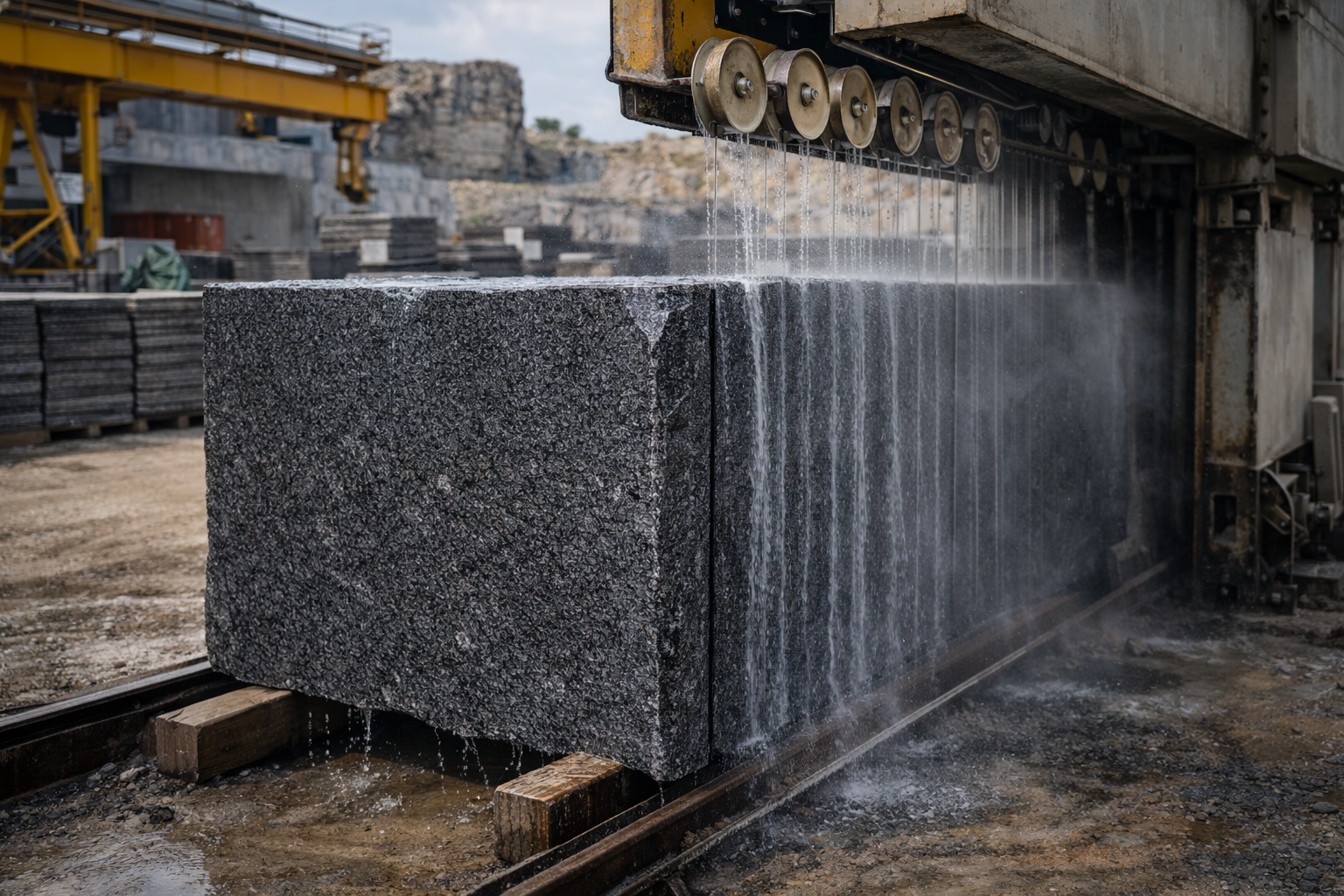
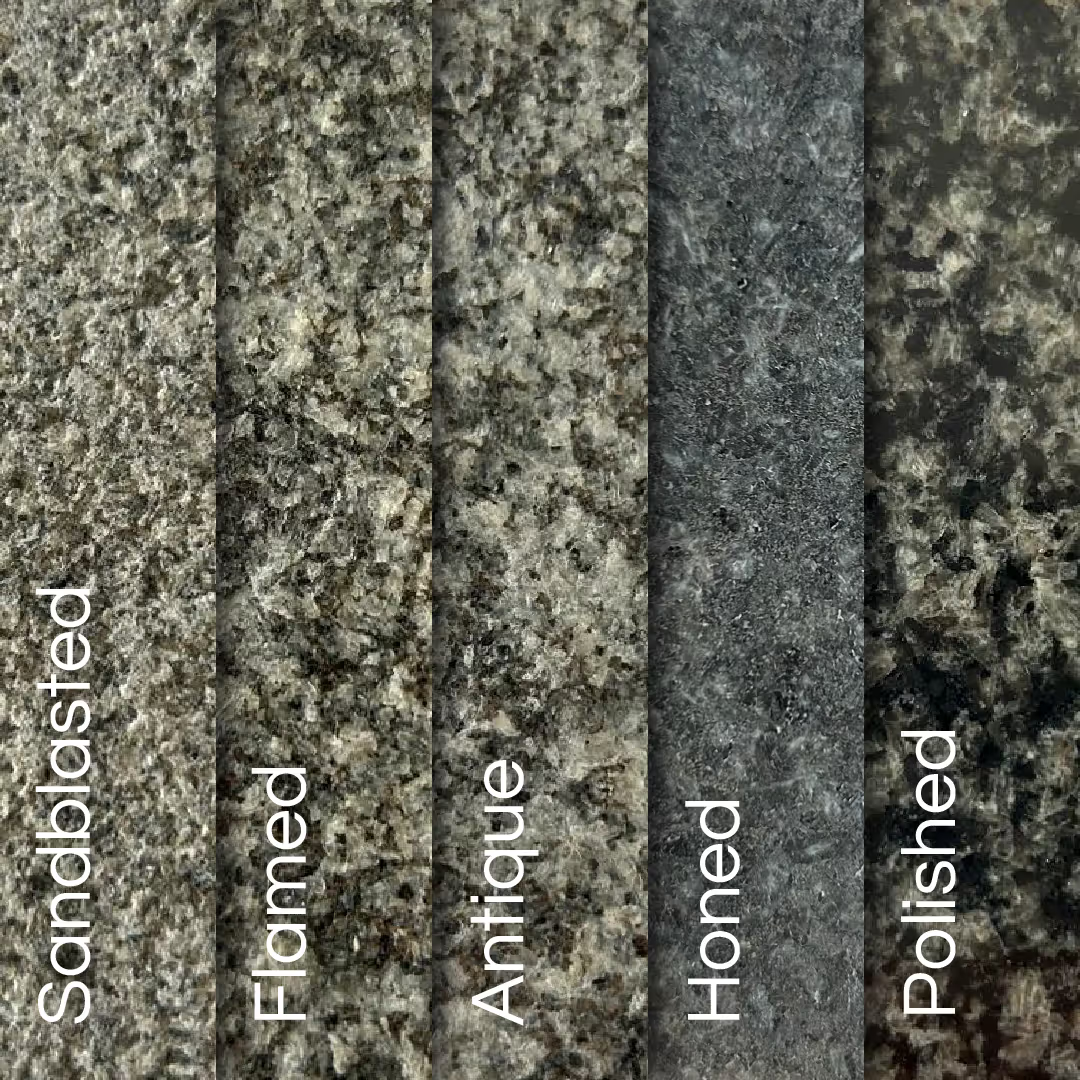
Granite grading is a visual and physical inspection process conducted after the slab has been sawn and surface-finished (polished, honed, flamed, or otherwise). Trained inspectors assess each slab against a set of criteria:
Colour Consistency
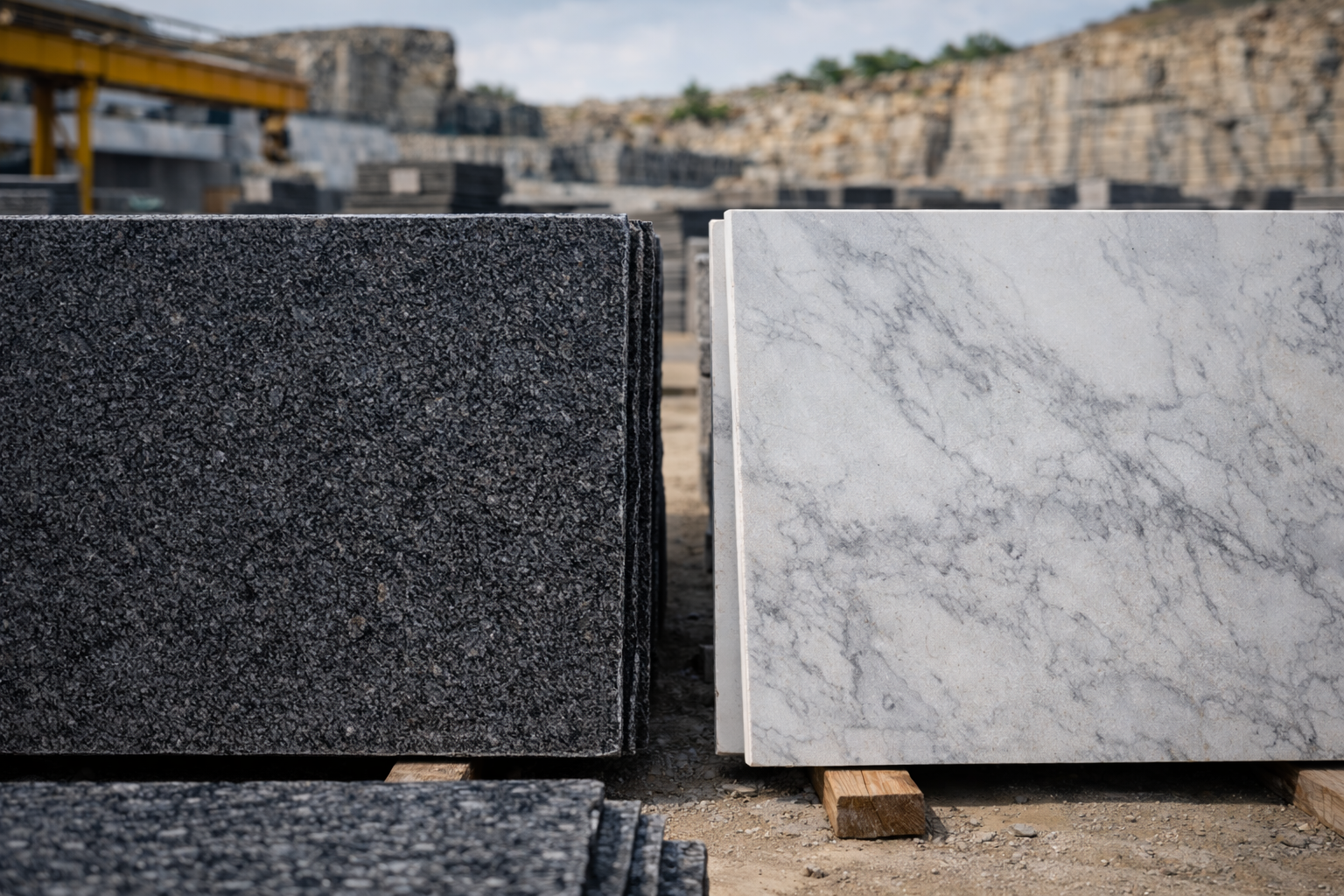
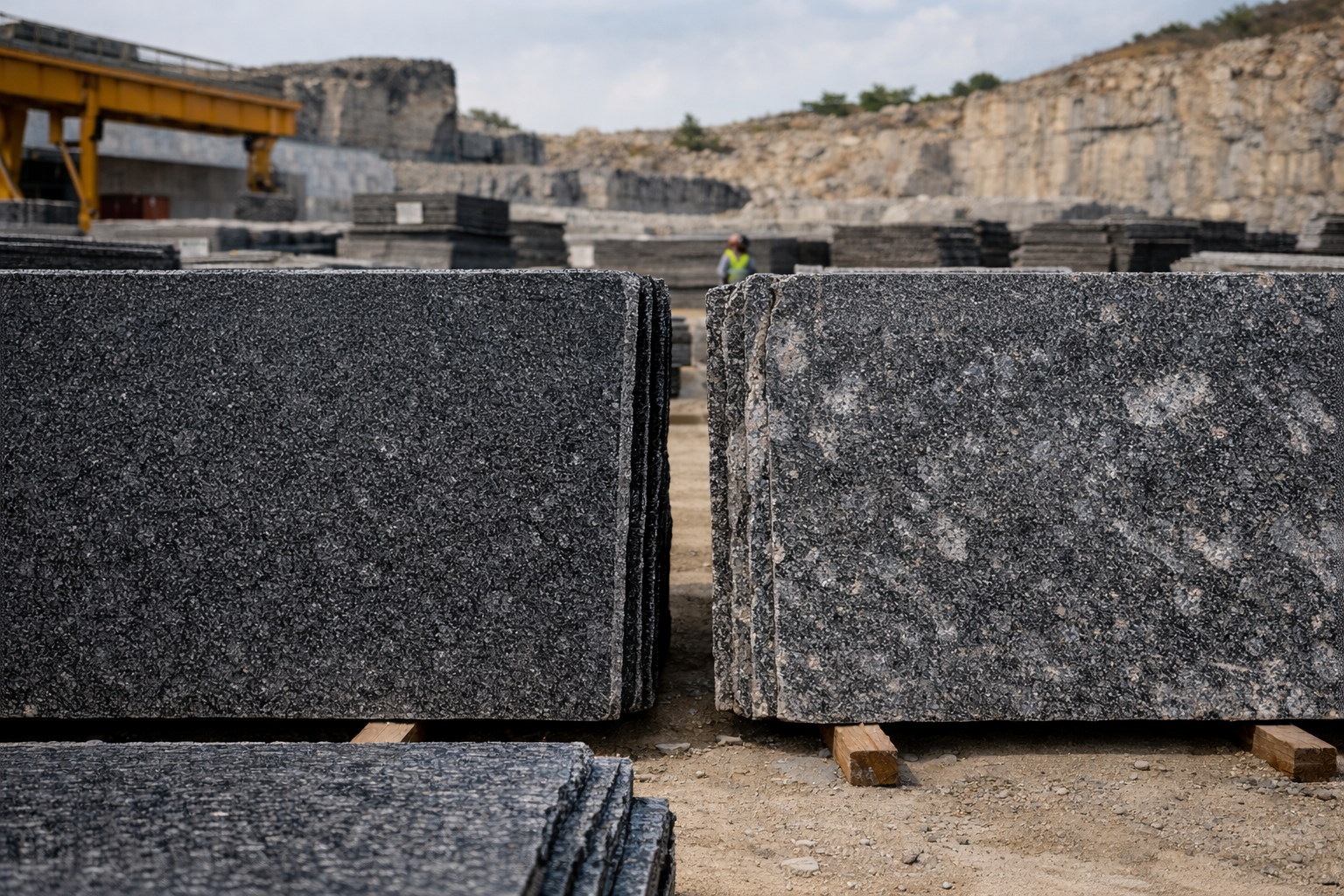
The primary grading criterion. Inspectors evaluate whether the slab's colour is uniform across the entire face. For Rustenburg granite (Nero Impala), this means consistent charcoal-grey background colour with evenly distributed silver-grey mineral flecks. Colour shifts — areas that are noticeably lighter, darker, or have a different undertone — are documented.
Mineral Distribution
Natural granite contains multiple mineral species (primarily feldspar, quartz, and mica in varying proportions). The distribution of these minerals affects the stone's visual character. First choice material has even mineral distribution; lower grades may show clustering, banding, or concentration of specific minerals in localised areas.
Structural Integrity
Inspectors check for hairline cracks, natural fissures, pitting, and other structural features. All natural stone contains some degree of natural fissuring — the question is whether these features affect the slab's structural performance or visual appearance in the finished application.
Surface Finish Quality
For polished slabs, inspectors verify consistent gloss level across the entire face. Dull spots, uneven polish lines, or areas where the finish has not fully developed indicate processing issues. For flamed or honed finishes, uniformity of texture depth and consistency is assessed.
Dimensional Accuracy
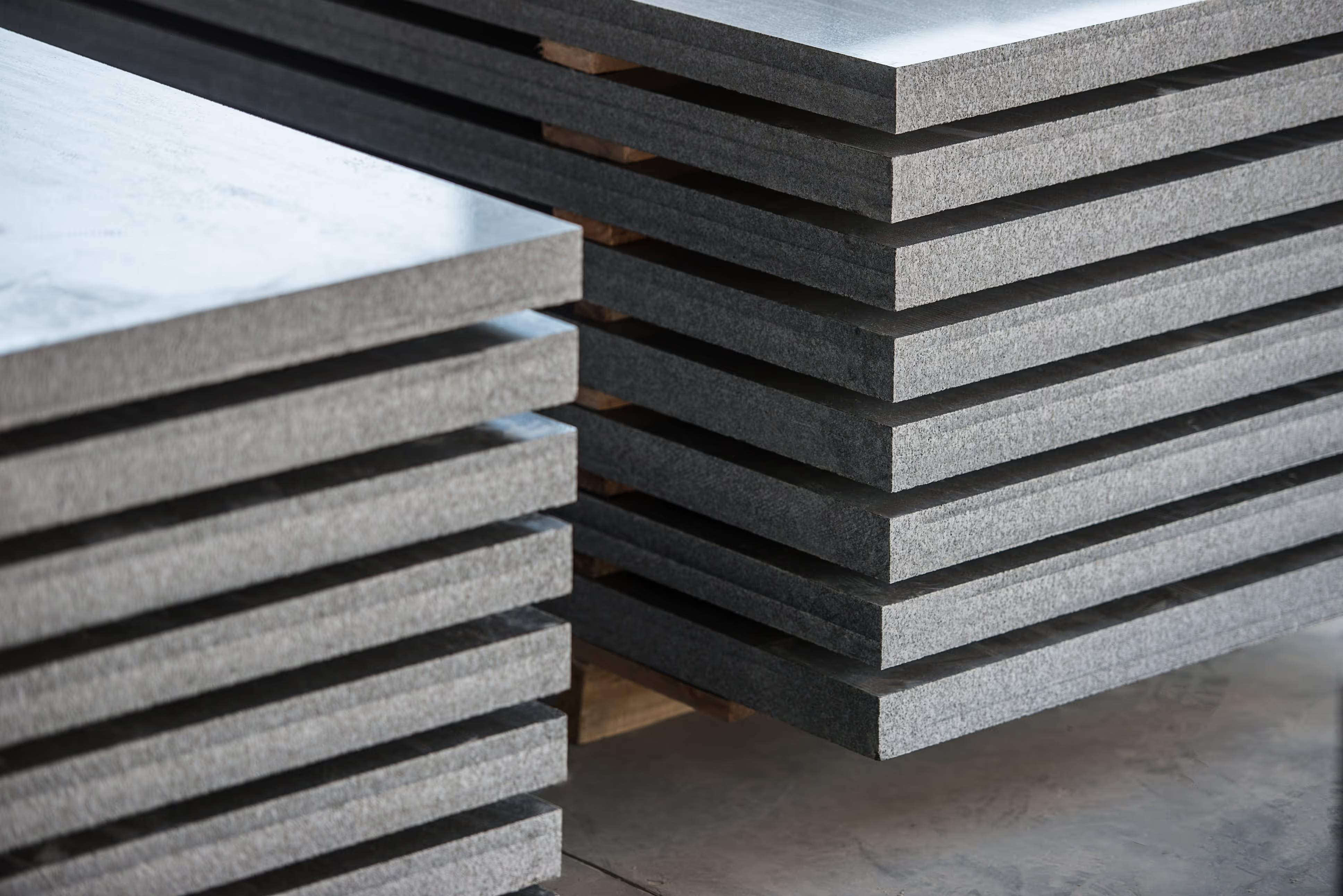
Slab thickness, flatness, and squareness are measured. Slabs outside acceptable tolerances are downgraded regardless of visual quality. Standard tolerances for polished slabs are typically ±1 mm on thickness and ±2 mm on flatness across the slab face.
First Choice Grade
First choice is the premium grade — the material that meets the highest standards for visual consistency, structural integrity, and dimensional accuracy.
Characteristics
- Colour: Uniform across the entire slab face, consistent with the reference standard for that material type
- Minerals: Evenly distributed, no visible clustering or banding
- Structure: No cracks, significant fissures, pits, or surface defects visible from normal viewing distance (approximately 2 metres)
- Finish: Consistent gloss, texture, or sheen across the full slab face
- Dimensions: Within specified tolerances for thickness, flatness, and squareness
When to Specify First Choice
First choice material is essential for:
- Export orders: International buyers purchasing sight-unseen rely entirely on grading accuracy. Export shipments should always be first choice unless explicitly agreed otherwise
- Large-format applications: Feature walls, lobby floors, and facade cladding where multiple slabs are installed adjacent to each other and colour consistency is visually critical
- High-end residential: Kitchen countertops, bathroom vanities, and interior flooring in premium residential projects where the client expects flawless material
- Architectural specification: Projects where the architect or designer has specified material based on a sample, and the delivered slabs must match that sample
Pricing
First choice commands the highest price per square metre. The premium over second choice varies by material type and market conditions but typically ranges from 15% to 30%. For exotic or imported materials with limited availability, the premium can be higher.
Second Choice Grade (Commercial Grade)
Second choice — sometimes called commercial grade — is material that doesn't meet first choice criteria but is structurally sound and suitable for a wide range of applications.
Characteristics
- Colour: Minor variations visible — slight shifts in background tone, small areas of different intensity, or subtle directional colour patterns
- Minerals: Some clustering or banding may be present, but the overall character of the stone is maintained
- Structure: Minor natural fissures or small pits may be present but do not compromise structural integrity. These features may be filled with colour-matched resin during processing
- Finish: Generally consistent but may have minor areas of reduced gloss or slight texture variation
- Dimensions: May have slightly wider tolerances than first choice
When Second Choice Is Appropriate
Second choice material is entirely suitable — and often the better commercial decision — for:
- Cut-to-size applications: When slabs are being cut into tiles, pavers, or countertop blanks, minor visual variations in the parent slab are absorbed in the cutting process. The finished pieces may show no perceptible difference from first choice material
- Large-volume commercial projects: Where cost per square metre is the primary driver and minor visual variation across a large installation area is acceptable
- Mixed-use environments: Commercial lobbies, retail spaces, and multi-unit residential where the stone is one element among many and absolute uniformity is not the primary design concern
- Domestic market supply: Many South African fabricators, distributors, and monument makers work effectively with second choice material, leveraging the price advantage to remain competitive
Pricing
Second choice is priced below first choice, making it attractive for cost-sensitive projects and buyers focused on volume. The price differential means that buyers who understand grading can optimise their material costs without compromising project outcomes.
Beyond First and Second: Utility Grade and Waste
Material that falls below second choice standards may be classified as utility grade or rejected entirely:
Utility Grade
Slabs with significant colour variation, visible structural features, or processing defects that preclude use in visible applications. Utility grade material may be suitable for concealed structural applications, backing material, or cutting into small components where defective areas can be avoided.
Production Waste
Material that cannot be commercially used in any form — heavily fractured slabs, off-cuts below minimum usable size, and slabs with severe processing damage. This material is typically crushed for aggregate or landscaping fill.
Grading Standards: Industry vs Manufacturer
It's important to understand that granite grading is not governed by a universal international standard in the same way that steel or concrete is. While bodies such as ASTM International (C615 for granite dimension stone) and the European EN standards (EN 12058, EN 12057) set physical performance benchmarks, visual grading remains largely a manufacturer's standard.
This means that "first choice" from one supplier may not be equivalent to "first choice" from another. Reputable manufacturers maintain consistent internal standards and can provide reference samples, but buyers should always verify grading criteria with their specific supplier.
ANG's Grading Approach
At ANG, our grading is conducted by experienced production staff who inspect every slab after finishing. Our grading criteria are documented and consistent, and we maintain reference slabs for each material type and grade. International buyers can request sample material before placing orders, and we provide detailed photographic documentation of production batches for export consignments.
Grading and the Export Market
For export transactions, grading accuracy is commercially critical. A container of granite slabs shipped from South Africa to Poland, Kenya, or the UK represents significant financial commitment from the buyer. If the material arrives and doesn't meet the expected grade, the consequences include:
- Claims and returns: Expensive for both parties, particularly when international shipping is involved
- Project delays: If replacement material must be sourced and shipped, project timelines are severely affected
- Relationship damage: Trust is difficult to rebuild after a grading dispute
ANG's approach to export grading is conservative — we grade strictly and only ship first choice material for international orders unless the buyer has explicitly agreed to accept second choice at adjusted pricing. This protects both parties and supports long-term trading relationships.
How to Specify Grade in Your Orders
Whether you're a fabricator ordering slabs for a kitchen project or a distributor purchasing a container load, clear grade specification prevents misunderstandings:
Be Explicit
State the required grade in writing on your purchase order. "First choice" or "second choice" should be clearly documented alongside material type, thickness, finish, and dimensions.
Request Samples
For first-time purchases or new material types, request physical samples or high-resolution photographs. Samples establish a visual reference point that both parties agree on before production begins.
Agree on Inspection Protocol
For large orders or export consignments, agree on whether the buyer (or their representative) will inspect material before shipping, or whether the manufacturer's quality certificate is accepted. Third-party inspection services are available for international transactions.
Document Tolerances
If your project has specific requirements beyond standard grading — for example, no visible mica, a specific background tone, or tighter-than-standard thickness tolerances — document these as additional specifications on the order.
Making the Right Choice for Your Project
The right grade depends on your application, budget, and client expectations. First choice is not always necessary, and second choice is not always sufficient. Understanding the distinction — and knowing when each grade is appropriate — is a mark of an experienced stone professional.
If you're unsure which grade is right for your project, talk to us. ANG's team can advise on material selection, grading implications, and cost optimisation based on your specific application requirements.
Visit Our Factory and See the Grades
The most effective way to understand granite grading is to see first and second choice slabs side by side. Visit our facility at 8 Dekenah Road, Alrode, Alberton, 1451 to inspect our current inventory, compare grades firsthand, and discuss your project requirements with our production team.
Contact Afrika National Granite to arrange a visit, request samples, or get a quote for your next project. We'll help you specify the right material at the right grade — with full transparency about what you're buying and where it comes from.