Why the Finish Matters as Much as the Stone
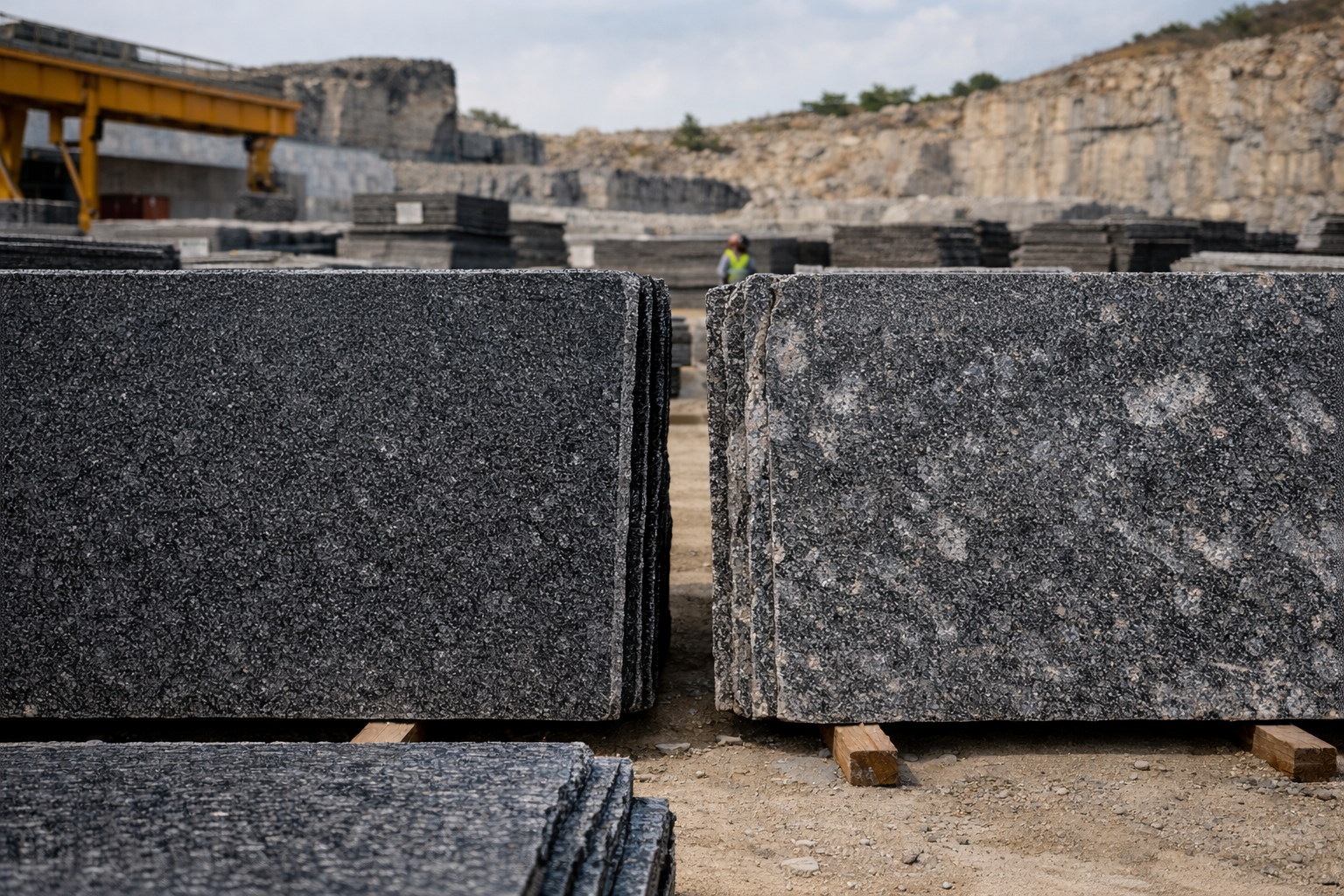
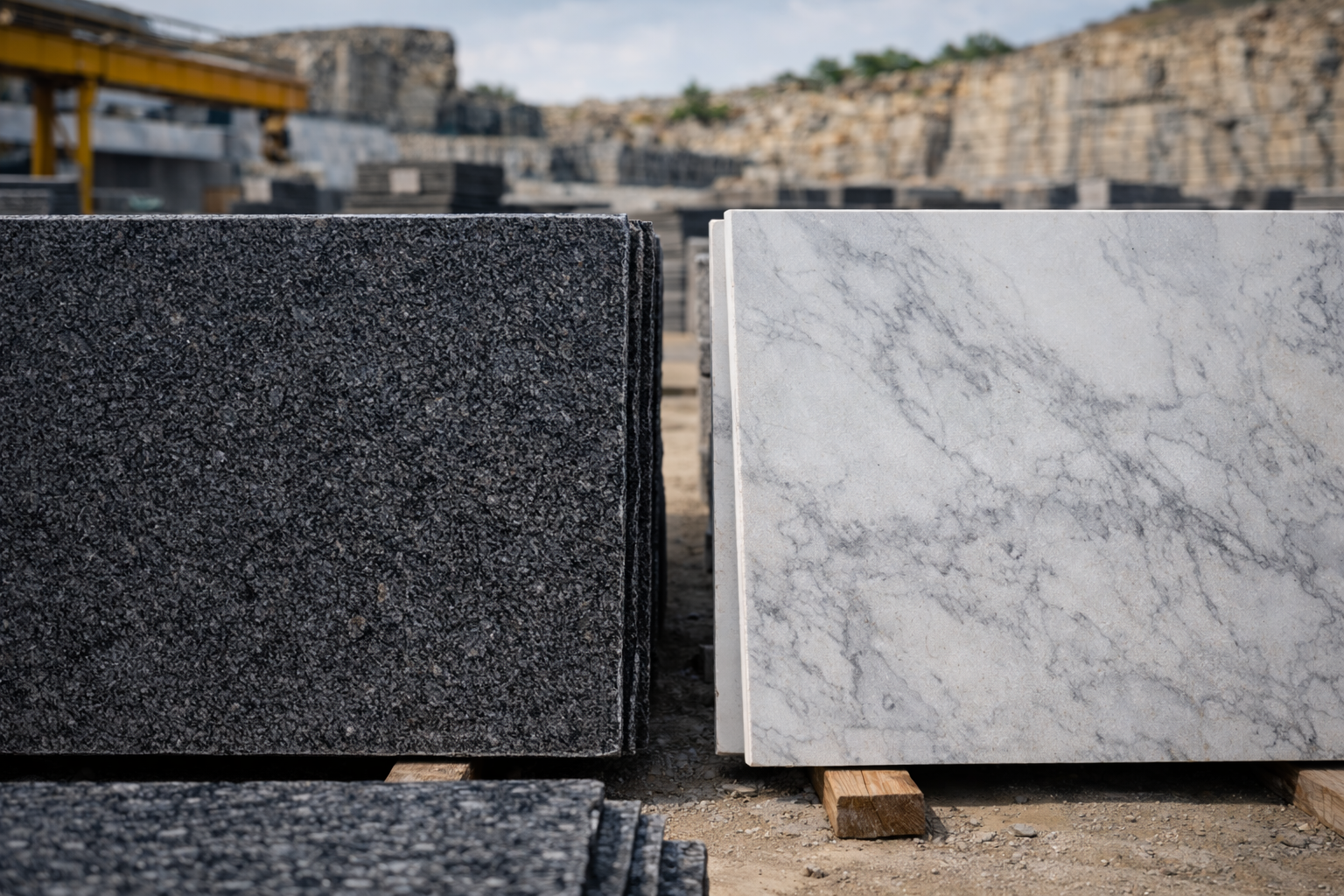
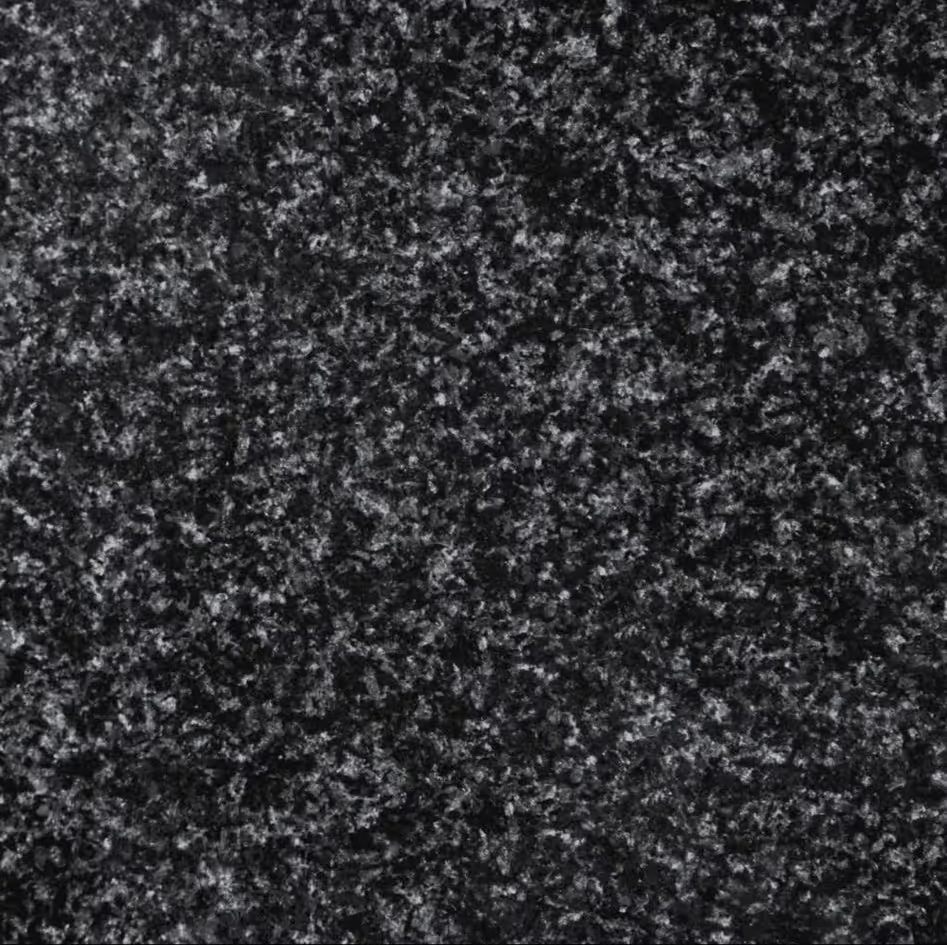
Rustenburg granite — also known internationally as Nero Impala, Impala Black, or African Grey — is one of the most versatile natural stones on the market. But the same block of Rustenburg granite can look and perform dramatically differently depending on the surface finish applied to it. A polished slab is glossy, dark, and refined. A flamed slab from the same block is rough, lighter in colour, and slip-resistant. The finish you specify determines the stone's appearance, texture, slip resistance, maintenance requirements, and suitability for the intended application.
This guide covers every standard finish available on Rustenburg granite from Afrika National Granite, with practical guidance on when to specify each one. Whether you are a fabricator advising a client, an architect writing a specification, or a designer selecting materials for a project, this is the reference you need.
Polished Finish
Process
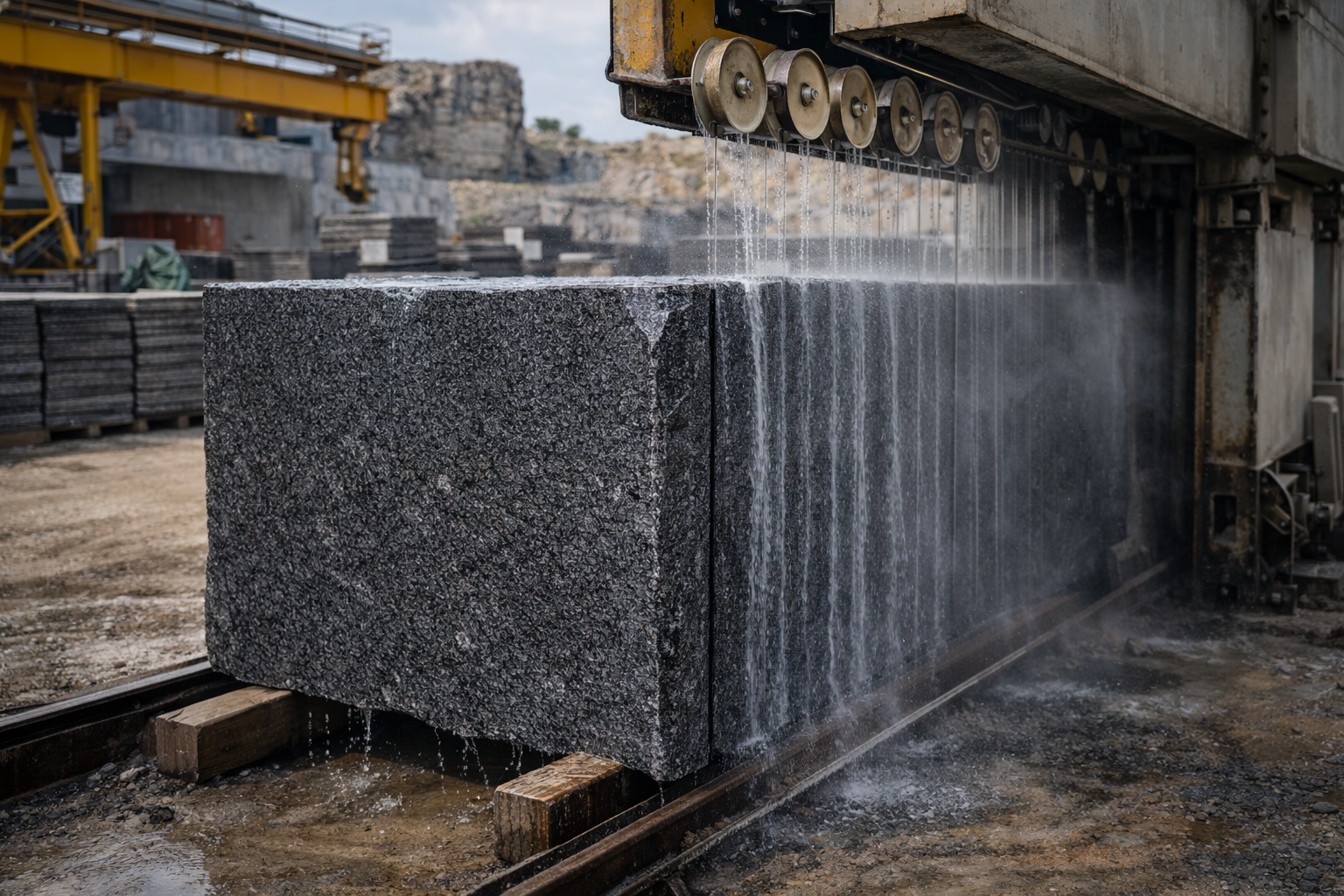
Polishing involves progressively finer abrasive stages applied to the slab surface, typically starting at 60-grit and working through to 3000-grit or finer. The process creates a mirror-like reflective surface by smoothing the stone at a microscopic level until it achieves maximum light reflection.
Appearance
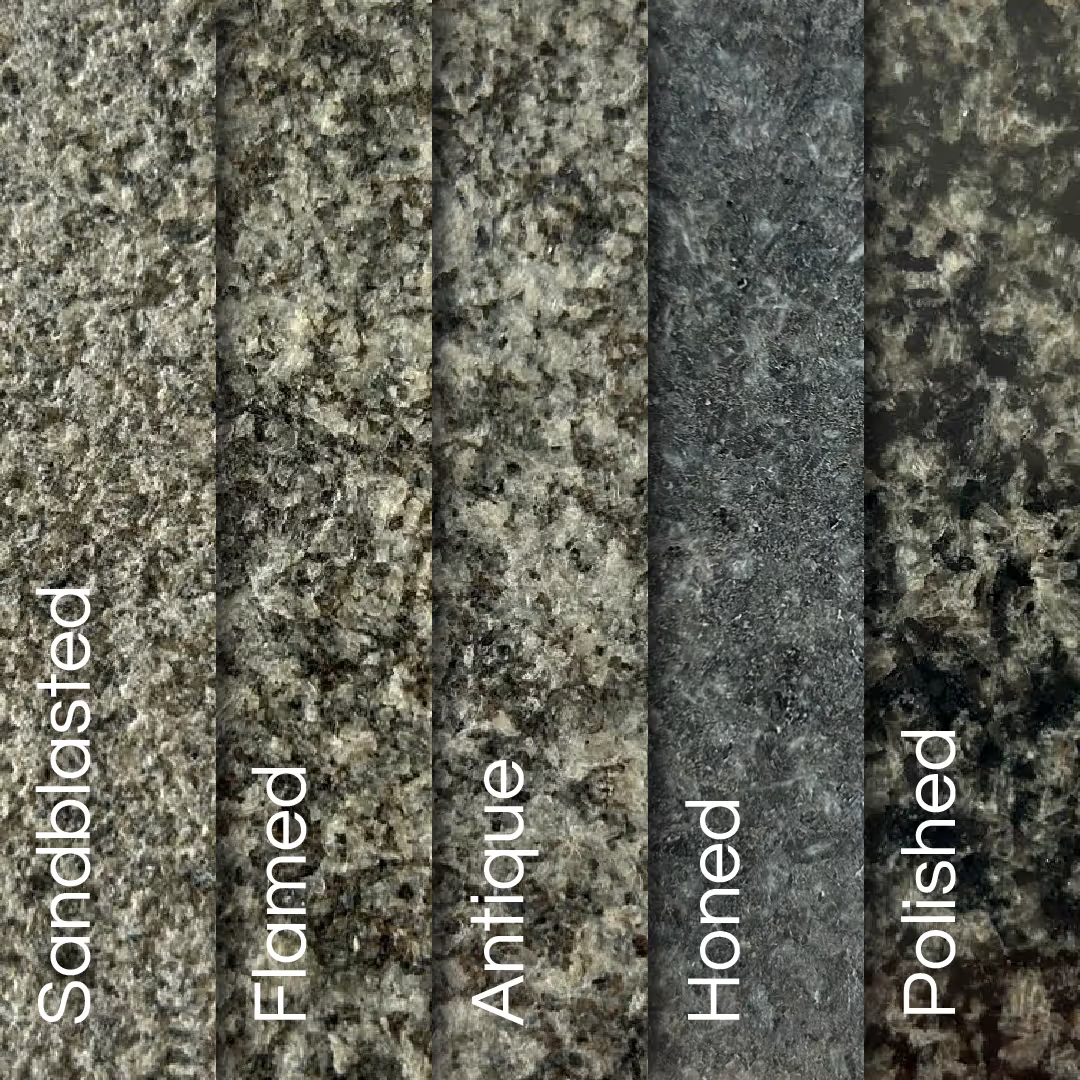
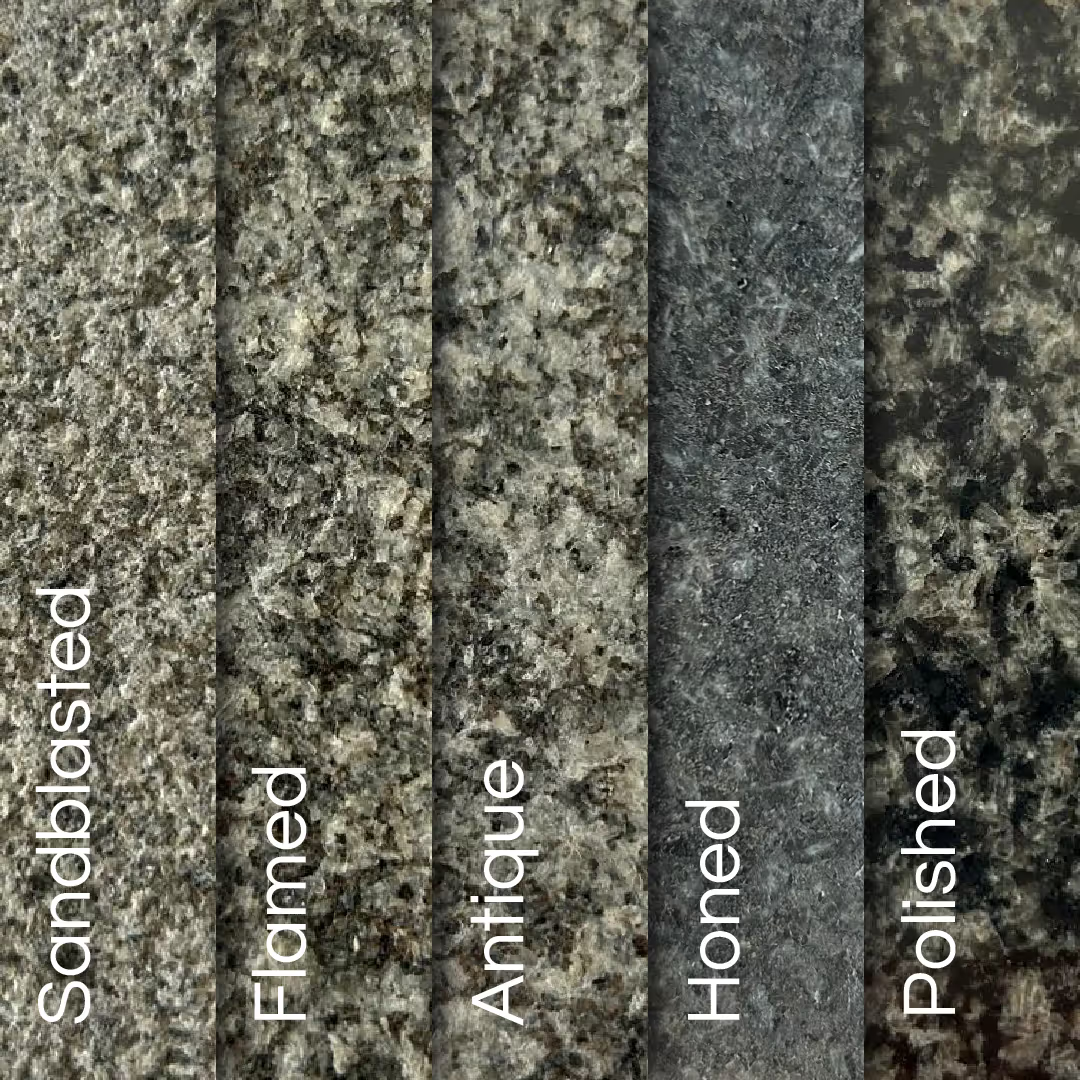
Polished Rustenburg granite is a deep charcoal-to-black with a high-gloss reflective surface. The polishing process brings out the full colour saturation of the stone and makes the silver-grey mineral flecks (biotite mica) clearly visible as sparkling points against the dark background. This is the finish that showcases Rustenburg granite at its most dramatic.
Best Applications
Kitchen countertops and islands are the primary market for polished Rustenburg. It is also the standard for bathroom vanity tops, reception desks and commercial front-of-house surfaces, tombstone headstones and memorial elements, feature wall cladding in interior settings, and window sills and door surrounds. Polished surfaces are best suited to interior and covered applications. While polished granite can be used outdoors, the glossy surface becomes slippery when wet and can show weathering effects over time.
Maintenance Notes
Polished surfaces are the easiest to clean due to their smooth, non-porous surface. However, they show fingerprints, water spots, and surface scratches more readily than textured finishes. Sealing is recommended for kitchen applications to prevent oil staining around food preparation areas.
Honed Finish
Process
Honing follows the same abrasive process as polishing but stops at an earlier stage — typically around 400 to 800-grit. This produces a smooth, flat surface without the reflective gloss of a full polish.
Appearance
Honed Rustenburg granite has a matte, velvety appearance. The colour is slightly lighter than polished because the non-reflective surface absorbs rather than reflects light. The mineral flecks are visible but more subtle. The overall effect is contemporary, sophisticated, and understated — a favourite of architects and designers working on modern, minimalist projects.
Best Applications
Honed finishes are increasingly specified for modern kitchen designs where the client wants stone without the traditional polished look, commercial flooring in low-to-medium traffic areas, bathroom surfaces and shower surrounds, contemporary furniture tops and shelving, and wall cladding in both residential and commercial settings. Honed granite provides some slip resistance on floors but is not suitable for high-traffic wet areas without additional treatment.
Maintenance Notes
Honed surfaces are more susceptible to staining than polished surfaces because the pores remain slightly more open. Sealing is essential for honed granite in kitchen and bathroom applications. On the positive side, honed surfaces do not show fingerprints or water marks as readily as polished, and minor surface scratches are far less visible.
Flamed (Thermal) Finish
Process
Flaming involves passing a high-temperature oxy-acetylene or propane flame across the slab surface. The extreme heat (over 2000°C) causes the surface minerals to expand and fracture at different rates, creating a rough, textured surface with microscopic pitting and grain exposure.
Appearance
Flamed Rustenburg granite is significantly lighter than its polished counterpart — typically a medium grey rather than near-black. The surface texture is rough and granular, with a natural, rustic character. The mineral structure is exposed rather than concealed, giving the stone a completely different visual identity compared to polished or honed finishes.
Best Applications
Flamed granite is the go-to finish for applications where slip resistance is critical. Primary uses include swimming pool surrounds and coping, exterior paving and walkways, steps and staircases (both indoor and outdoor), driveways and vehicle traffic areas, and exterior wall cladding. The rough texture provides excellent grip even when wet, making it the standard specification for pool decks and outdoor entertaining areas in South Africa.
Slip Resistance
Flamed Rustenburg granite typically achieves R11 to R12 slip resistance ratings under DIN 51130 standards, making it suitable for wet barefoot areas. For specific project requirements, request slip test certification from your supplier.
Maintenance Notes
The textured surface traps dirt and biological growth (algae, lichen) more readily than smooth finishes. Regular cleaning with a pressure washer or stiff brush is recommended for outdoor installations. Sealing is advised to reduce biological colonisation and make cleaning easier.
Brushed (Leathered) Finish
Process
Brushing or leathering uses diamond-tipped brushes that rotate across the slab surface, removing the softer mineral components and leaving the harder minerals slightly proud. This creates a textured but relatively smooth surface with a distinctive tactile quality.
Appearance
Brushed Rustenburg granite retains much of the stone's dark colour — darker than flamed but without the gloss of polished. The surface has a soft, leathery texture with subtle undulations that catch the light at different angles. It is increasingly popular as a premium alternative to both polished and honed finishes.
Best Applications
Brushed granite is a versatile finish suited to premium kitchen countertops where the client wants a unique tactile experience, bathroom vanities and surfaces, dining tables and furniture tops, feature walls and fireplace surrounds, and commercial surfaces where fingerprint resistance is important. The brushed finish strikes a balance between the visual impact of polished and the practicality of honed, which is why it is becoming the preferred specification for high-end residential projects.
Maintenance Notes
Brushed surfaces are more forgiving than polished in terms of showing fingerprints and water marks, while being easier to clean than flamed surfaces. Sealing is recommended for kitchen applications. Minor scratches tend to blend into the textured surface rather than being visible.
Bush-Hammered Finish
Process
Bush-hammering uses mechanical hammers fitted with pointed or pyramid-shaped heads that impact the stone surface repeatedly. The result is a heavily textured, cratered surface with a rugged, hand-worked appearance.
Appearance
Bush-hammered Rustenburg granite has the roughest texture of all standard finishes. The surface is uniformly pitted with small craters, creating a very tactile, heavily textured character. The colour is medium grey, similar to flamed but with a more pronounced texture.
Best Applications
Bush-hammered granite is specified for heavy-duty exterior paving in commercial and public spaces, monument and memorial bases and surrounds, bollards and street furniture, landscaping features (retaining walls, garden edging), and architectural accent surfaces where a rugged, natural stone character is desired. This finish is rarely used for countertops or interior surfaces due to its rough texture, which makes cleaning difficult and creates an uneven surface for placing objects.
Maintenance Notes
The deep texture requires more effort to clean than other finishes. For exterior applications, periodic pressure washing is the most effective maintenance approach. Bush-hammered surfaces are extremely durable and resistant to surface damage — scratches and minor chips are virtually invisible against the textured surface.
Sandblasted Finish
Process
Sandblasting propels abrasive particles (typically aluminium oxide or silicon carbide) at high pressure against the stone surface. The impact removes a thin layer of material, creating a uniformly textured, matte surface.
Appearance
Sandblasted Rustenburg granite has a uniform, fine-grained texture that is smoother than flamed or bush-hammered but rougher than honed. The colour sits between polished and flamed — a medium-dark grey with consistent tone. It offers a clean, contemporary look with good slip resistance.
Best Applications
Sandblasted finishes work well for interior flooring in commercial settings, exterior cladding where a uniform but textured appearance is desired, signage and engraved elements (the matte surface provides good contrast for filled or painted lettering), and transitional surfaces between indoor and outdoor areas.
Finish Comparison at a Glance
Here is a practical comparison across the key factors that matter for specification. For colour depth, polished is the darkest (near-black), followed by brushed, then honed, sandblasted, flamed, and bush-hammered (lightest). For slip resistance, bush-hammered and flamed offer the best grip, followed by sandblasted, then brushed and honed, with polished offering the least. For ease of cleaning, polished is easiest, then honed and brushed, then sandblasted, flamed, and bush-hammered (most difficult). For fingerprint visibility, polished shows the most, then honed, then brushed and sandblasted (minimal), and flamed and bush-hammered (none). For stain resistance, polished is best, then brushed and honed, then sandblasted, flamed, and bush-hammered.
Specifying Finishes from ANG
Afrika National Granite produces Rustenburg granite slabs in all standard finishes at our Alrode manufacturing facility. Polished and honed 20mm and 30mm slabs are maintained in regular stock. Flamed, brushed, bush-hammered, and sandblasted finishes are available on order, with production timelines dependent on current demand. Custom finish combinations — for example, a polished top surface with flamed edges — can be produced as cut-to-size orders to your specification.
For finish samples, specification data sheets, or slip resistance certifications, contact us or visit our factory at 8 Dekenah Road, Alrode, Alberton.