Why Natural Stone Cladding?
Natural stone cladding transforms the character of a building — interior or exterior — in a way that no manufactured material can authentically replicate. Stone cladding communicates permanence, quality, and material integrity. It ages gracefully over decades, developing a patina that enhances rather than diminishes its appearance. And when specified correctly, it outperforms most alternative cladding materials on durability, maintenance, fire resistance, and lifecycle cost.
For architects, designers, and contractors working in South Africa, Rustenburg granite offers a locally sourced cladding material that competes on technical merit with any imported stone. This guide covers the specification considerations for granite wall cladding — from panel formats and finish selection to fixing systems and thermal movement design.
Cladding Panel Formats
Stone cladding panels are produced in several formats depending on the design intent and the structural requirements of the installation.
Large Format Panels
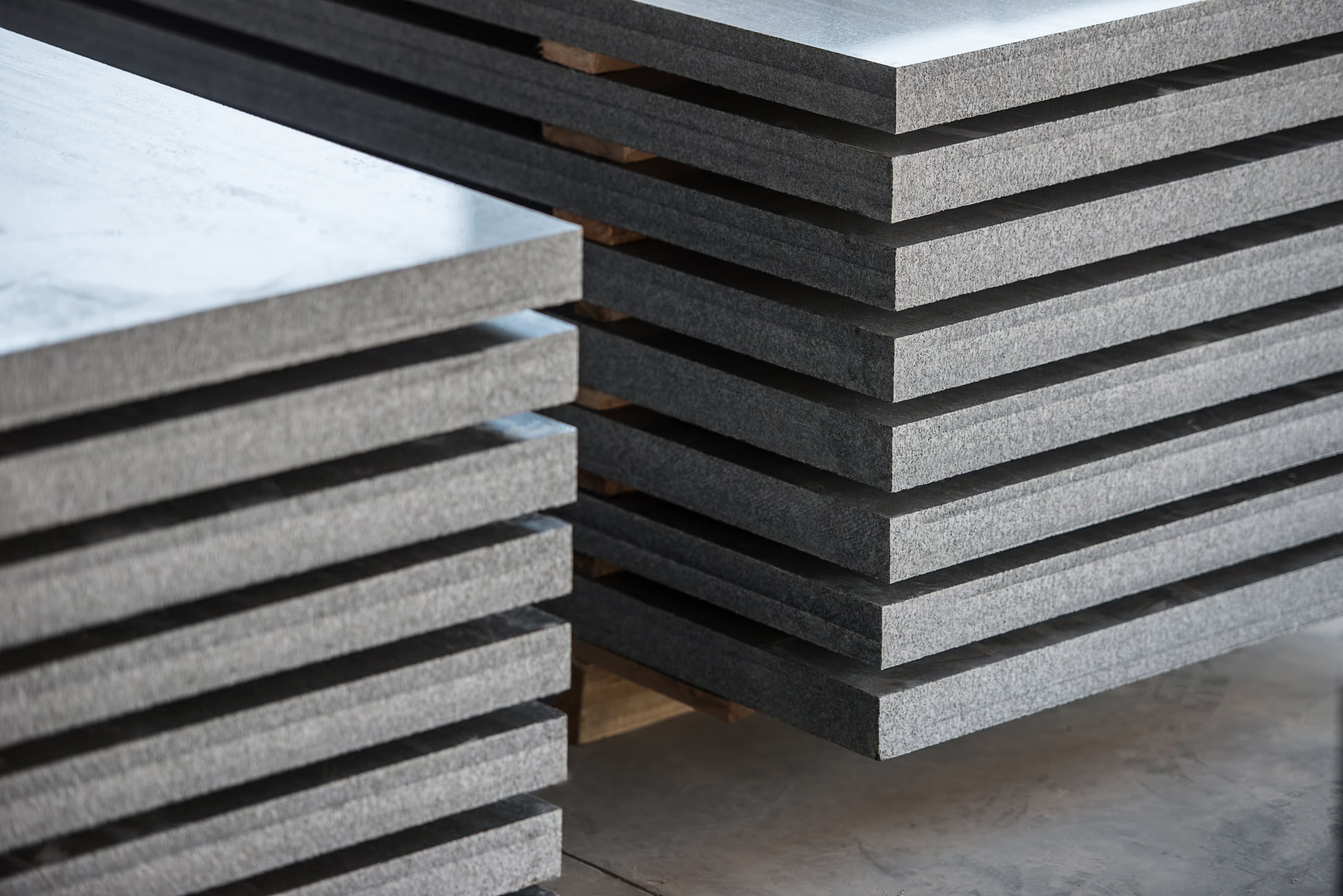
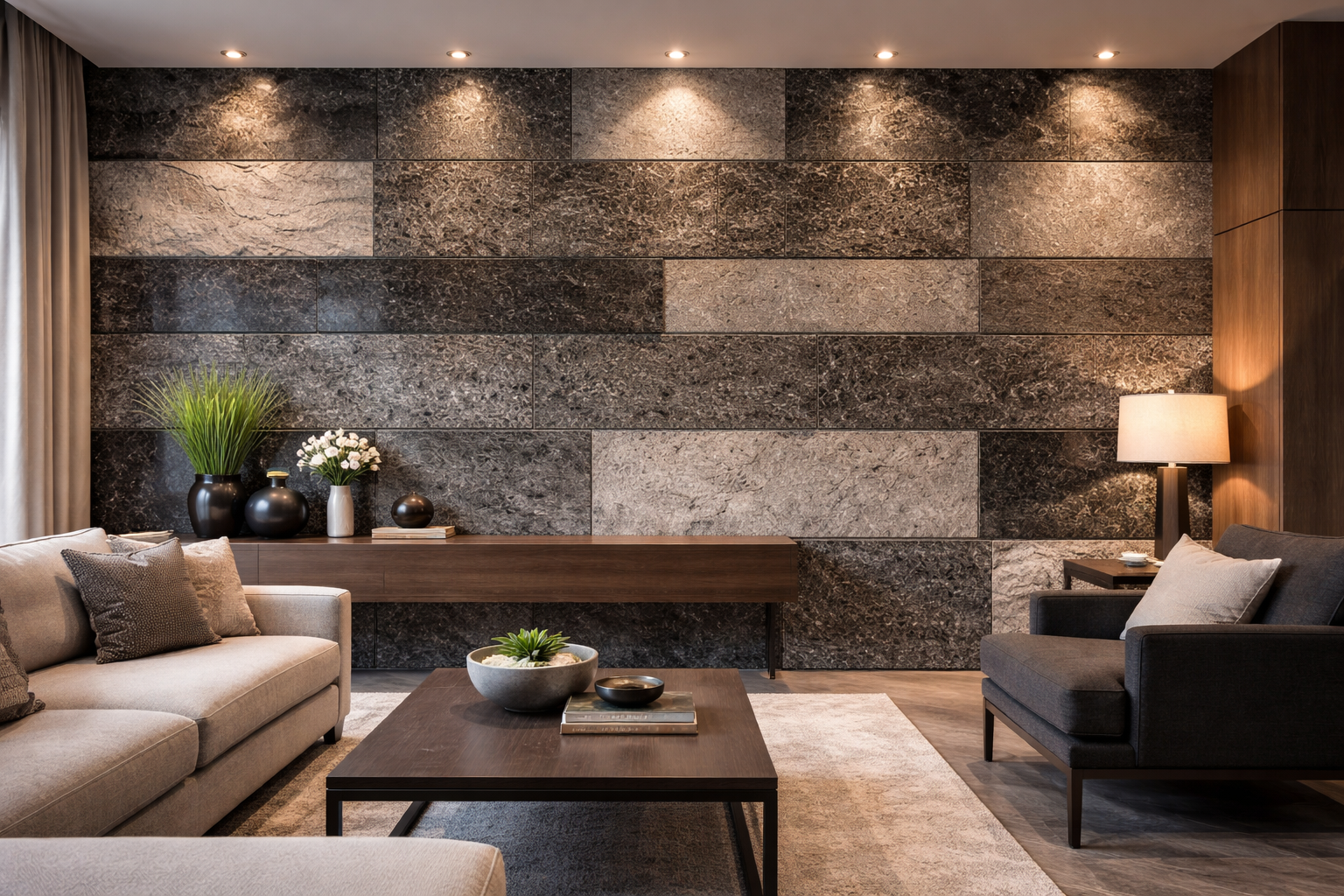
Large format panels typically range from 600mm x 600mm up to 1200mm x 600mm or larger, with thicknesses from 20mm to 30mm. These panels create a dramatic, monolithic stone appearance with fewer visible joints. They are used for feature walls in commercial lobbies, building facades with a bold stone statement, and interior feature walls in residential and hospitality projects. Large format panels require more substantial fixing systems and careful handling during installation, but the visual impact is significant.
Standard Format Panels
Standard panels in the range of 300mm x 600mm to 400mm x 600mm are the most common format for commercial and residential cladding. They offer a good balance between visual scale, ease of handling, and efficient production from standard slab sizes. Most cladding projects use this format as the primary panel with occasional large format feature panels for accent areas.
Strip and Ledger Formats
Narrow strips (typically 50mm to 150mm high, 300mm to 600mm long) create a horizontal linear aesthetic when installed in a stacked or staggered pattern. This format is popular for contemporary residential exteriors, interior feature walls, and fireplace surrounds. Strip cladding can use a mix of finishes (polished and flamed, for example) in the same installation to create textural contrast.
Split Face and Rough-Cut Formats
Panels with a split or rough-hewn face create a rugged, natural stone character suited to rustic, heritage, or nature-inspired designs. These are produced by splitting the stone along its natural cleavage rather than sawing, producing an irregular, textured face with a sawn back for flat mounting.
Finish Selection for Cladding
Because wall cladding has no slip resistance requirement (unlike flooring), the finish selection is driven entirely by aesthetic preference and practical considerations.
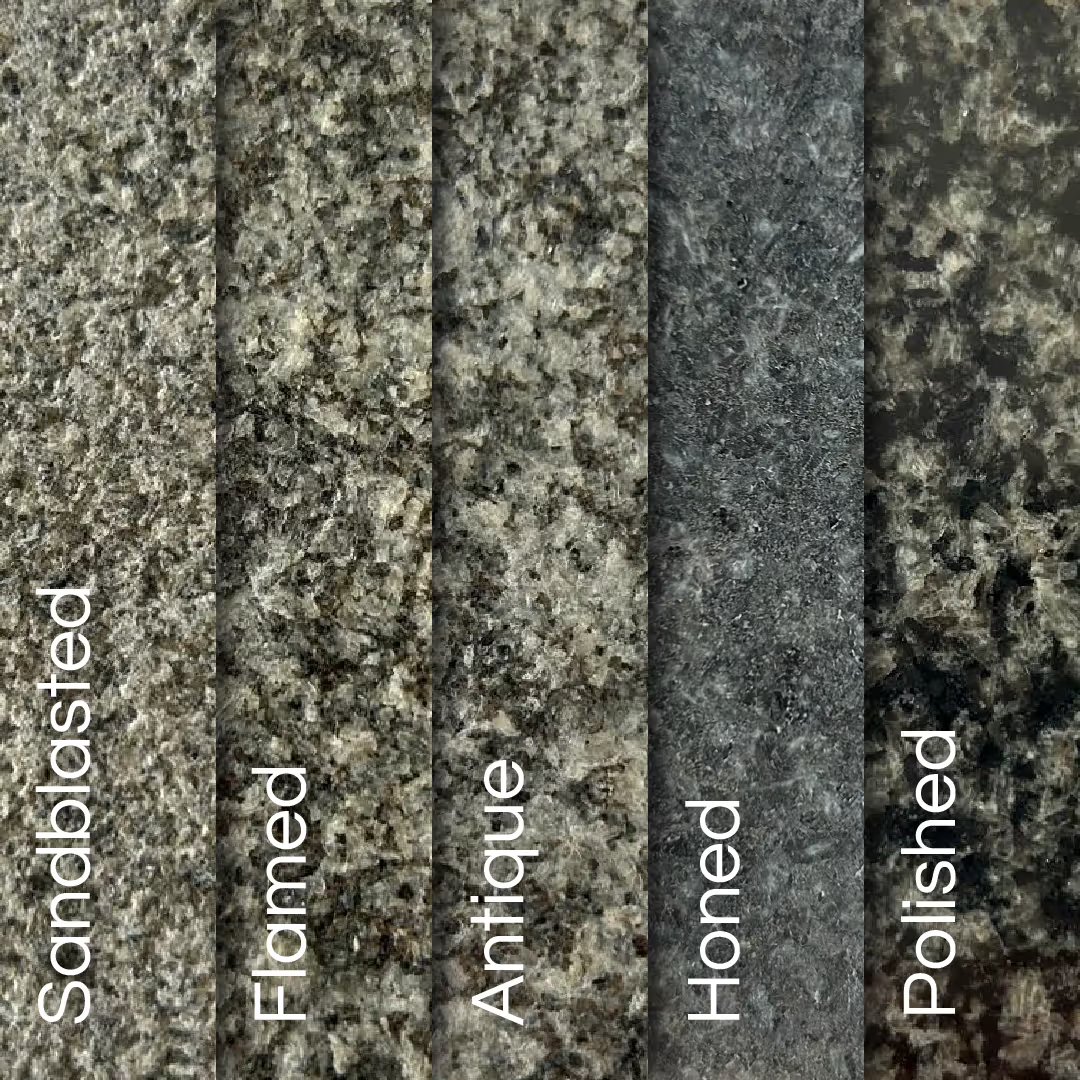
Polished
Polished granite cladding creates a dramatic, reflective surface that brings out the maximum colour depth and mineral detail. It is the most visually striking option and is commonly specified for interior feature walls, commercial lobby cladding, and prestigious building entrances. On exterior applications, polished cladding creates a high-end, corporate aesthetic. It shows dirt, water spots, and fingerprints more readily than textured finishes, which is a consideration for high-traffic interior areas.
Honed
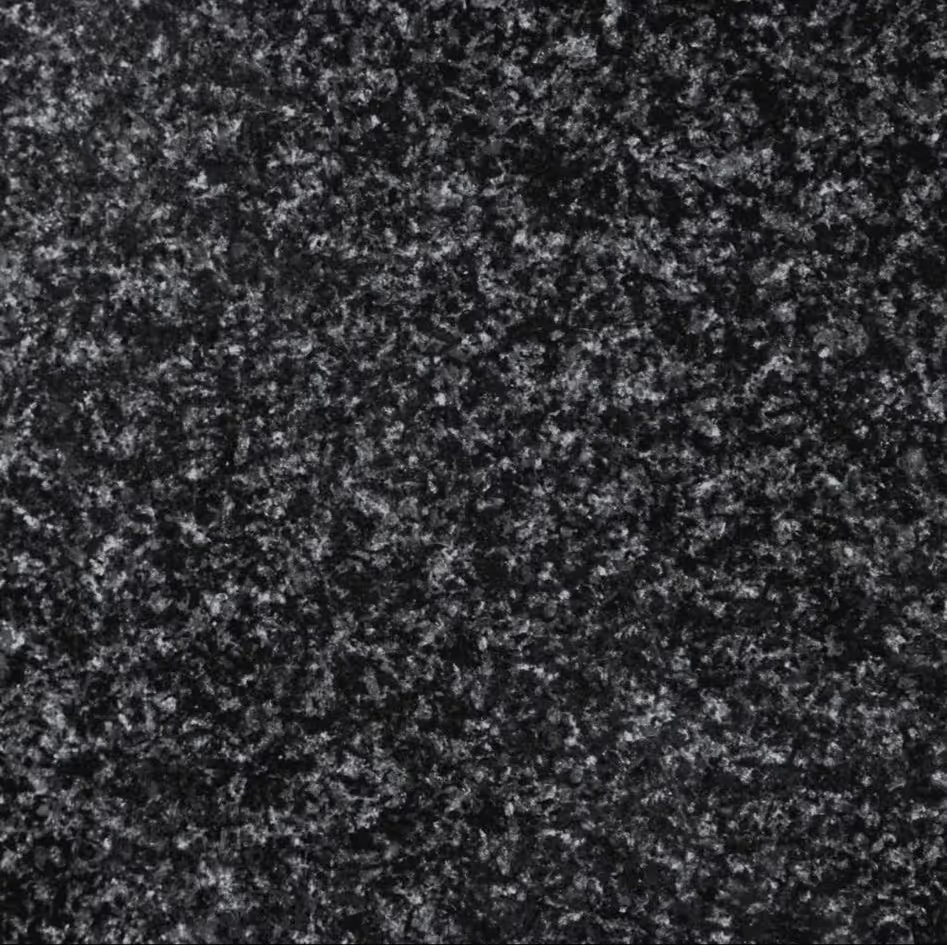
Honed cladding has a smooth matte surface that provides a contemporary, understated aesthetic. It is less reflective than polished, making it a good choice for spaces where glare from lighting or sunlight would be problematic. Honed Rustenburg granite cladding has a sophisticated charcoal appearance that works well in both minimalist and traditional contexts.
Flamed
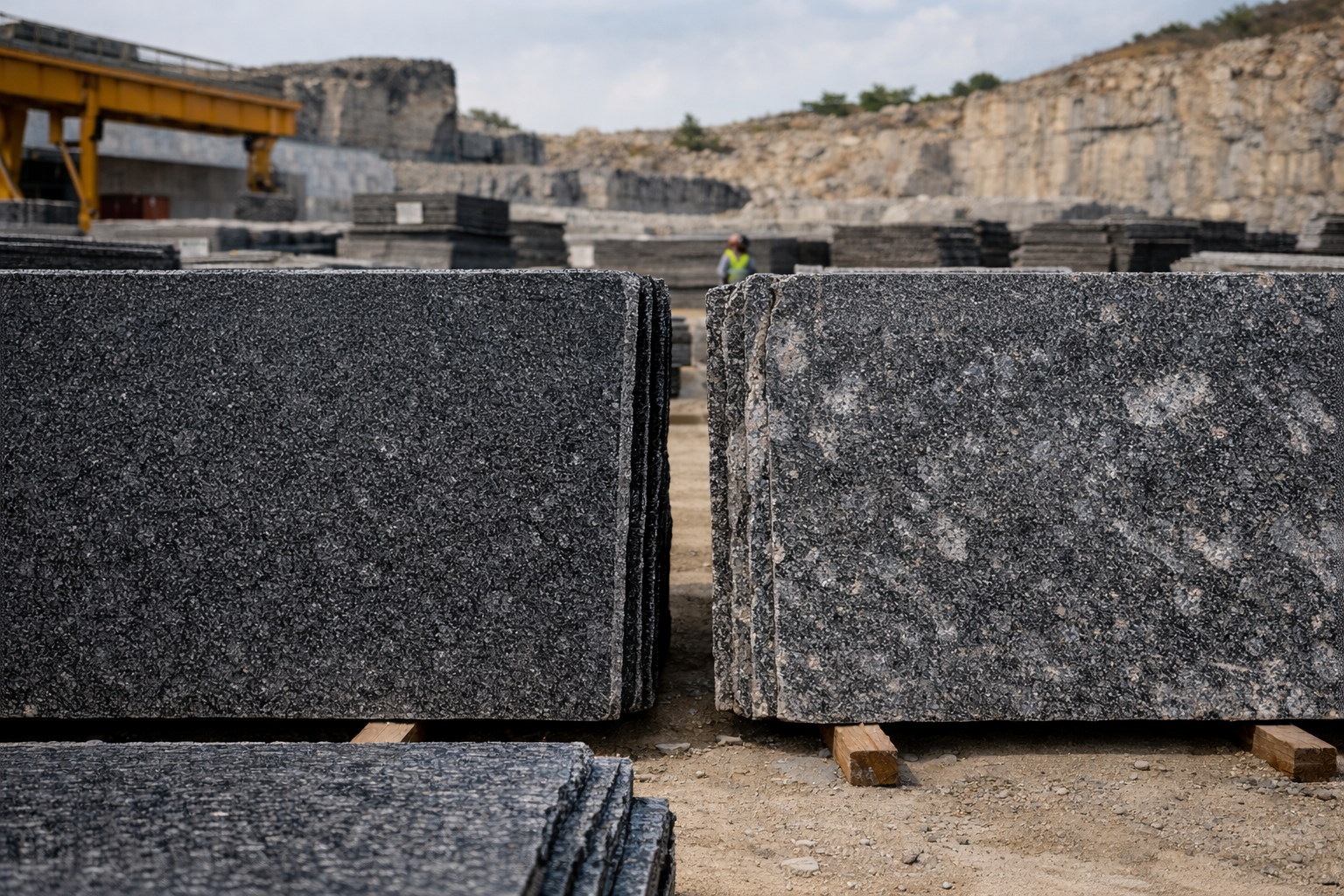
Flamed cladding introduces a rough, granular texture that changes the stone's colour (lightening Rustenburg from near-black to medium grey) and creates a natural, rustic character. Flamed finishes are popular for exterior cladding where the textured surface adds visual interest and complements landscaping elements. The rough surface also helps disguise dust and environmental soiling.
Mixed Finishes
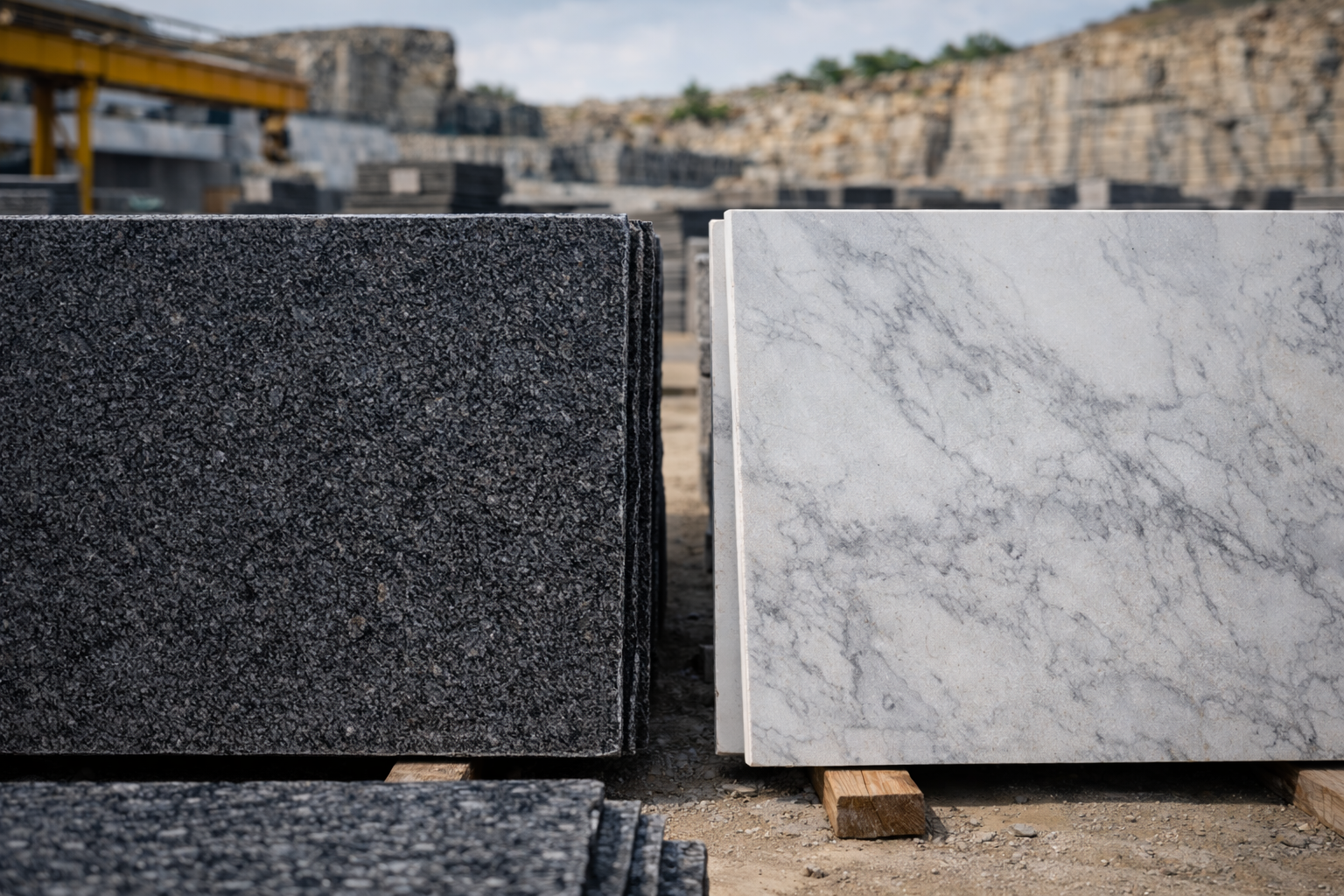
One of the most effective cladding design strategies is combining multiple finishes of the same stone in a single installation. For example, alternating polished and flamed panels in a stacked pattern creates striking textural contrast from a single material. This approach works because the base stone is identical — the colour family is consistent even though the surface character differs dramatically between finishes.
Fixing Systems
How cladding panels are fixed to the wall structure is a critical specification decision that affects the installation's structural integrity, weather performance, and long-term durability.
Adhesive (Direct Bond) Fixing
For interior cladding and low-rise exterior applications with moderate exposure, panels can be adhered directly to a suitable substrate using a polymer-modified stone adhesive. This method is simpler and less expensive than mechanical fixing but is limited to panels of moderate size and weight (typically up to 20mm thick and 0.36 square metres per panel). The substrate must be structurally sound, clean, and flat. Adhesive fixing does not allow for drainage behind the cladding, so it is not recommended for exterior applications with high rain exposure.
Mechanical Fixing (Ventilated Facade)
For exterior cladding, high-rise applications, and large or heavy panels, mechanical fixing is the standard. Panels are secured to a metal subframe (typically aluminium or stainless steel) using clips, dowels, or undercut anchors. The subframe creates an air gap between the panels and the building structure, forming a ventilated facade that allows moisture drainage, air circulation behind the cladding for thermal management, accommodation of building movement and thermal expansion, and individual panel replacement without disturbing adjacent panels. Mechanical fixing is more expensive to install but provides superior long-term performance and is required by building codes for most exterior and high-rise cladding applications.
Channel Fixing
Channel fixing uses horizontal or vertical channels (typically aluminium) into which panel edges are slotted. This system provides a clean, visible-fixing-free appearance and is used for interior feature walls and some exterior applications.
Thermal Movement and Joint Design
Stone cladding, particularly on exterior applications, is subject to thermal expansion and contraction as temperatures change through the day and across seasons. Rustenburg granite has a thermal expansion coefficient of approximately 7 to 8 multiplied by 10 to the minus 6 per degree Celsius. For a one-metre panel experiencing a 40 degree Celsius temperature range (not uncommon for an exterior wall in South Africa going from cool overnight to hot afternoon sun), the expansion is approximately 0.3mm. This may seem small, but over a large facade the cumulative effect is significant.
Joint design must accommodate this movement. Specify open joints of 6 to 10mm between panels for exterior cladding. On ventilated facades, the joints are typically left open (no sealant) to allow ventilation. On adhesive-fixed installations, joints should be filled with a UV-resistant flexible sealant that can accommodate the expected movement without cracking or delaminating.
Weight and Structural Considerations
Natural stone cladding adds significant weight to a building facade. Rustenburg granite at 20mm thickness weighs approximately 58 to 61 kg per square metre. At 30mm thickness, this increases to 87 to 92 kg per square metre. The building structure and any subframe must be designed to carry this dead load plus any wind suction loads acting on the cladding panels. For retrofit cladding projects on existing buildings, structural assessment of the existing wall is essential before specifying stone cladding.
Fire Performance
Natural granite is classified as non-combustible (Class A1 under European fire classification standards). It does not burn, does not contribute to fire spread, and does not release toxic fumes when exposed to fire. This makes granite cladding suitable for applications where fire performance is a regulatory requirement, including high-rise buildings and buildings near property boundaries.
Sourcing Cladding Panels from ANG
Afrika National Granite produces cladding panels in Rustenburg granite at our Alrode facility. We offer standard panel formats from stock and custom sizes and finishes on order. Our cut-to-size service can produce panels to your exact dimensions and finish specification, including mixed-finish orders for contrast installations. For cladding specifications, samples, or project pricing, contact our team or visit our factory at 8 Dekenah Road, Alrode, Alberton.