.jpeg)
Why Slab Selection Matters for Your Workshop
For granite fabricators, the slabs you purchase directly determine your output quality, waste percentage, and profit margin on every job. Choosing the wrong grade, thickness, or finish means rework, client complaints, and material you cannot move. This guide covers the practical knowledge that separates experienced fabricators from those still learning costly lessons.
At Afrika National Granite, fabricators account for a significant portion of our business. We understand the pressures you face — tight deadlines, clients who change specifications mid-project, and the constant need to balance cost against quality. Everything in this guide comes from decades of working alongside fabricators at our Alrode facility.
Understanding Slab Grading: First Choice vs Second Choice
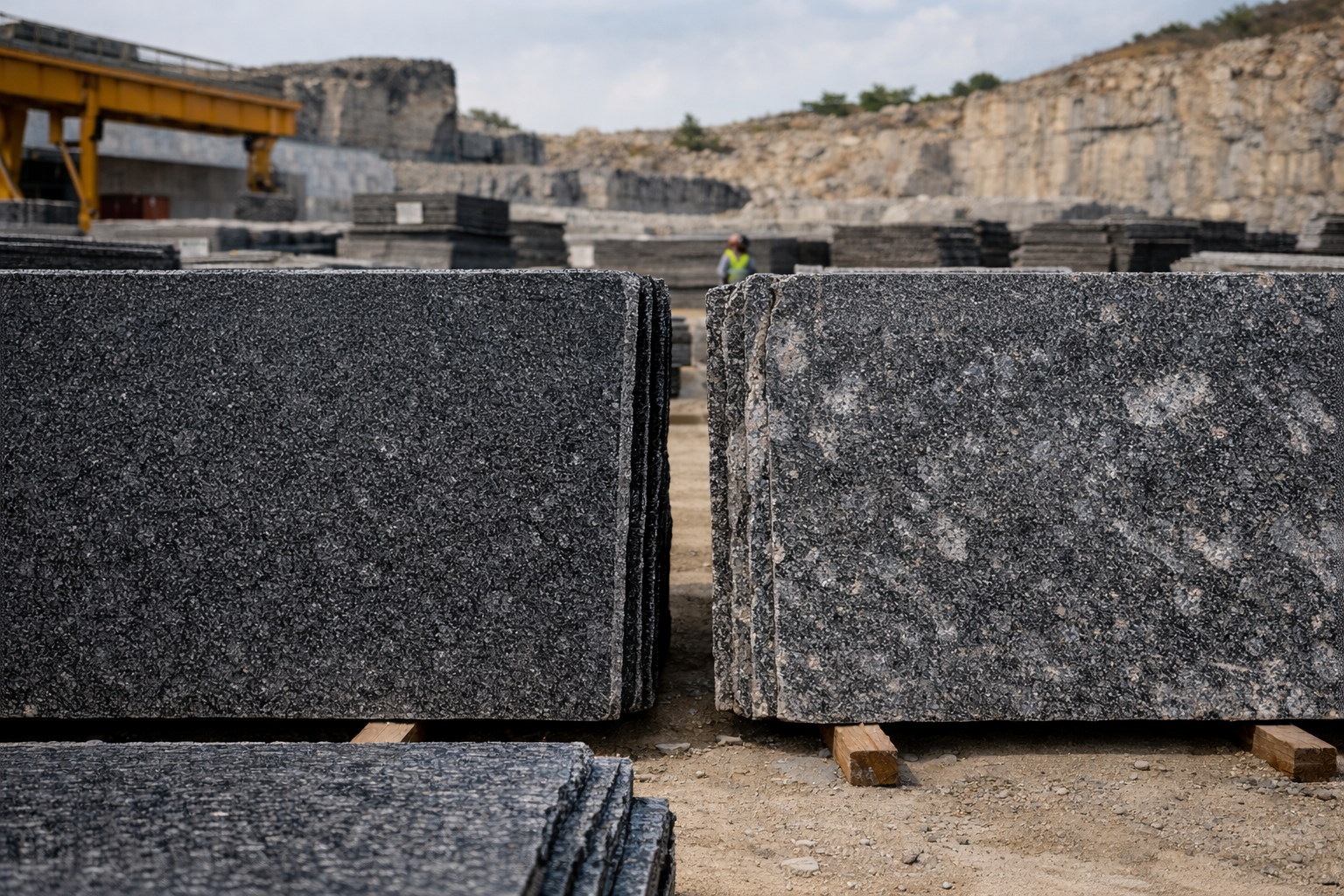
South African granite — particularly Rustenburg granite (traded internationally as Nero Impala or Impala Black) — is graded at the point of manufacture. Understanding what each grade means helps you buy with confidence.
First Choice Slabs
First choice slabs meet the highest visual and structural standards. They feature consistent colour across the full slab face, even mineral distribution with no clustering or banding, no visible cracks, fissures, or structural weakness, uniform thickness within tight tolerances (typically ±1mm), and clean, straight edges suitable for minimal trimming. First choice is required for export orders and is the standard for high-end residential and commercial projects. If your client is specifying a premium finish or the installation will be highly visible (reception counters, feature walls, showroom floors), first choice is non-negotiable.
Second Choice Slabs
Second choice slabs are structurally sound but may have minor cosmetic variations — slight colour inconsistency across the face, small mineral clusters, or minor edge irregularities. For many fabrication applications, second choice represents excellent value. Tombstone components, utility countertops, outdoor applications where slight variation is acceptable, and large-format flooring where slabs will be cut down all work well with second choice material. The price differential between first and second choice can be 15–25%, which on a large order significantly improves your margin.
Thickness Selection: 20mm vs 30mm
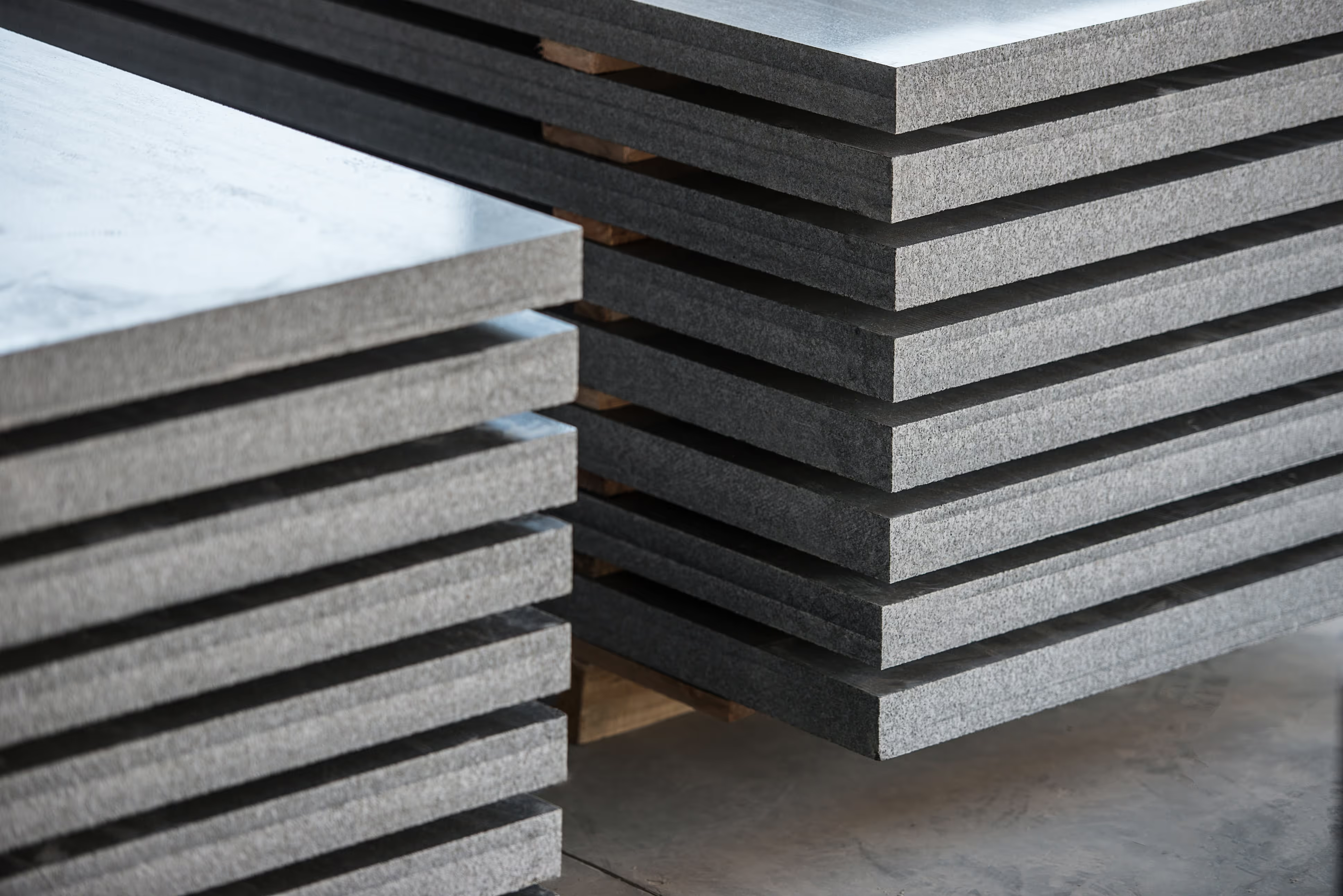
The two standard slab thicknesses you will encounter are 20mm and 30mm. Your choice depends on the application, client expectations, and your fabrication setup.
20mm Slabs
The 20mm thickness is the most popular for countertops in the South African market. It is lighter, easier to handle in the workshop, uses less material per square metre (better pricing), and is suitable for standard residential countertops, vanity tops, and window sills. Many fabricators laminate 20mm slabs to create a 40mm edge profile, giving the appearance of a thicker stone at lower material cost. If your workshop primarily serves the residential kitchen and bathroom market, 20mm will be your volume purchase.
30mm Slabs
The 30mm thickness is specified for commercial installations, heavy-use surfaces, large island countertops, outdoor applications exposed to thermal cycling, and any application where the client wants a solid, thick edge without lamination. 30mm slabs are heavier and require appropriate lifting equipment. Ensure your workshop crane and transport can handle the additional weight before ordering large quantities.
Surface Finishes and What They Mean for Fabrication
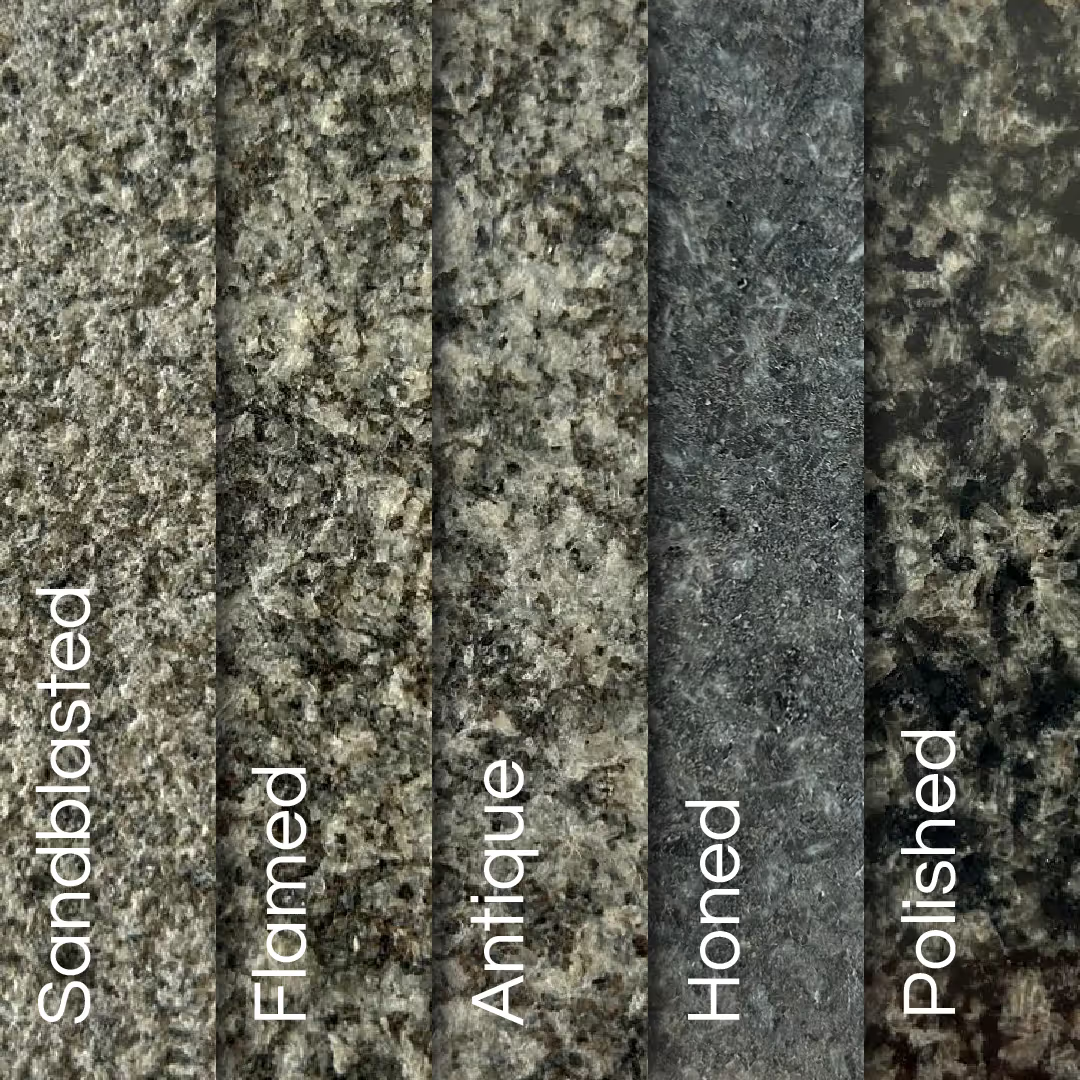
The finish applied to a slab affects its appearance, slip resistance, maintenance requirements, and your fabrication process. Understanding each finish helps you advise clients correctly and plan your workshop workflow.
Polished
A polished finish produces a high-gloss, mirror-like surface that brings out the full depth of colour and mineral detail in the stone. It is the most popular finish for kitchen countertops, reception desks, and feature installations. Polished surfaces show fingerprints and water marks more readily, which you should communicate to clients. Fabrication note: polished slabs require careful handling to avoid surface scratches during transport and cutting.
Honed
Honed granite has a smooth, matte finish with no reflective shine. It offers a contemporary, understated look popular in modern architectural projects. Honed surfaces are more forgiving of fingerprints but can show oil stains more easily if not sealed. This finish is increasingly specified by architects and interior designers.
Flamed (Thermal)
Flaming exposes the slab surface to high-temperature gas jets, causing the surface minerals to fracture and create a rough, textured finish. Flamed granite is primarily used for outdoor applications — paving, pool surrounds, steps, and exterior cladding — where slip resistance is critical. The rough texture changes the stone's colour, typically lightening it by several shades compared to a polished finish of the same material.
Brushed (Leathered)
Brushed or leathered granite has a soft, textured surface that retains the stone's colour better than flaming while still providing a tactile, non-reflective finish. This is a premium finish increasingly popular for kitchen countertops and bathroom vanities where clients want something different from the standard polished look.
Bush-Hammered
Bush-hammered surfaces have a heavily textured, rough appearance created by mechanical impact. This finish is used for exterior paving, monument bases, and architectural features where a rugged, natural stone aesthetic is desired.
Evaluating Granite Suppliers: What to Look For
As a fabricator, your supplier relationship directly affects your ability to deliver on time and on budget. Here is what to evaluate when choosing or reviewing a granite supplier.
Stock Consistency
The most common reason fabricators change suppliers is inconsistent stock availability. You need a supplier who maintains regular inventory of the grades, thicknesses, and finishes you use most. Ask potential suppliers about their production capacity, quarry ownership (suppliers who own their quarries have better supply control), and typical stock levels of your core materials.
Grading Transparency
You should be able to inspect slabs before purchasing, or at minimum receive accurate photographs and grade certifications. A supplier who resists inspection or ships material that does not match the agreed grade is a supplier you should not rely on for client-facing projects.
Order Turnaround
Understand the supplier's production timeline for standard stock items versus cut-to-size orders. At ANG, standard stock items are typically available for immediate collection. Cut-to-size orders enter our production queue, and we provide realistic timelines upfront — no false promises that lead to missed deadlines.
Transport and Logistics
Does the supplier offer delivery, and at what cost? For fabricators outside Gauteng or in neighbouring countries, transport can be a significant cost factor. A supplier with established logistics networks can save you money and reduce breakage risk compared to arranging your own transport.
Vertical Integration
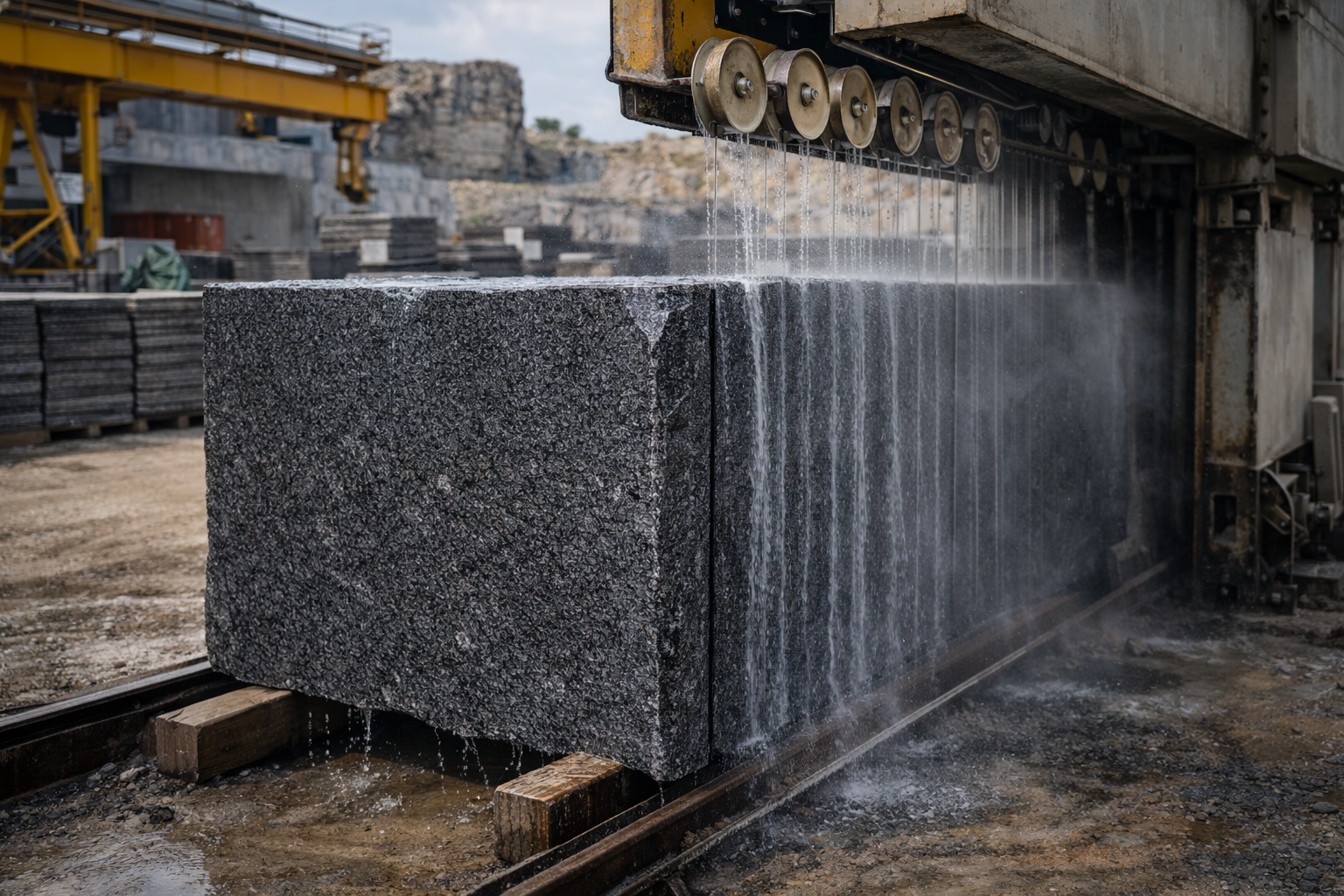
Suppliers who own their own quarries and manufacture their own slabs can offer better pricing (no middleman markup), more consistent material (same quarry face produces consistent colour), and greater flexibility on custom orders. Afrika National Granite is vertically integrated — we own our quarries, manufacture slabs at our Alrode facility, and process cut-to-size orders in-house.
Ordering Best Practices
Based on decades of supplying fabricators across South Africa and internationally, here are practical ordering tips. Always order 10–15% more material than your cutting plan requires to account for waste, breakage, and edge trimming. When colour matching is critical (kitchen countertop with island), order all material from the same production batch and inspect for consistency before accepting. Provide accurate cutting plans with your order — the more precise your specifications, the less waste at both ends. For regular stock items, establish a standing order or preferred customer arrangement to ensure priority access during high-demand periods. Keep records of slab batch numbers for warranty and replacement purposes.
Why Fabricators Choose ANG
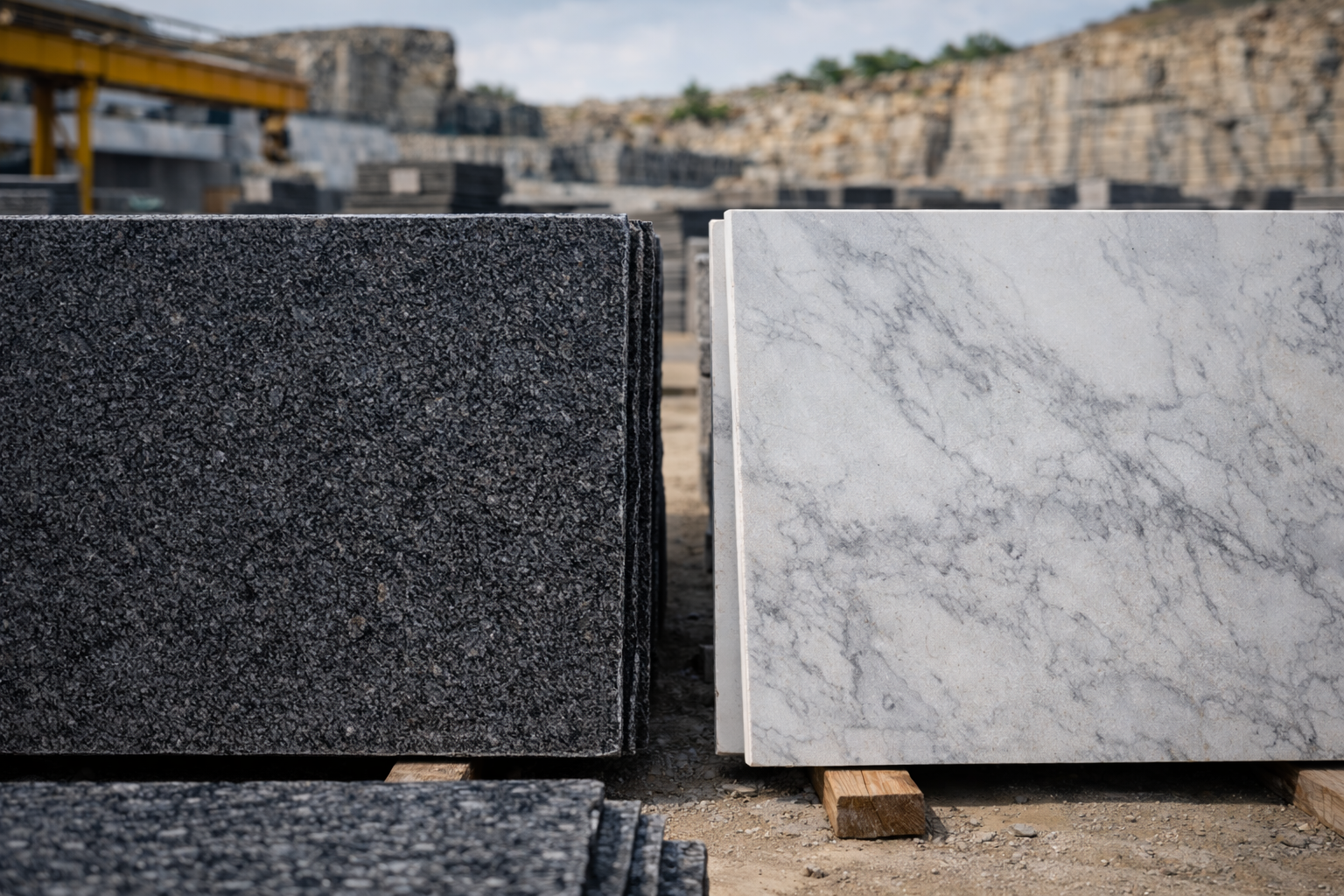
Fabricators across South Africa and in export markets including Botswana, Mozambique, Poland, Hungary, and beyond choose Afrika National Granite because we offer direct-from-quarry pricing with no middleman markup, consistent first and second choice grading with transparent quality standards, a full range of Rustenburg granite in 20mm and 30mm across all standard finishes, cut-to-size processing for fabricators who need pre-cut components, exotic and imported materials (Rain Forest Green, Patagonia, Carrara Black) available without requiring full container purchases, and established logistics for both local delivery and international shipping.
Visit our factory at 8 Dekenah Road, Alrode, Alberton to inspect current stock, or contact us for a quote on your next project.