The Most Common Material Comparison in Natural Stone
"Should I use granite or marble?" It is the question that architects, interior designers, fabricators, and end clients ask more often than any other when specifying natural stone. Both materials are genuine natural stone quarried from the earth, both are visually stunning, and both have been used in prestige buildings for centuries. But they are fundamentally different materials with different properties, different maintenance requirements, and different ideal applications.
This guide provides an honest, technically grounded comparison to help professionals and buyers make the right choice for their specific project.
Geological Differences
Understanding the geological origin of each stone explains their different properties:
Granite
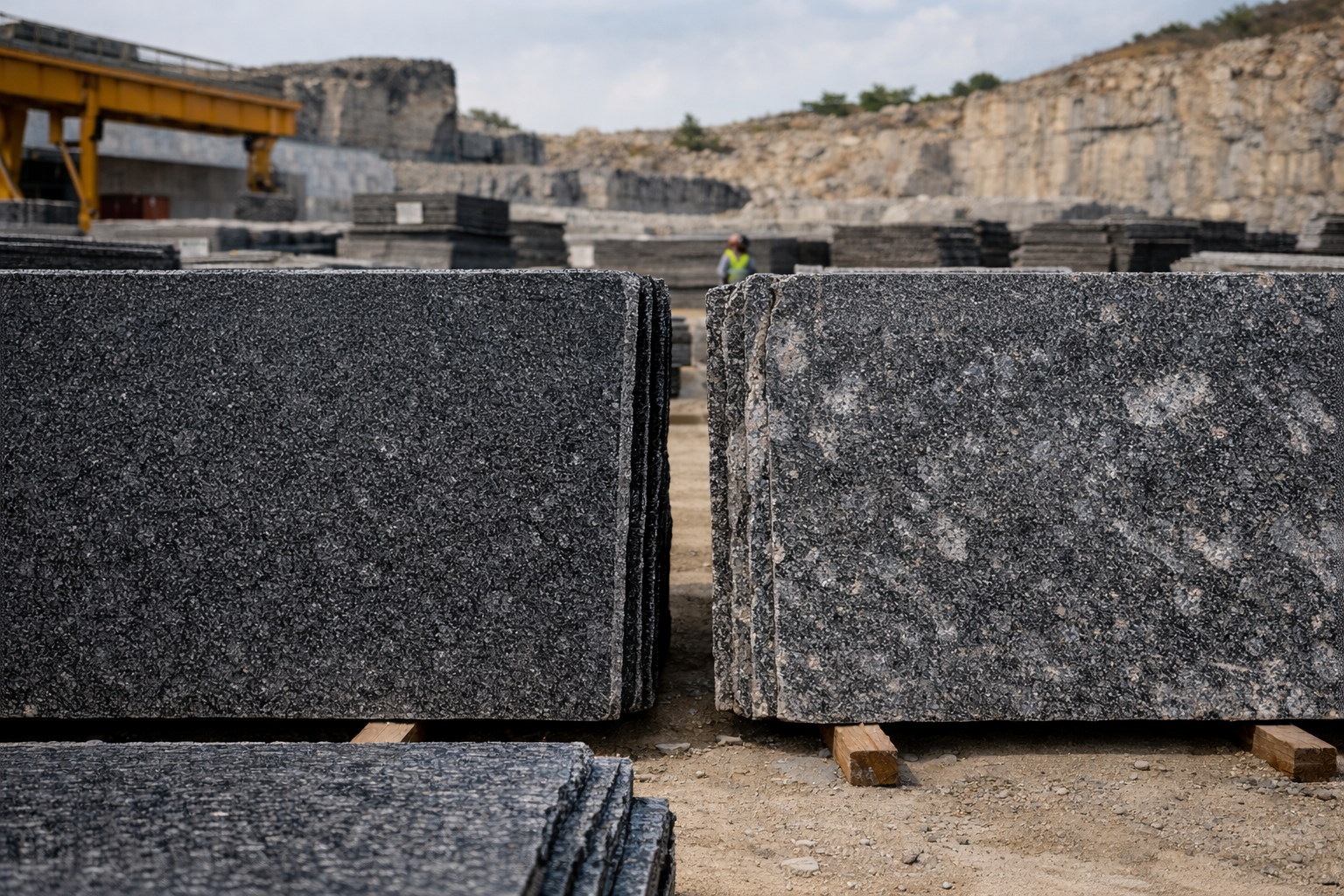
Granite is an igneous rock formed from slowly cooling magma deep within the Earth's crust. The slow cooling process allows large mineral crystals to form, giving granite its characteristic speckled appearance. Granite is composed primarily of quartz, feldspar, and mica — all hard minerals that contribute to the stone's exceptional durability. Rustenburg granite (Nero Impala) is technically a norite/gabbronorite, formed from the same igneous processes but with a slightly different mineral composition that gives it its dark colour.
Marble
Marble is a metamorphic rock formed when limestone is subjected to intense heat and pressure deep within the Earth. This process recrystallises the calcium carbonate in the limestone into interlocking calcite crystals, creating the translucent quality and veining patterns that marble is prized for. Marble is composed primarily of calcite — a relatively soft mineral that is reactive to acids.
Property Comparison
Hardness and Scratch Resistance
Granite wins decisively. Granite rates 6-7 on the Mohs hardness scale. It resists scratching from everyday objects, kitchen knives, keys, and abrasive cleaning. Marble rates 3-4 on the Mohs scale — significantly softer. Marble can be scratched by a steel knife, a set of keys, or even gritty cleaning products. In high-traffic areas, marble surfaces will develop a patina of fine scratches over time that dulls the polished finish.
Stain Resistance
Granite wins. Dense granites like Rustenburg have water absorption rates of 0.08-0.20%, making them nearly impervious to staining when sealed. Marble is more porous (water absorption typically 0.20-0.50%) and its calcite composition reacts with acids. Lemon juice, vinegar, wine, tomato sauce, and many household cleaning products will etch marble surfaces on contact, leaving dull marks that cannot be removed without re-polishing.
Heat Resistance
Both perform well, but granite has a slight edge. Both stones can handle hot pots and pans without damage in normal kitchen use. However, granite has superior thermal stability and is less likely to develop thermal shock cracks under extreme or repeated temperature changes.
Durability and Longevity
Granite wins for most applications. In high-traffic commercial environments, granite floors maintain their polish for 50-100+ years. Marble floors in equivalent traffic conditions will show wear within 10-20 years, with high-traffic pathways losing their polish and developing a worn appearance. In low-traffic residential settings, both stones can last a lifetime with appropriate care.
Aesthetics
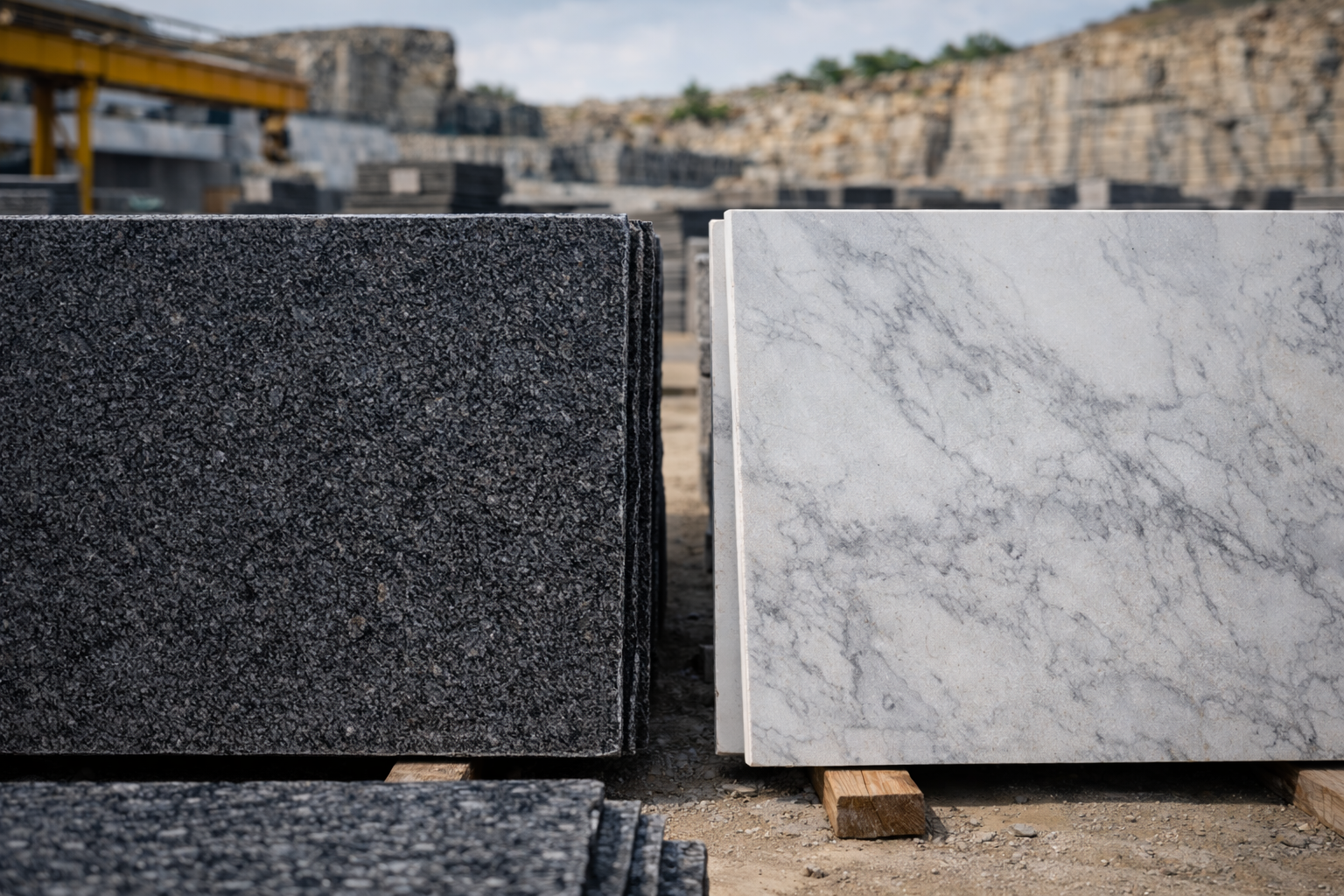
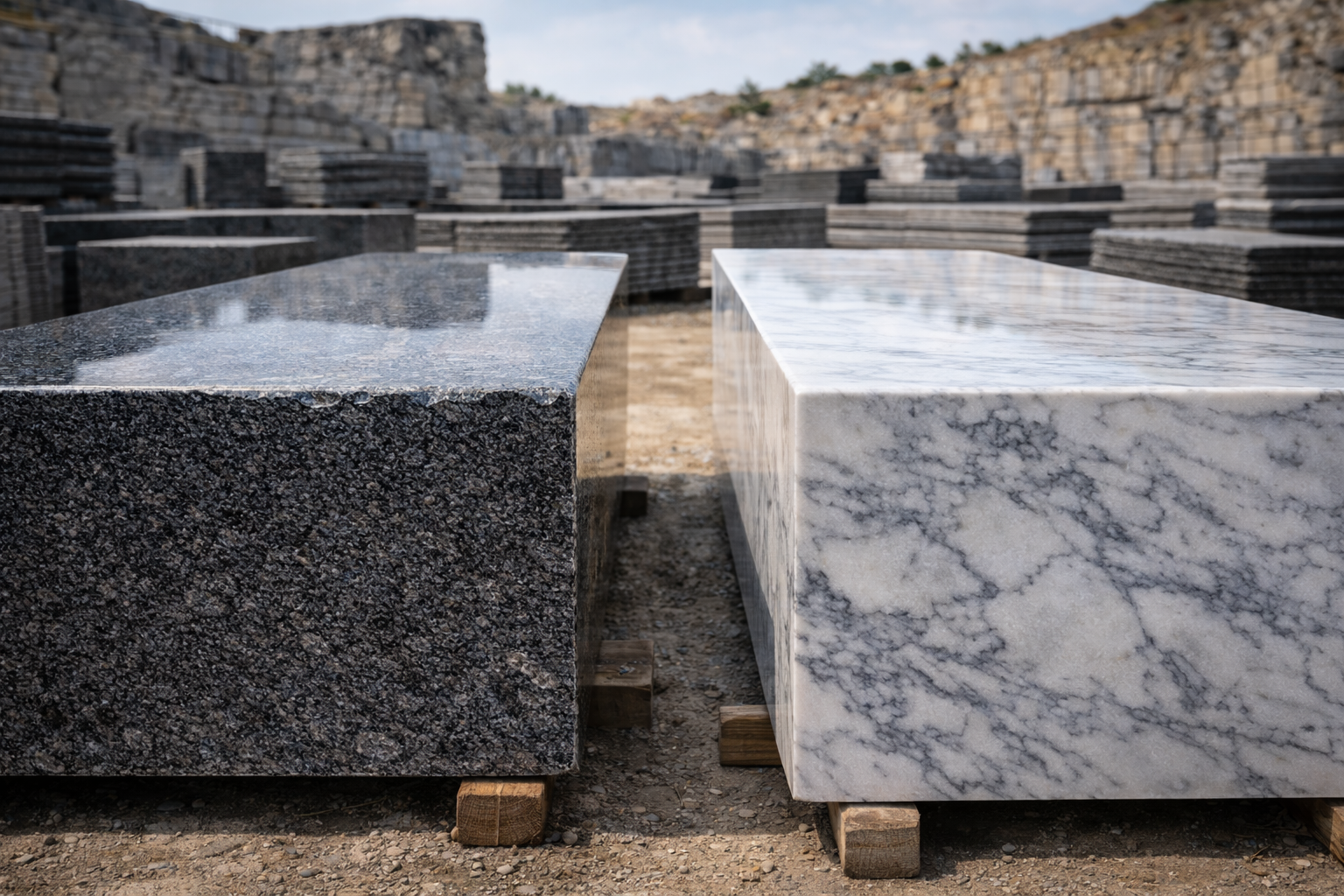
This is subjective and application-dependent. Marble offers a luminous, translucent quality with dramatic veining patterns that granite cannot replicate. Carrara, Calacatta, and Statuario marbles have an association with classical luxury that has persisted for millennia. Granite offers depth, mineral character, and a gravitas that conveys permanence and strength. Dark granites like Rustenburg create a sophisticated, contemporary aesthetic that works across a broader range of design styles.
Maintenance
Granite wins significantly. Granite requires minimal maintenance: annual sealing (recommended but not critical) and routine cleaning with pH-neutral cleaner. Marble requires regular sealing (every 6-12 months), immediate attention to acid spills, avoidance of acidic cleaning products, and periodic professional re-polishing of high-traffic surfaces. For commercial facilities managers and residential homeowners alike, granite's low maintenance requirement is a significant practical advantage.
Cost
Comparable at the material level, but granite wins on lifecycle cost. Material costs for granite and marble overlap significantly depending on the specific stone. Premium marbles (Calacatta, Statuario) are more expensive than standard granites, but standard marbles are priced similarly to mid-range granites. However, the lifecycle cost of marble is substantially higher due to more frequent sealing, professional re-polishing, and potential replacement of etched or stained surfaces. Over a 30-year building lifecycle, granite is consistently the more cost-effective choice.
Where to Use Granite
Granite is the better choice for:
- Kitchen countertops — The combination of heat resistance, scratch resistance, and stain resistance makes granite the clear winner for kitchen applications. A polished Rustenburg granite countertop will look the same after 20 years of daily kitchen use.
- High-traffic commercial floors — Lobbies, retail spaces, airports, and public buildings where durability and low maintenance are paramount.
- External applications — Facades, paving, steps, and landscaping. Granite's UV resistance, frost resistance, and weather durability make it the only sensible choice for outdoor use.
- Bathroom vanities and floors — Granite resists the moisture, toiletries, and cleaning chemicals found in bathroom environments.
- Commercial environments — Any space where maintenance costs must be minimised and the surface must perform under heavy use.
Where to Use Marble
Marble is the better choice for:
- Feature walls and decorative elements — Where the marble's translucent beauty is the primary design intent and the surface will not be subjected to abrasion or acid contact.
- Low-traffic residential floors — Bedrooms, formal living rooms, and spaces where the marble will be treated as a premium surface with appropriate care.
- Bathroom walls — Marble wall tiles in bathrooms are stunning and are not subject to the abrasion and acid exposure that makes marble problematic for countertops and floors.
- Fireplace surrounds — A classic application where marble's beauty is showcased and the surface is largely untouched.
- Sculptural and artistic applications — Marble's workability and translucent quality make it the traditional material for carving and artistic stonework.
Where Either Works Well
- Interior wall cladding — Both granite and marble make excellent feature walls. The choice is purely aesthetic.
- Reception desks and counters — In controlled commercial environments where acidic substances are unlikely, both materials perform well.
- Staircase risers — The vertical face of the riser is not walked on, so marble's softness is not a concern. Polished marble risers with granite treads is a popular combination.
The Honest Assessment
As a granite quarry owner and manufacturer, we have an obvious commercial interest in this comparison. But the physical properties of these two stones are measurable facts, not marketing opinions. Granite is objectively harder, more stain-resistant, more durable, and lower maintenance than marble. For the vast majority of construction and interior applications, granite is the superior technical choice.
Marble's advantage is aesthetic. In applications where beauty is the primary specification criterion and the surface will be treated with care, marble delivers a visual quality that granite does not replicate. The two stones are complementary rather than directly competing — and many of the best projects use both, playing to each material's strengths.
Explore Your Options
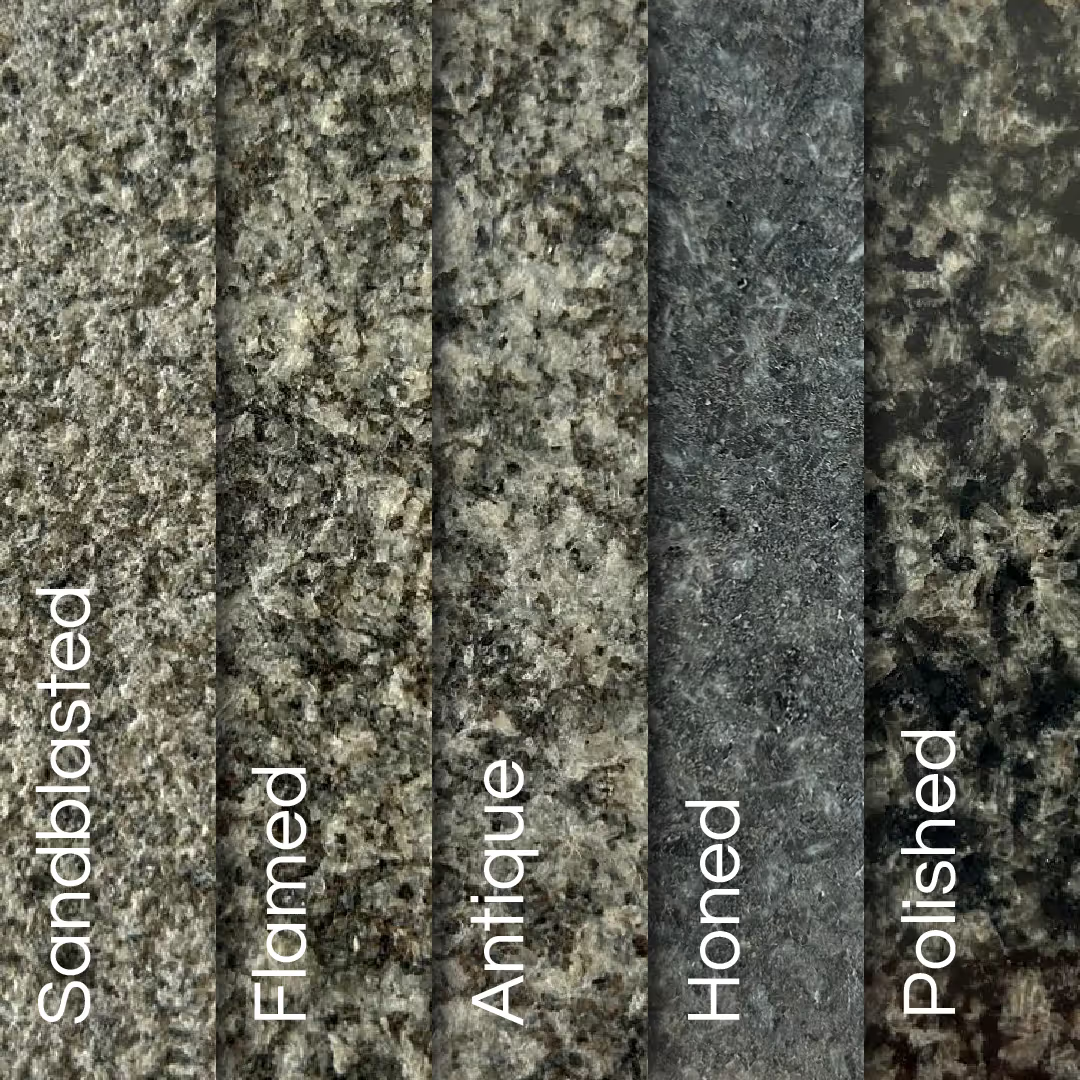
Visit Afrika National Granite at 8 Dekenah Road, Alrode, Alberton to compare granite and natural stone options for your project. Our range includes Rustenburg granite in multiple finishes, exotic granites and quartzites, and materials like Calacatta D'Oro quartzite that offer marble-like aesthetics with granite-like performance. Contact us today for a consultation.