The Sustainability Question
When architects, developers, or environmentally conscious homeowners evaluate building materials, "sustainable" can mean different things: low embodied energy, long service life, recyclability, low emissions during manufacturing, or responsible sourcing. Granite performs well on several of these measures, though it's not without environmental cost. Here's an honest comparison.
Natural Granite: Environmental Profile
Extraction
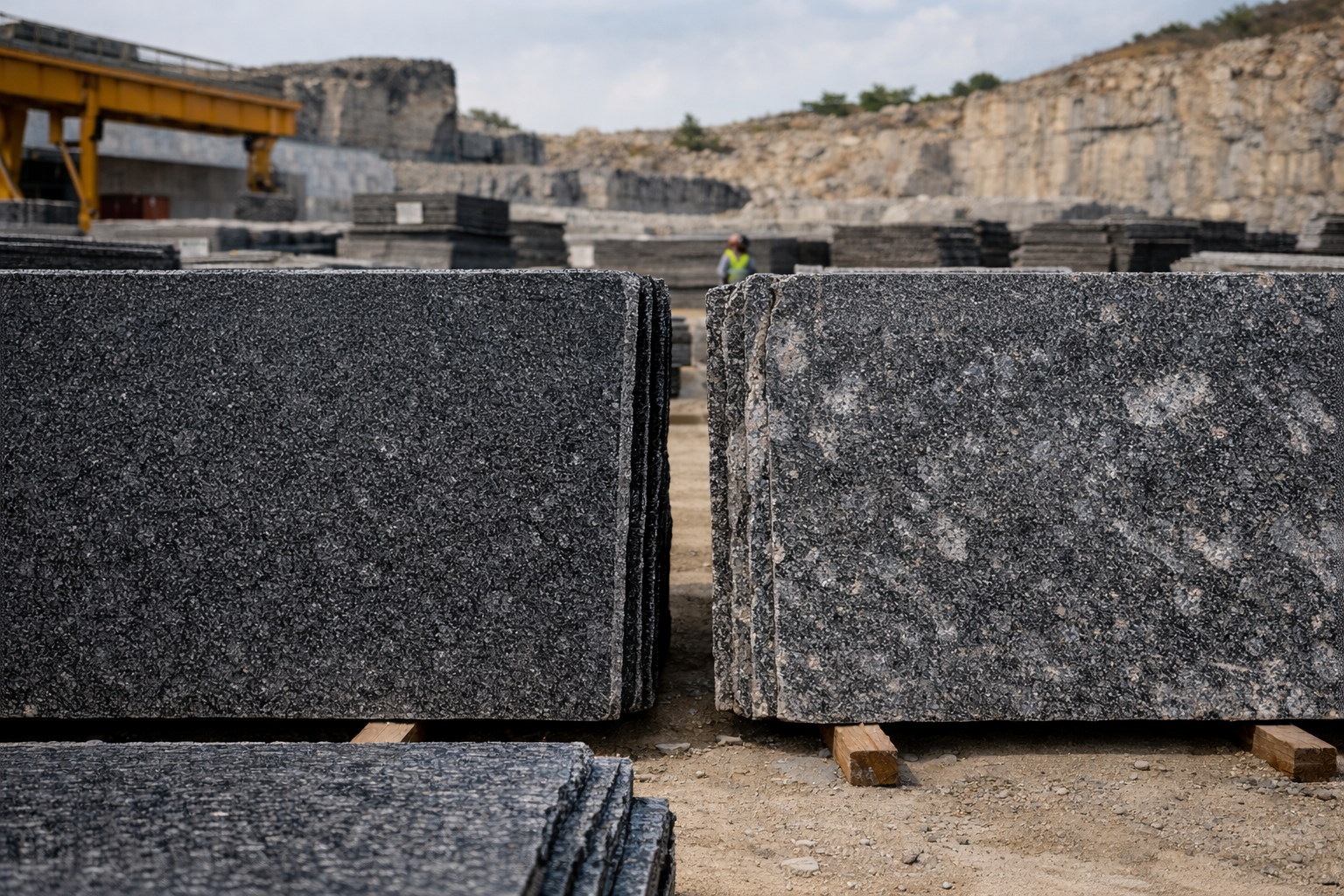
Granite is quarried from open-pit mines using diamond wire cutting and controlled blasting. At Afrika National Granite, our Rustenburg quarries extract blocks that are transported to our Alrode manufacturing facility for processing into slabs and finished products.
Quarrying does have environmental impact: land disturbance, energy use for heavy machinery, and transport of heavy blocks. However, granite quarries produce a usable product from a naturally occurring material with no chemical synthesis required. Modern quarrying operations, including ours, also follow rehabilitation plans to restore quarried land over time.
Manufacturing
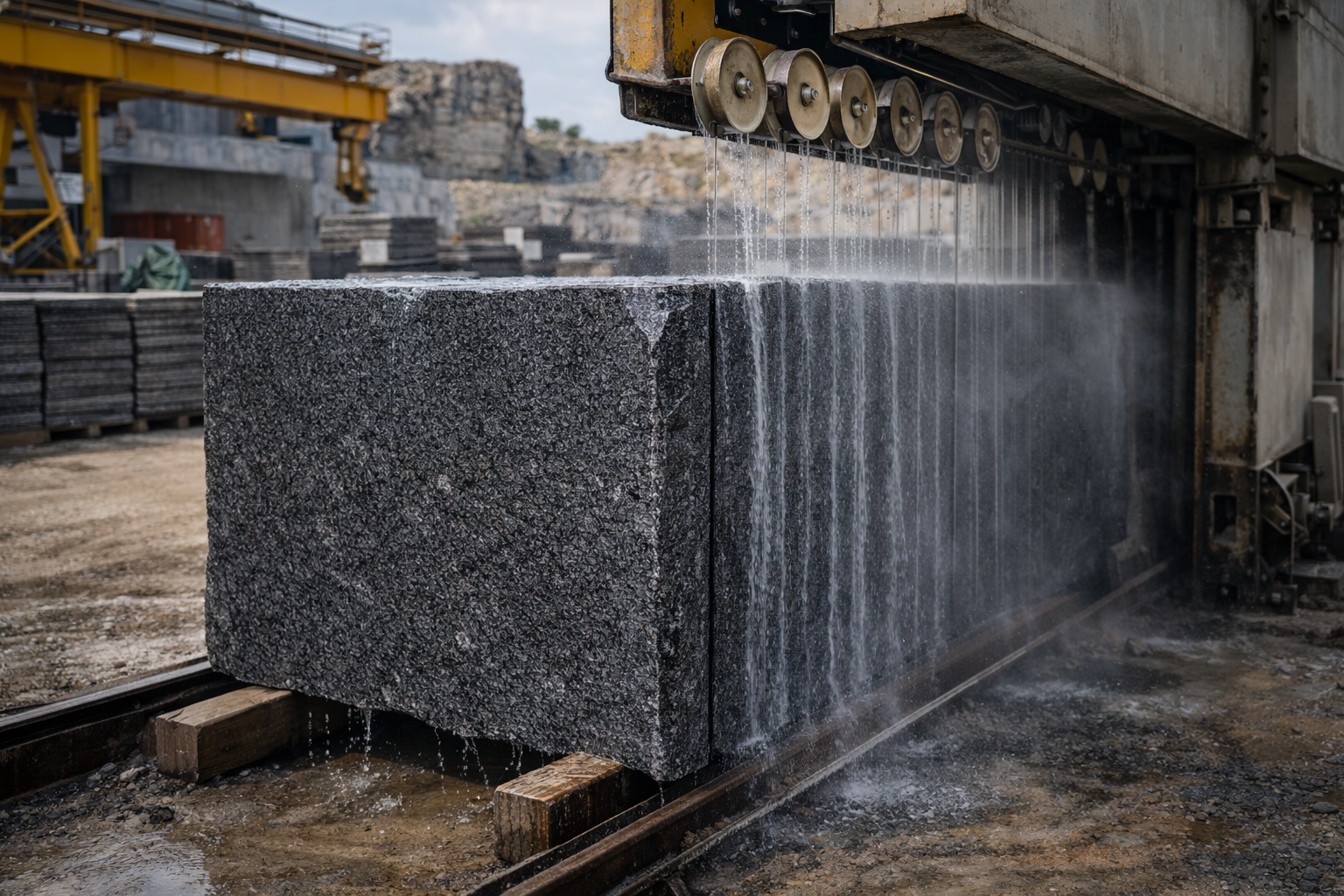
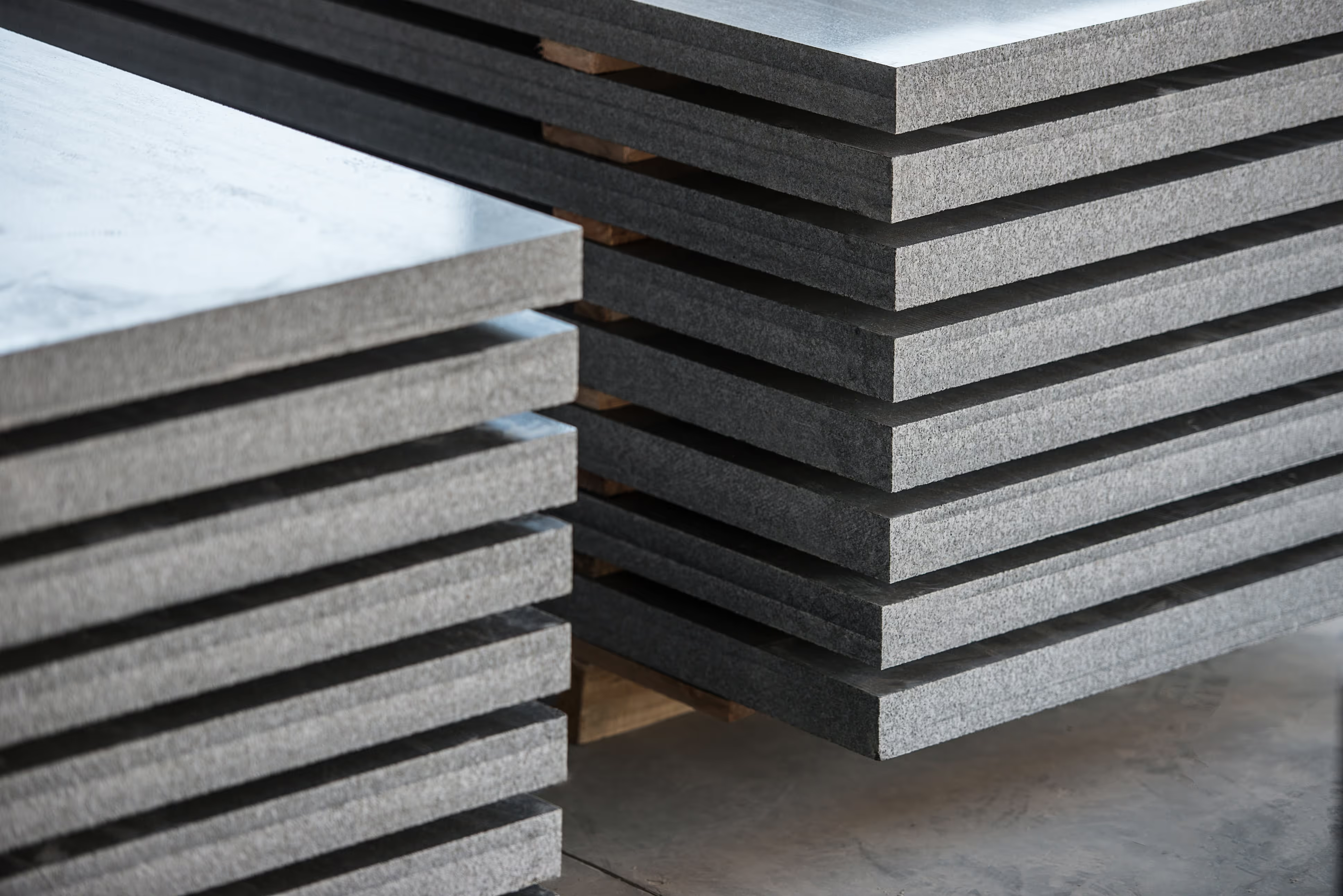
Slab production involves gang sawing blocks into slabs, then grinding and polishing to achieve the desired finish. This process uses water (recycled in closed-loop systems at modern facilities) and electricity for machinery. No resins, polymers, or chemical binders are added — the finished product is 100% natural stone.
Compare this to engineered quartz (e.g., Silestone, Caesarstone), which combines crushed quartz with 7–10% polyester resin binders, pigments, and other additives. The resin component is petroleum-derived, and the manufacturing process involves curing at high temperatures with energy-intensive processes.
Lifecycle & Durability
This is where granite's sustainability case is strongest:
- Service life: 50–100+ years for interior applications, with many granite installations outlasting the buildings they're in
- Maintenance: Periodic sealing and basic cleaning — no refinishing, no coatings, no specialist chemicals required
- Colour stability: UV-resistant and colourfast. Granite doesn't fade, yellow, or discolour with age or sun exposure
- Structural integrity: Doesn't crack, warp, delaminate, or degrade under normal conditions
Engineered stone has a typical service life of 15–25 years before showing wear, edge chipping, or discolouration. Ceramic and porcelain tiles typically last 10–20 years in high-traffic applications before grout failure and surface wear necessitate replacement.
When you factor in the full lifecycle — manufacture, installation, use, and eventual replacement — granite's longer service life means fewer replacements, fewer manufacturing cycles, and less construction waste over time.
Granite vs Engineered Stone: Comparison
| Factor | Natural Granite | Engineered Quartz |
|---|---|---|
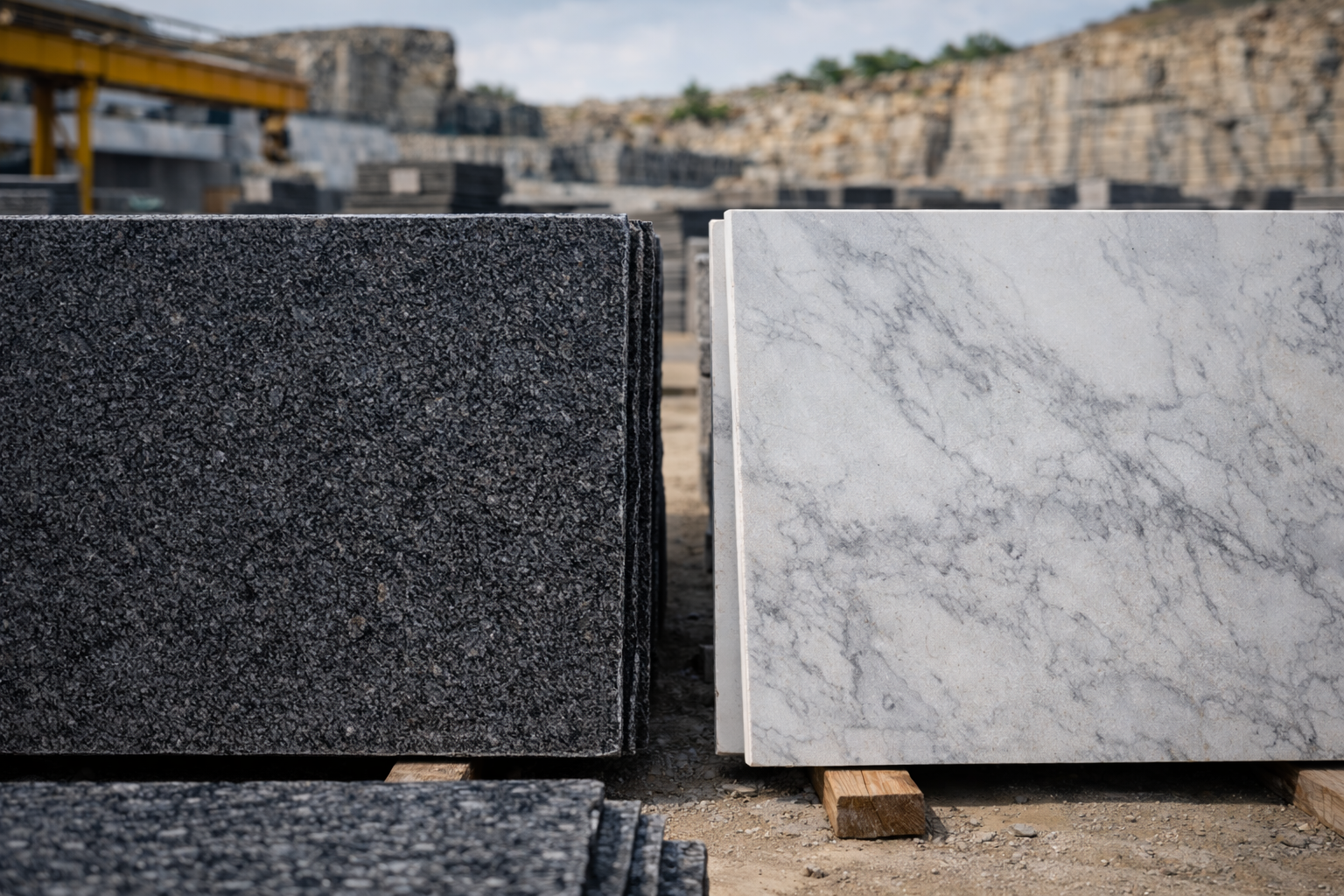
| Composition | 100% natural stone | 90–93% quartz + 7–10% resin |
| Binders/Chemicals | None | Petroleum-derived polyester resin |
| Typical service life | 50–100+ years | 15–25 years |
| UV resistance | Excellent (suitable outdoors) | Poor (yellows with UV exposure) |
| Heat resistance | Excellent (300°C+) | Moderate (can scorch at 150°C) |
| Recyclable at end of life | Yes — crushed for aggregate, repurposed | Difficult — resin makes recycling impractical |
| Outdoor suitability | Yes | No (UV degradation, thermal limits) |
| Silica dust risk (fabrication) | Present — managed with wet cutting | Higher risk — dry cutting banned in many regions |
End-of-Life & Recyclability
When a granite surface eventually reaches end of life (usually because the surrounding space is being renovated, not because the granite has failed), the stone can be:
- Reused: Removed intact and re-installed in another project
- Repurposed: Cut down for smaller applications (table tops, shelving, garden features)
- Crushed: Broken down for use as construction aggregate, drainage fill, or landscaping material
Engineered stone, by contrast, is difficult to recycle because the resin binder can't be economically separated from the quartz aggregate. Most engineered stone ends up in landfill at end of life.
Health & Safety Considerations
The fabrication of both natural granite and engineered quartz produces silica dust, which is a health hazard if inhaled. The critical difference is in concentration: engineered quartz contains 90%+ crystalline silica in a form that generates finer dust particles during cutting. This has led to a growing global health crisis among fabrication workers, with Australia, the UK, and parts of Europe implementing bans or restrictions on dry cutting of engineered stone.
Natural granite typically contains 20–40% quartz (varying by type), producing less crystalline silica dust during fabrication. Standard wet-cutting practices, which ANG recommends for all stone fabrication, effectively suppress dust for both materials.
What Specifiers Should Consider
For architects and designers working on projects with sustainability requirements (Green Star, LEED, or similar rating systems):
- Lifecycle cost analysis: Granite's higher upfront cost is offset by its 50–100+ year service life versus 15–25 years for engineered alternatives
- Local sourcing: South African-quarried granite (like Rustenburg) has lower transport emissions for local projects compared to imported engineered stone manufactured in Europe or Asia
- Material transparency: Granite is a single-ingredient material with no proprietary chemical compounds — simpler for material health declarations
- Waste minimisation: Granite offcuts from fabrication can be used for smaller products (tiles, cobbles, kerbs) rather than discarded
At ANG, our integrated operation — quarrying, manufacturing, and finishing at facilities within South Africa — means the full supply chain is local. For projects prioritising local content and reduced transport emissions, this is a tangible advantage.
For technical data, sustainability statements, or material samples for your specification, contact us at +27 (0)11 908 3595.