Why Granite for Pool Surrounds?
Swimming pool surrounds must satisfy demanding requirements that most materials struggle to meet simultaneously. The surface must be slip-resistant when wet, comfortable underfoot in direct sunlight, resistant to pool chemicals and salt chlorination, dimensionally stable through daily thermal cycling, and aesthetically appropriate for what is typically the centrepiece of an outdoor living area. Natural granite, properly specified and finished, meets all of these requirements — which is why it has been the preferred pool surround material for premium residential and commercial projects across South Africa for decades.
This guide covers the technical and practical considerations for specifying granite pool surrounds, with specific reference to Rustenburg granite and the finishes available from Afrika National Granite.
Slip Resistance: The Non-Negotiable Requirement
Slip resistance is the primary safety consideration for any pool surround material. South African building regulations and international standards require adequate slip resistance for wet barefoot traffic areas around swimming pools.
Understanding Slip Ratings
Slip resistance is measured using several standards. The most commonly referenced in South Africa are the DIN 51130 ramp test (gives an R-rating from R9 to R13, where higher numbers indicate better grip) and the pendulum test (BS 7976 / SANS 1186) which gives a Pendulum Test Value (PTV) where values above 36 are considered low slip risk for wet conditions. For pool surrounds specifically, a minimum of R11 under DIN 51130 or PTV of 40+ under the pendulum test is recommended for wet barefoot areas.
How Granite Achieves Slip Resistance
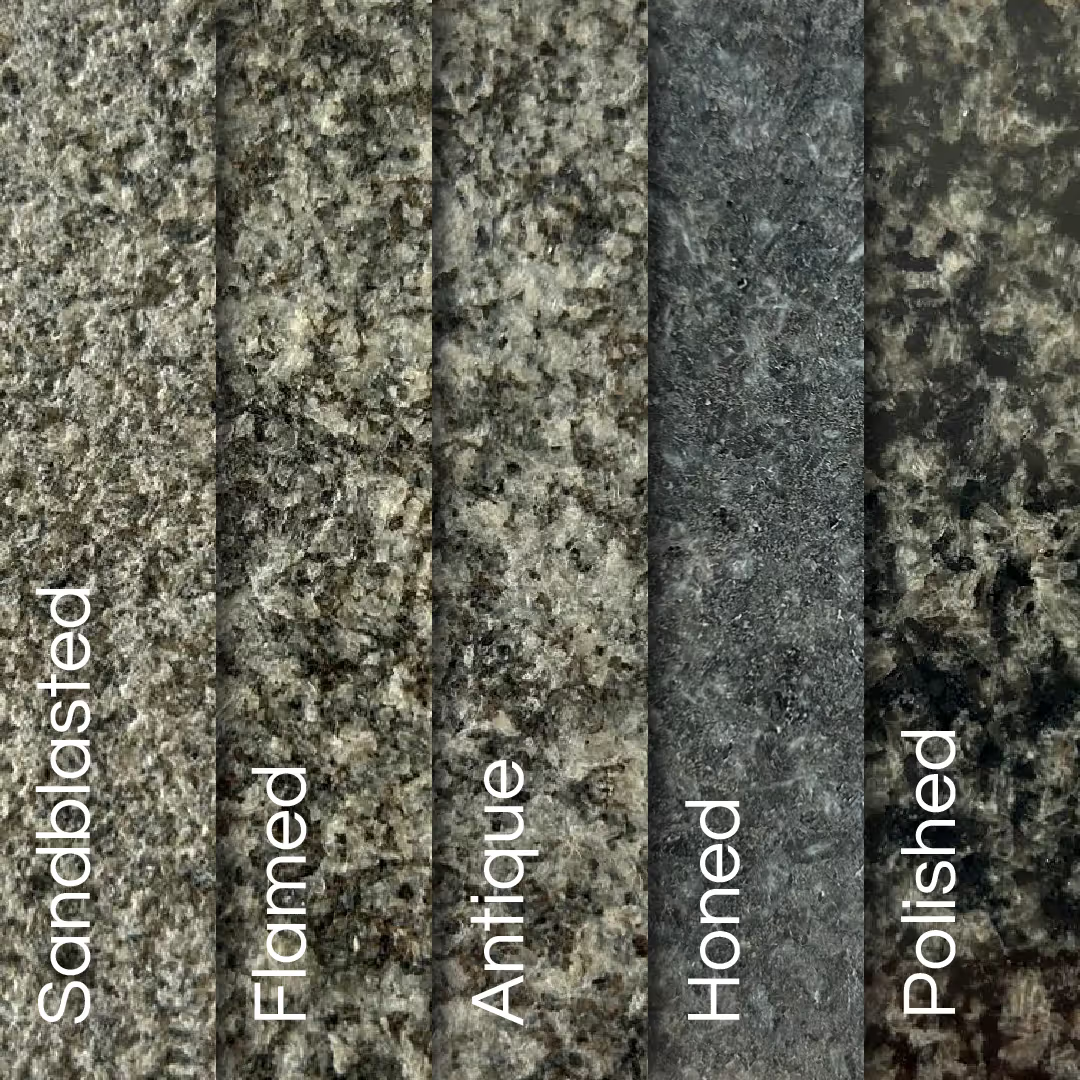
Polished granite is slippery when wet and is NOT suitable for pool surrounds. The slip resistance of granite for pool applications comes from the surface finish applied to the stone. The appropriate finishes are flamed (thermal), which achieves R11–R12 ratings and is the standard for pool surrounds, bush-hammered, which achieves R12–R13 ratings and offers maximum grip but has a very rough texture, and sandblasted, which achieves R10–R11 ratings and provides a balance between grip and comfort. The flamed finish is by far the most specified for pool surrounds because it provides adequate slip resistance while remaining comfortable for barefoot traffic. Bush-hammered surfaces provide better grip but can be uncomfortable to walk on barefoot for extended periods.
Thermal Performance: Heat Under the South African Sun
One of the most common concerns about stone pool surrounds is heat absorption. In the South African climate, pool surrounds are exposed to intense direct sunlight for much of the year. Understanding how granite handles thermal load is important for client expectations.
How Hot Does Granite Get?
All hard surfaces absorb heat in direct sunlight. Dark stones absorb more heat than light stones. Polished surfaces absorb more heat than rough surfaces. Rustenburg granite in a flamed finish (the standard pool surround specification) performs better than many alternatives because the flamed texture creates microscopic air pockets that reduce the contact area between the stone and bare feet. The lighter colour of flamed granite (medium grey rather than the near-black of polished) also reduces heat absorption compared to a polished surface of the same material. In practical terms, flamed Rustenburg granite in direct summer sun will be warm but walkable for most people. For clients who are highly sensitive to heat, lighter granite varieties or the use of shade structures over seating areas can be considered.
Thermal Cycling Resistance
Pool surrounds in South Africa experience significant daily temperature swings — from cool overnight temperatures to intense midday heat. This thermal cycling can cause expansion and contraction that damages poorly selected materials over time. Granite's extremely low thermal expansion coefficient (approximately 7–8 × 10⁻⁶ per degree Celsius) means it expands and contracts minimally. Combined with its low porosity (typically less than 0.5% water absorption for Rustenburg granite), this makes it highly resistant to the freeze-thaw and heat-cool cycles that crack concrete pavers and delaminate cheaper stone alternatives.
Chemical Resistance
Pool water is chemically treated, and splashing is inevitable. Pool surround materials must resist the chemical agents used in pool maintenance. Granite is chemically inert to standard pool treatment chemicals including chlorine at normal pool concentrations (1–3 ppm), salt (for salt chlorination systems, typically 3000–6000 ppm), pH adjustment chemicals (hydrochloric acid, sodium carbonate), and algaecides and clarifiers. Unlike some natural stones (marble, limestone, travertine), granite does not react with acidic chemicals. This makes it suitable for both traditional chlorine pools and salt chlorination systems. Sealing is still recommended to prevent biological staining (algae growth in porous areas) rather than chemical damage.
Recommended Finishes for Pool Applications
Pool Deck / Surround
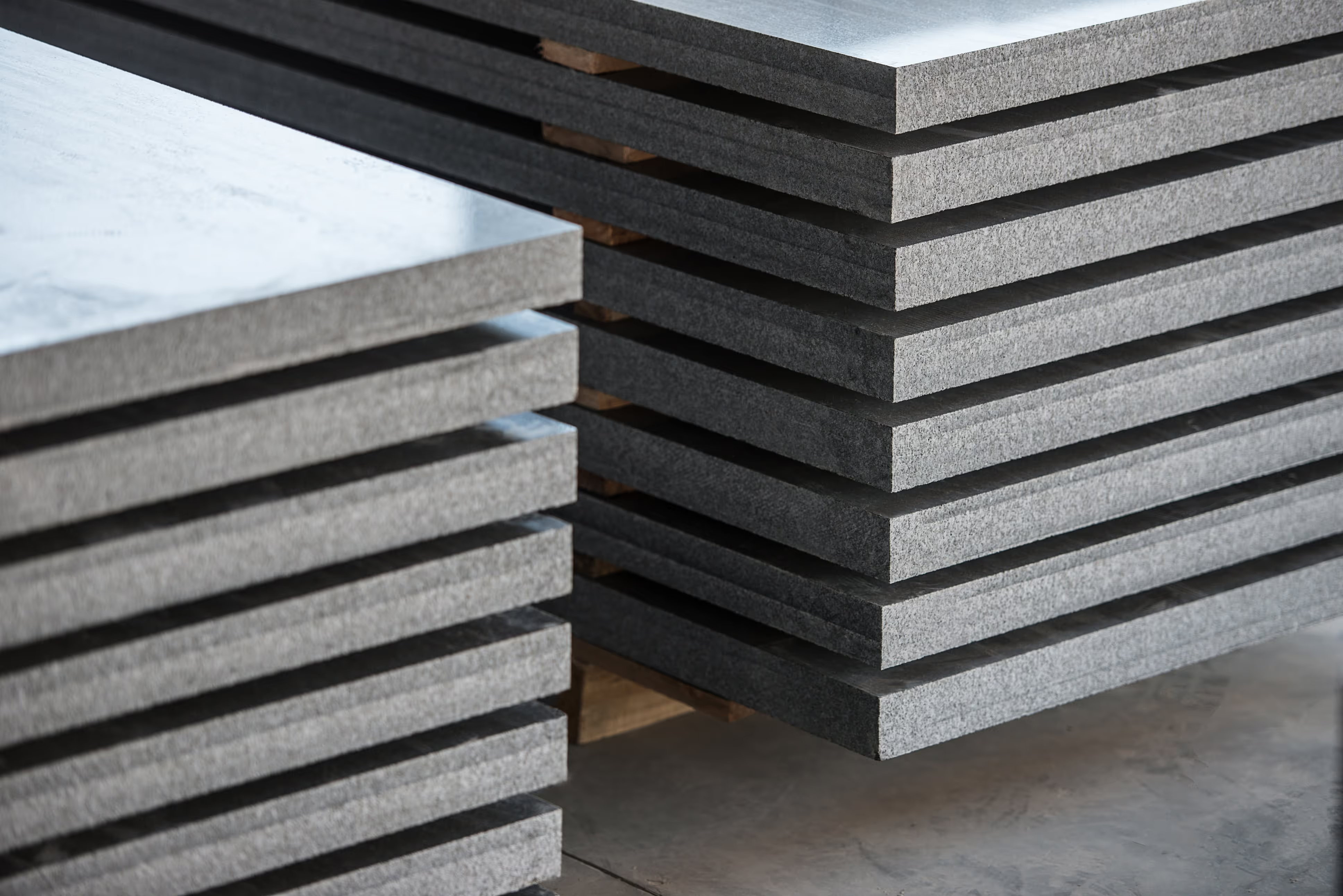
Flamed Rustenburg granite is the standard specification. It provides R11+ slip resistance, comfortable barefoot texture, good thermal performance in the lighter flamed colour, and a natural, contemporary appearance that complements most architectural styles. Standard slab sizes for pool surrounds are typically 600mm x 300mm or 600mm x 600mm in 20mm or 30mm thickness, though custom sizes can be cut to suit specific pool geometries.
Pool Coping (Edge)
Pool coping — the capstone that covers the pool shell edge — is typically specified with a bullnose or pencil-round profile on the pool-facing edge for swimmer comfort and water drainage. The top surface should be flamed for slip resistance, while the visible vertical face can be honed or polished for visual contrast. ANG can produce coping in custom profiles to suit your pool design.
Steps and Entry Points
Pool steps require the highest slip resistance rating in the entire pool surround area. Flamed or bush-hammered finishes are recommended. Consider adding a contrasting nosing strip or colour change on step edges for visibility, particularly for evening use. Some specifiers request a sandblasted groove pattern on step treads for additional grip.
Water Features and Spillways
If the pool design includes water features, spillways, or wet walls, the granite surfaces in these areas should be flamed or bush-hammered. For purely decorative wet walls where foot traffic is not a concern, honed granite can create an attractive water-over-stone effect.
Installation Considerations
Substrate and Bedding
Granite pool surrounds should be installed on a stable, well-compacted concrete substrate. Movement joints must be incorporated at regular intervals (typically every 3–4 metres) and at all changes of direction to accommodate thermal expansion. Use a flexible, polymer-modified adhesive rated for exterior stone installation. Standard cement mortars are too rigid and will crack, eventually loosening the granite.
Jointing
Joints between granite pavers should be 3–5mm wide, filled with a flexible, UV-resistant sealant or a polymer-modified grout. Rigid cement grout will crack and deteriorate in exterior pool environments. Joint colour should be selected to complement the granite — medium grey is the standard choice for flamed Rustenburg granite.
Drainage
Pool surrounds must be laid with a fall of 1–2% away from the pool edge to prevent standing water. The flamed granite surface itself provides good surface drainage due to its texture, but the gradient must be designed into the substrate, not relied upon from the stone surface alone.
Sealing
Sealing flamed granite pool surrounds is recommended to reduce algae and biological growth in the textured surface, make routine cleaning easier, maintain the stone's natural colour (unsealed flamed granite can lighten over time due to mineral efflorescence), and reduce water absorption (already low in granite, but further reduction extends the stone's life). Use a penetrating impregnating sealer, not a topical coating sealer. Topical sealers create a film on the surface that reduces slip resistance — the opposite of what you want around a pool.
Specifying Pool Surround Granite from ANG
Afrika National Granite supplies flamed Rustenburg granite for pool surround applications in standard slab and tile formats, as well as custom-cut coping profiles and bespoke sizes. We can provide slip resistance test certificates for project specifications, cut-to-size components to match your pool geometry, matching granite for water features, steps, and surrounding landscaping, and samples for client approval and specification inclusion.
For pool surround specifications, samples, or pricing, contact our team or visit our factory at 8 Dekenah Road, Alrode, Alberton.