What Are Granite Cobblestones?
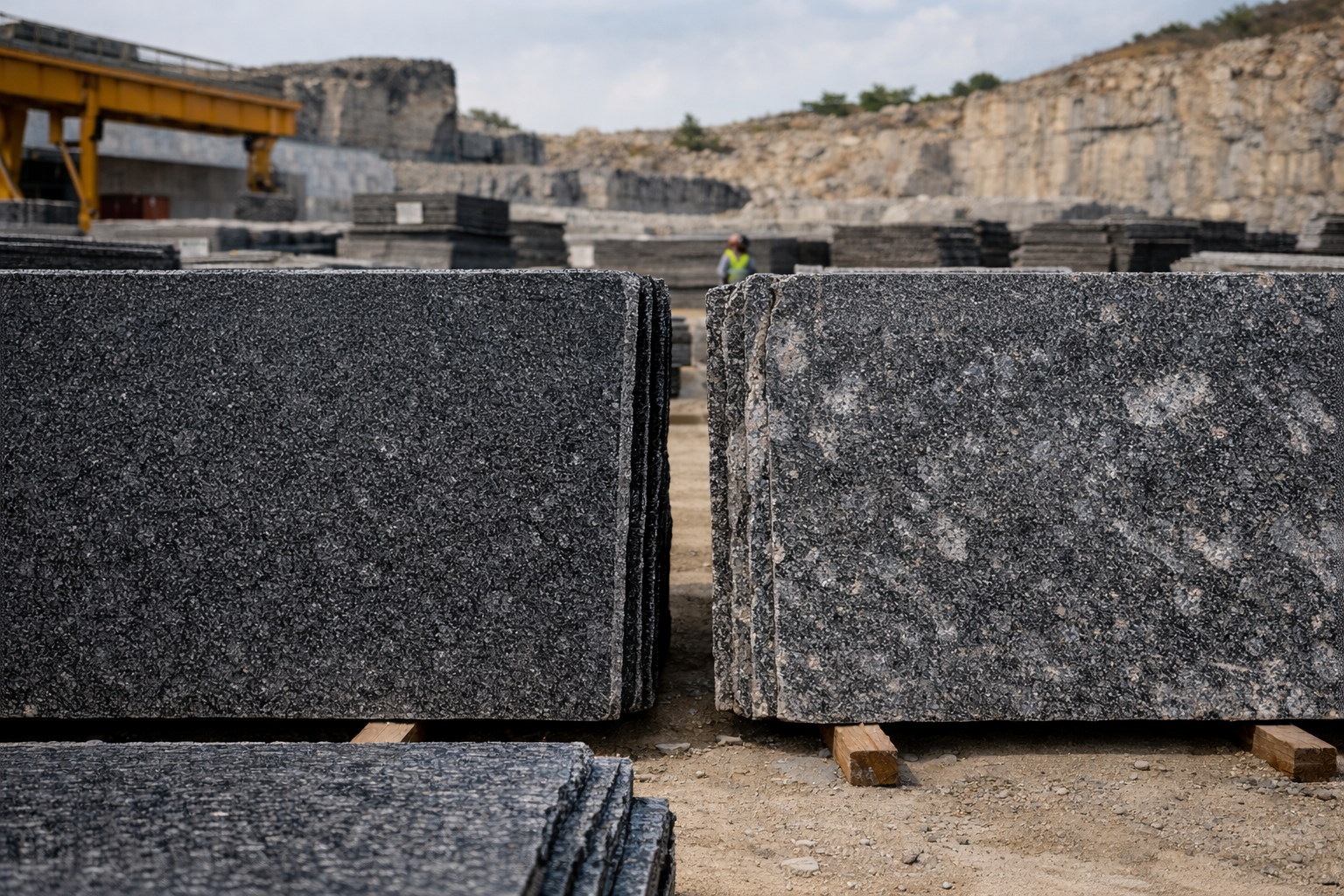
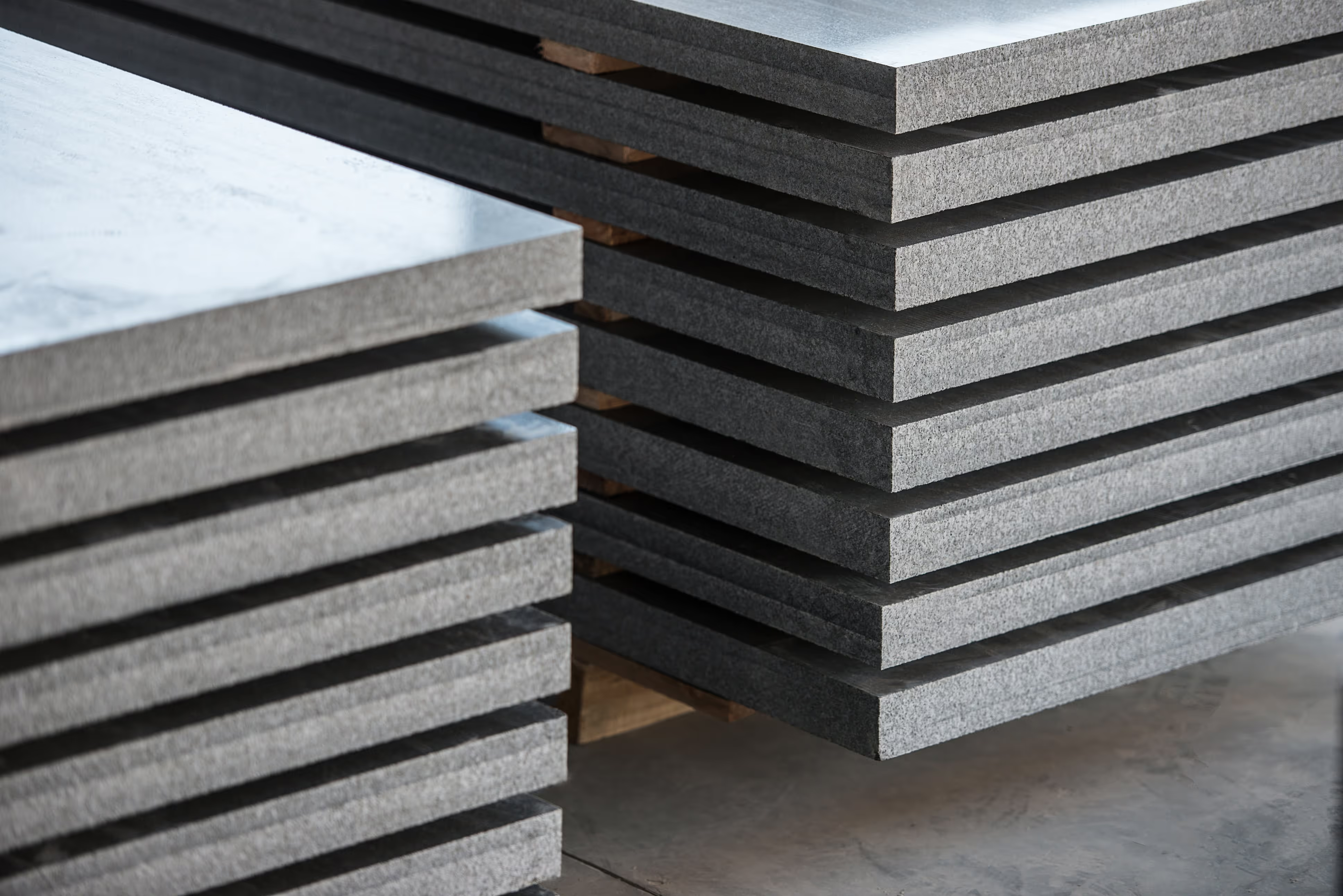
Granite cobblestones are small, thick blocks of natural granite used for paving driveways, walkways, plazas, courtyards, and landscaping features. Unlike granite tiles (which are thin, calibrated slabs designed for adhesive installation), cobblestones are substantial, heavy units designed to be bedded in mortar or sand on a compacted substrate. Their thickness and weight give them the structural capacity to handle pedestrian and vehicle traffic, and their natural stone character makes them one of the most durable and visually appealing paving options available.
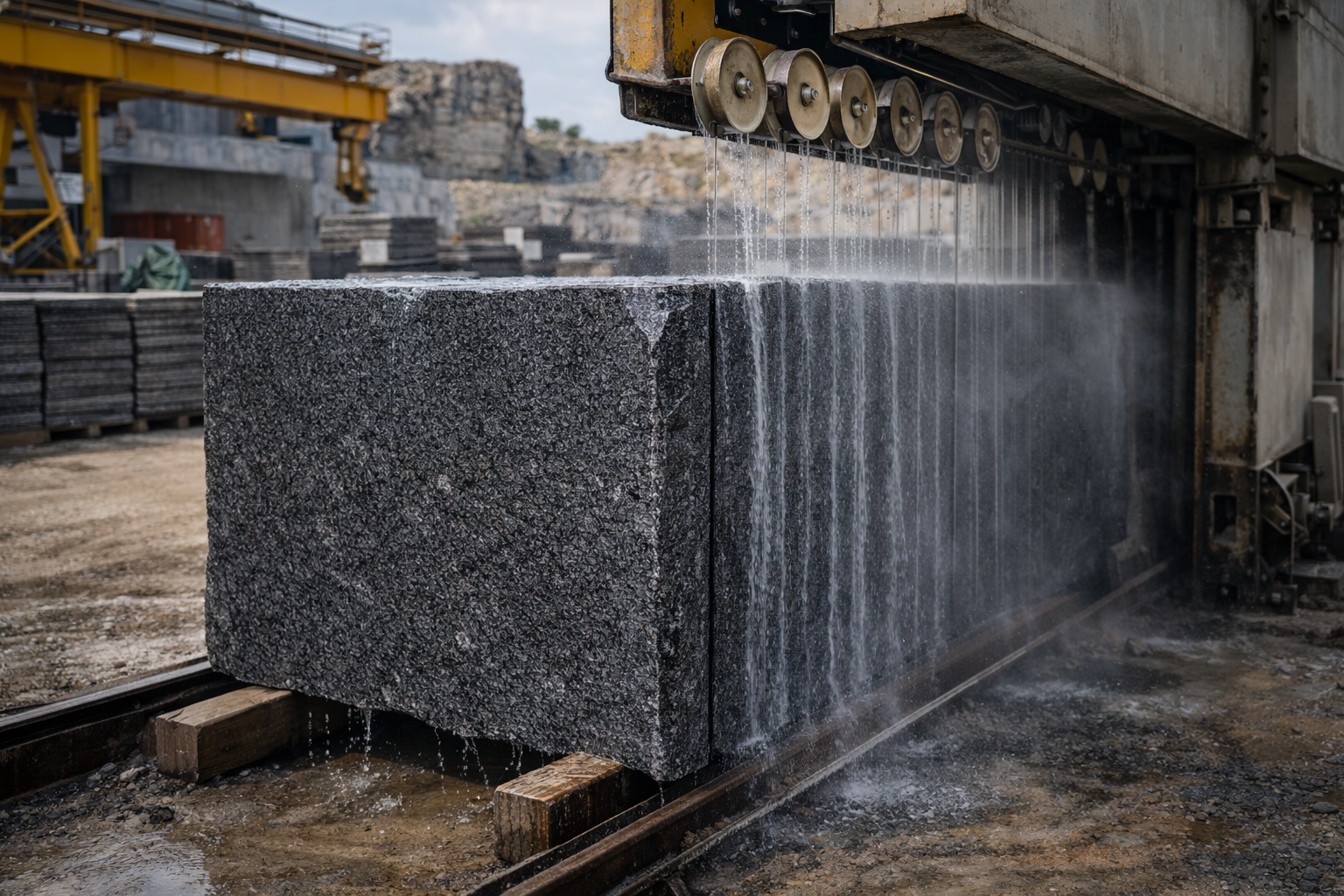
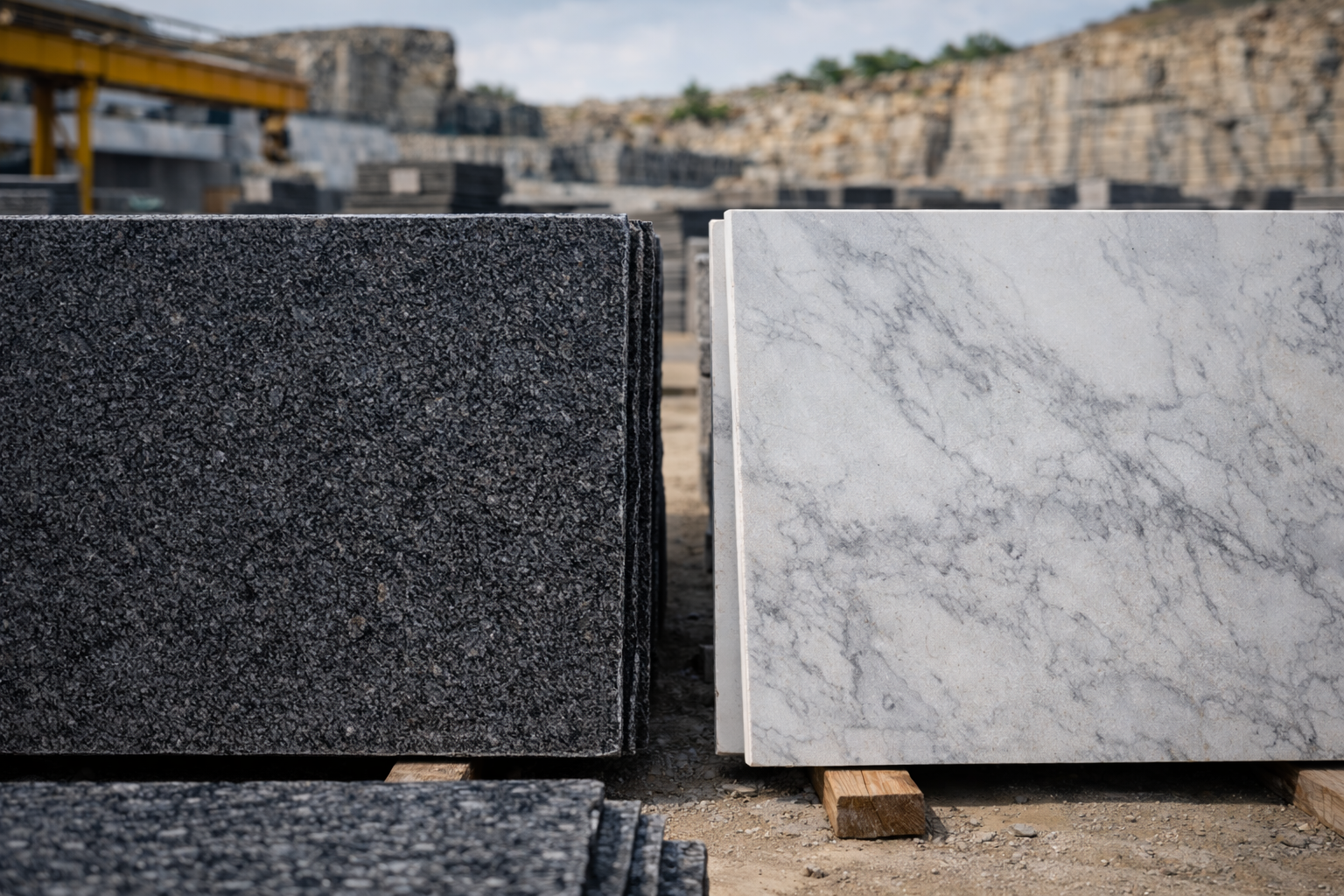
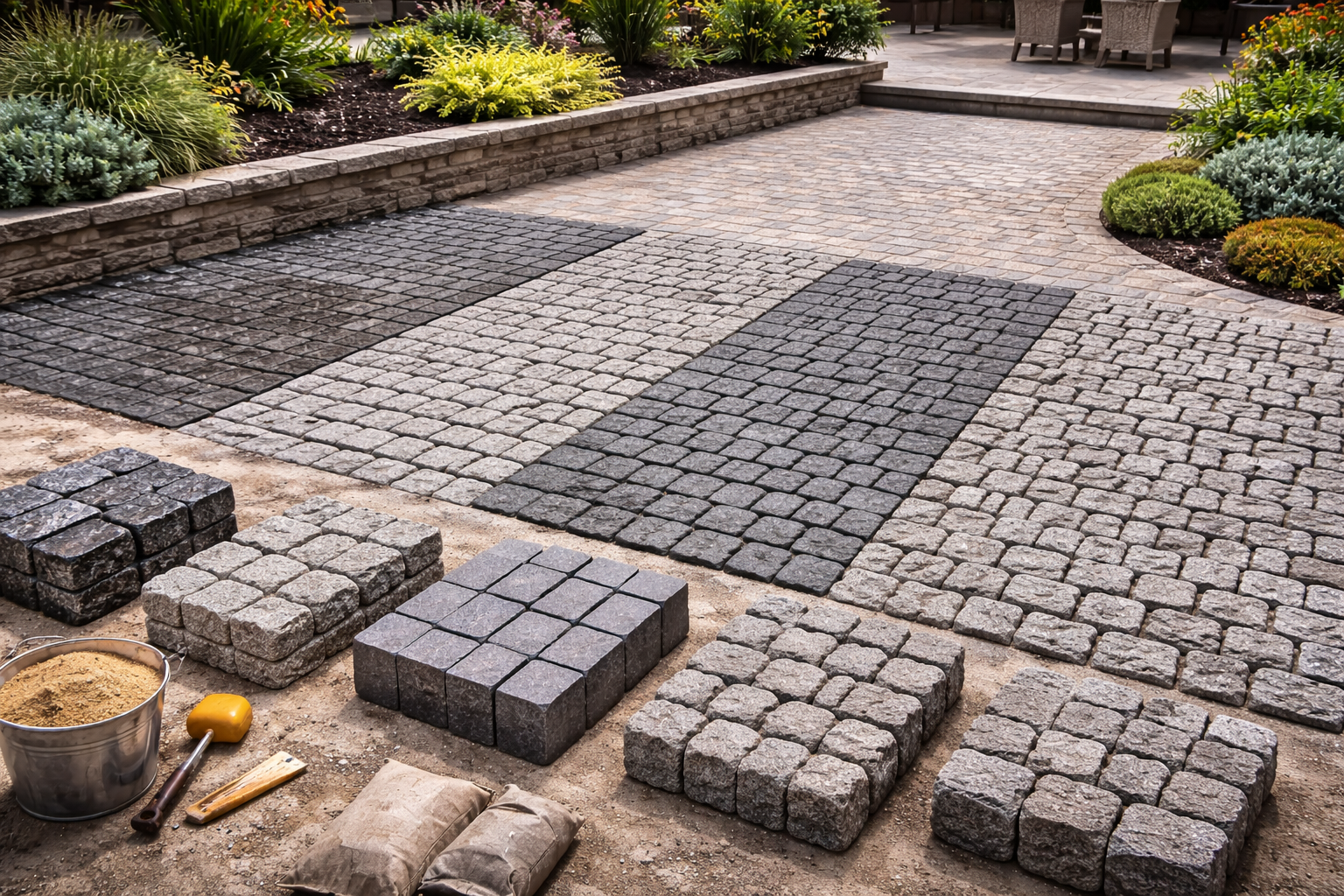
Afrika National Granite produces four distinct cobblestone types from Rustenburg granite, each with different surface characteristics suited to different aesthetic preferences and functional requirements. Understanding the differences between these types is essential for specifiers, landscapers, paving contractors, and architects working on exterior stone projects.
The Four Cobblestone Types
Sawn Face Polished Cobbles
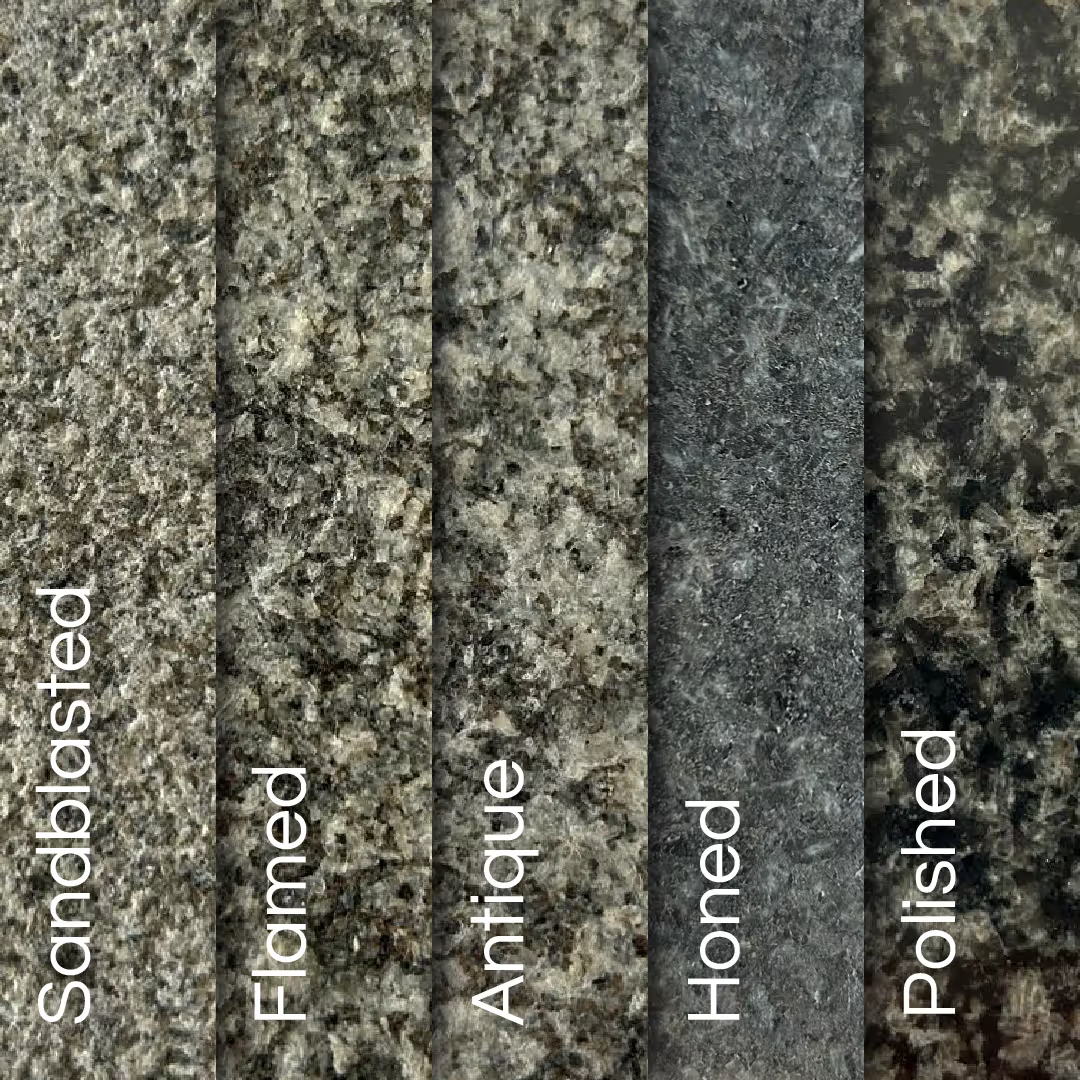
Sawn face polished cobblestones have all faces machine-cut (sawn) with the top surface polished to a glossy finish. The result is a precise, geometric unit with sharp edges and a reflective top surface that shows the full colour depth and mineral detail of Rustenburg granite.
Polished cobblestones are specified for premium residential driveways, formal garden paths, courtyard paving in contemporary designs, decorative borders and feature strips within larger paving schemes, and indoor-outdoor transition zones where a refined aesthetic continues from interior flooring. It is important to note that polished cobblestones become slippery when wet. They are not recommended for pool surrounds, public pedestrian areas, or anywhere slip resistance is a safety requirement. Their primary appeal is visual — they create a sleek, sophisticated paving surface that showcases the stone's natural beauty.
Sawn Face Tumbled Cobbles
Sawn face tumbled cobblestones start as machine-cut (sawn) units which are then tumbled in a rotating drum with abrasive media. The tumbling process rounds the sharp edges and corners, creating a softer, aged appearance while maintaining the relatively flat, consistent surfaces produced by the initial sawing.
Tumbled cobblestones are among the most popular choices for residential landscaping because they combine the dimensional consistency of sawn production with the character and warmth of a worn, aged finish. They are specified for residential driveways and motor courts, garden paths and walkways, courtyard paving in traditional and rustic designs, public pedestrian areas where a traditional stone character is desired, and commercial landscaping where a heritage or established aesthetic is appropriate. The tumbled edges provide better slip resistance than sharp-edged polished cobbles, and the surface texture gives adequate grip for most exterior pedestrian applications.
Sawn Face Non-Tumbled Cobbles
Sawn face non-tumbled cobblestones are machine-cut on all faces but without the tumbling process. They retain the precise, sharp-edged geometry of the sawing process, producing clean-lined, geometric units with flat, smooth (but not polished) surfaces.
These cobblestones are specified for contemporary and minimalist landscape designs, linear paving patterns where crisp joint lines are desired, modern driveway designs with a clean geometric aesthetic, architectural paving where precision and uniformity are valued, and boundary and edging strips alongside other paving types. The sawn surface provides moderate slip resistance — better than polished but less than tumbled or split face. The clean geometry makes these cobbles particularly suited to contemporary architectural projects where the designer wants natural stone with modern precision.
Split Face Tumbled Cobbles
Split face tumbled cobblestones are produced by splitting granite blocks along their natural cleavage planes rather than sawing them. This creates irregular, textured surfaces that reveal the stone's natural fracture character. The split units are then tumbled to round the sharpest edges, producing a cobblestone with maximum natural stone character.
Split face tumbled cobbles are the most rustic and characterful option. They are specified for traditional and heritage paving installations, garden and landscape features where a natural, hand-set appearance is desired, driveways in rural or country estate settings, public spaces in heritage districts and conservation areas, and decorative walling and vertical applications where the split texture adds visual interest. The rough, textured surface of split face cobbles provides excellent slip resistance, making them suitable for exterior applications in all weather conditions. However, the irregular surface creates a less even paving surface than sawn alternatives, which may be a consideration for wheelchair accessibility or high-heeled footwear.
Standard Cobblestone Sizes
Granite cobblestones are produced in a range of standard sizes to suit different laying patterns and design requirements. Common standard dimensions in the South African market include 100mm x 100mm cubes (the classic cobblestone format, used for fan patterns, arcs, and traditional cobbled surfaces), 200mm x 100mm half-bricks (the most popular format for herringbone, stretcher bond, and basket weave patterns), 300mm x 100mm (used for stretcher bond patterns on driveways and paths), and 200mm x 200mm squares (used for grid patterns and large-format cobbled surfaces). Standard thickness ranges from 40mm to 80mm depending on the intended traffic load. For pedestrian-only areas, 40 to 50mm thickness is typically adequate. For residential driveways with occasional vehicle traffic, 50 to 60mm is standard. For commercial vehicle traffic areas, 60 to 80mm provides the necessary structural capacity.
Custom sizes can be produced to specification for projects with specific design requirements. Discuss non-standard sizing with your supplier early in the design process to confirm feasibility and lead times.
Laying Patterns
The laying pattern significantly affects both the visual character and the structural performance of cobblestone paving.
Herringbone
The herringbone pattern — where units are laid at 45 or 90 degrees to each other — is the strongest pattern for vehicle traffic areas. The interlocking geometry distributes load effectively and resists lateral displacement under braking and turning forces. It is the recommended pattern for driveways and vehicle-trafficked areas.
Stretcher Bond
Stretcher bond — a running brick pattern where each row is offset by half the unit length — creates a linear, directional aesthetic. It is commonly used for paths, walkways, and paving areas where a sense of direction or flow is desired.
Fan Pattern (European Arc)
The fan pattern arranges small cube cobbles in concentric arcs, creating a traditional European cobblestone aesthetic. This pattern is visually distinctive and is commonly used for courtyards, plazas, and feature paving areas. It requires skilled installation and is typically specified with 100mm x 100mm cube cobbles.
Basket Weave
Basket weave alternates pairs of cobbles at right angles, creating a woven visual effect. It is used for courtyards, patios, and decorative paving areas where a traditional but less formal aesthetic than herringbone is desired.
Substrate and Installation
Granite cobblestones can be installed using two methods depending on the application and traffic requirements.
Sand-Bedded Installation
Cobbles are laid on a compacted sand bed over a compacted aggregate base. Joints are filled with kiln-dried sand or polymeric sand. This method allows for slight movement and drainage, making it suitable for driveways, paths, and residential paving. It is the most common installation method for cobblestone paving.
Mortar-Bedded Installation
Cobbles are bedded on a cement mortar over a concrete slab. Joints are filled with cement mortar or a flexible pointing compound. This method creates a rigid, permanent installation suitable for commercial areas, vehicle traffic zones, and applications where movement resistance is critical.
For both methods, the substrate preparation is critical. Inadequate base compaction is the primary cause of cobblestone paving failure — settling, unevenness, and joint opening. Specify a minimum 150mm compacted aggregate base for pedestrian areas and 200mm for vehicle traffic.
Sourcing Cobblestones from ANG
Afrika National Granite produces all four cobblestone types in Rustenburg granite at our Alrode facility. We offer standard sizes from stock and can produce custom dimensions on order. Cobblestones are sold by the square metre or by the pallet, and we can calculate quantities from your paving area drawings. For cobblestone samples, pricing, or project quantity estimates, contact our sales team or visit our factory at 8 Dekenah Road, Alrode, Alberton.