Why Contractors Need to Understand Natural Stone
For building contractors, natural granite is often encountered as a specification item rather than a material they choose themselves. The architect specifies granite flooring, the client wants granite countertops, or the landscape design calls for granite paving. The contractor's role is to procure, schedule, coordinate, and ensure correct installation — and this is where knowledge gaps can lead to costly delays, site damage, and rework.
This guide is written for main contractors, subcontractors, and project managers who need practical, site-level knowledge of working with natural granite in construction projects. It covers the essentials: what to specify, how to order, what lead times to expect, how to handle material on site, and how to coordinate with specialist installers.
Understanding What You Are Specifying
Granite Is Not a Generic Material
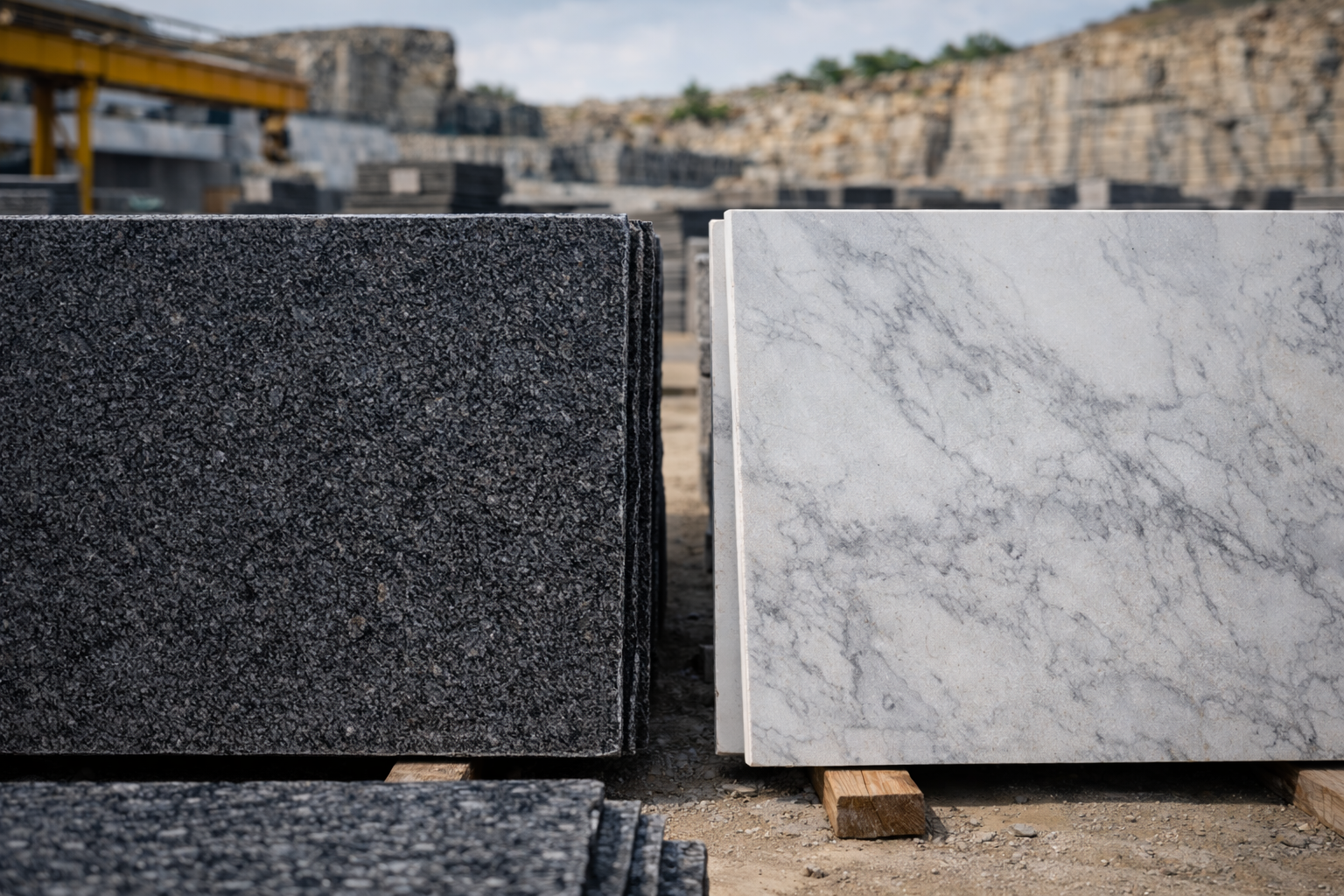
Unlike concrete or steel where material properties are standardised, natural granite varies by quarry, formation, and even block position. When an architect specifies "granite flooring", the contractor needs to know:
- Which granite? — Rustenburg (K2 or Sonop), Zimbabwe Black, an imported exotic? Each has different colour, properties, price points, and lead times.
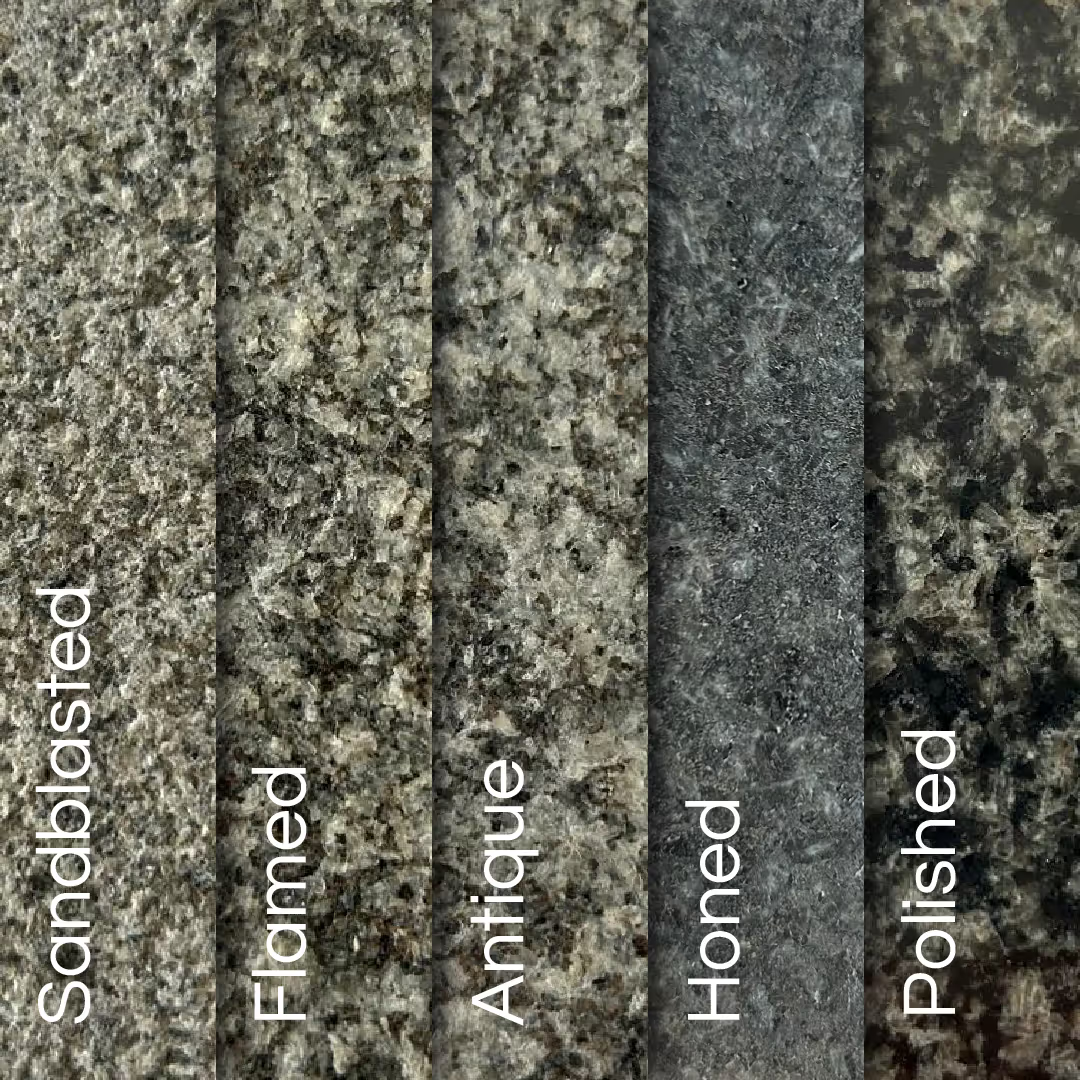
- What finish? — Polished, honed, flamed, bush-hammered? The finish affects slip resistance, aesthetics, and cost.
- What format? — Slab, tile (and what size), cobblestone, paver? Format affects installation method, adhesive specification, and substrate requirements.
- What thickness? — 10 mm, 20 mm, 30 mm? Thickness affects weight, structural requirements, and cost.
If the architect's specification is vague, clarify these details before ordering. A specification that simply states "granite floor tiles" without defining the stone type, finish, format, and thickness is incomplete and will lead to problems.
Ordering and Lead Times
Standard Products
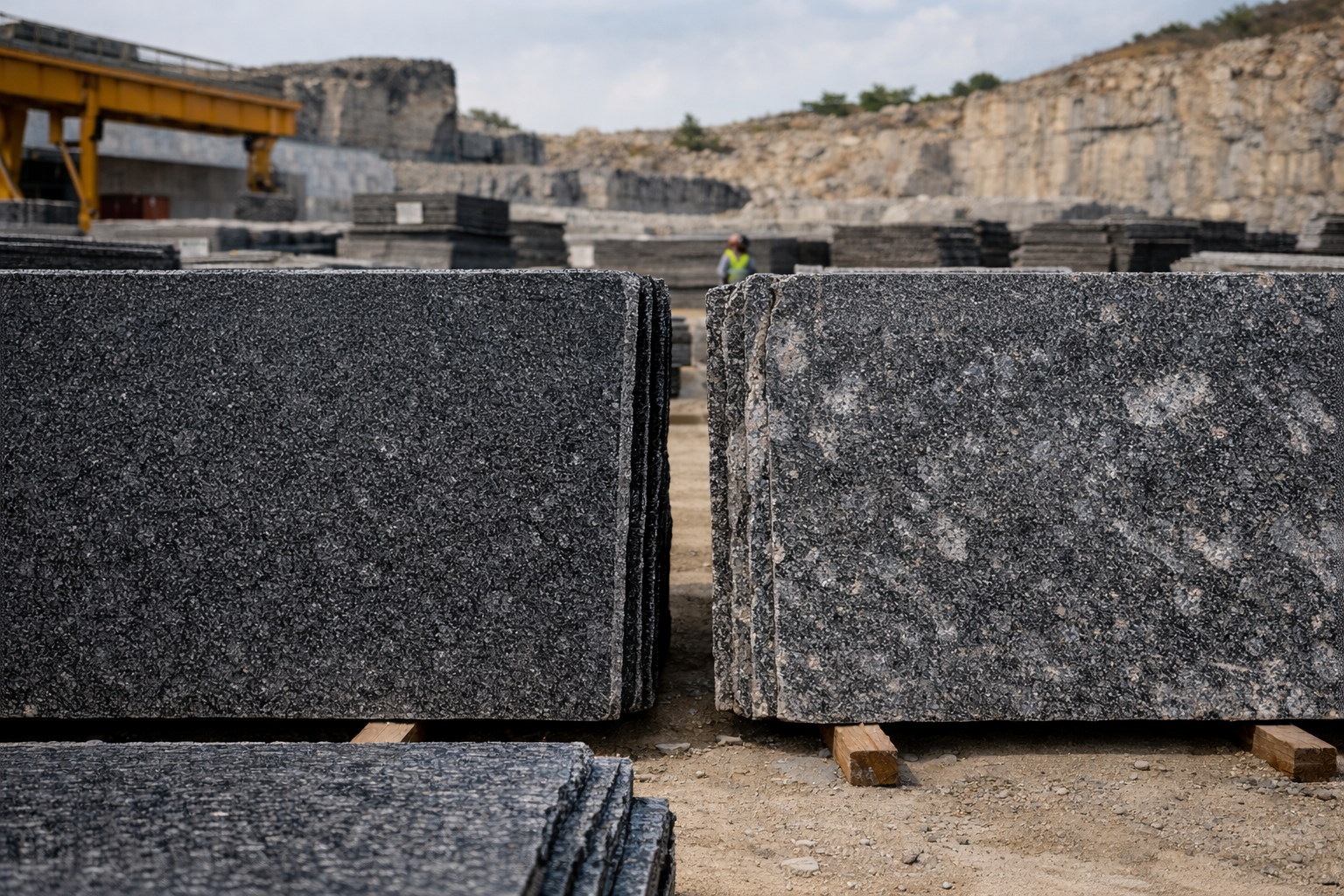
For Rustenburg granite — the most commonly specified stone in South Africa — ANG maintains continuous stock of polished 20 mm and 30 mm slabs. Standard tile formats in common finishes are typically available within 1-2 weeks. Cobblestones and pavers are stocked in standard sizes.
Custom and Cut-to-Size Orders
Custom dimensions, non-standard finishes, and large project orders require production scheduling. Allow:
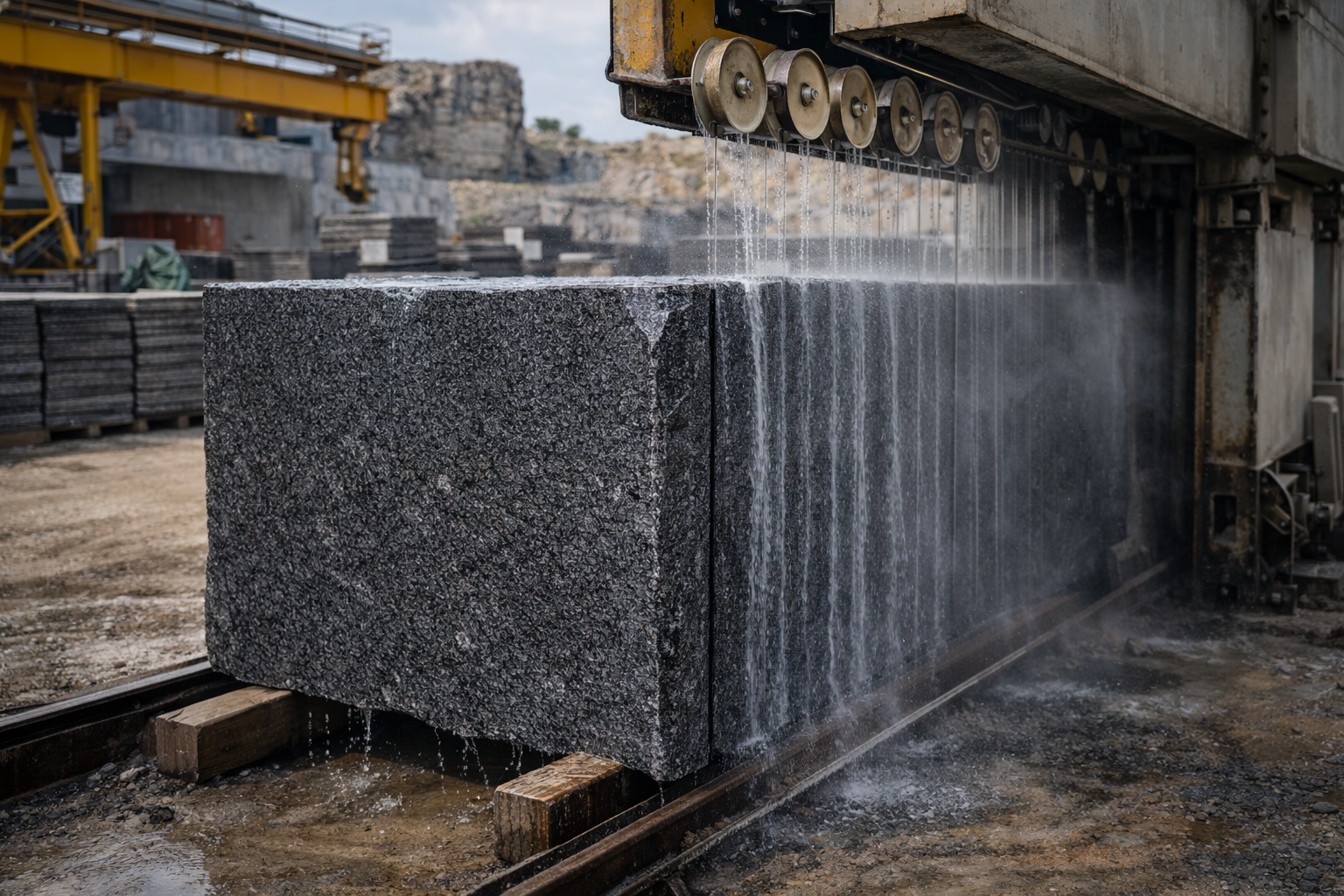
- 2-4 weeks for custom cut-to-size from stock slabs
- 4-8 weeks for large-volume orders requiring dedicated production runs
- 6-12 weeks for exotic or imported materials that may need to be sourced from international quarries
Order Quantities
Always order more than the measured quantity. Natural stone installation generates waste from cutting, breakage, and fitting. Standard waste allowances:
- Tiles and slabs: 10-15% over measured area for standard rectangular layouts
- Complex layouts, curves, and diagonal patterns: 15-20% over measured area
- Cobblestones and pavers: 5-10% over measured area
Also retain a small quantity (2-5%) of each batch for future repairs and replacements. Natural stone batches can vary in colour, so material from the same production batch will match better than material ordered later.
Budgeting for Natural Stone
When pricing natural stone work, contractors must account for:
- Material cost — Varies by stone type, finish, and format. Get quotations from the manufacturer early.
- Adhesive and grout — Natural stone requires polymer-modified flexible adhesives, not standard tile adhesive. Cost is 20-30% higher than standard adhesive.
- Substrate preparation — Screeds must be level, cured, and moisture-free. Budget for self-levelling compound or screed repairs if the substrate is below standard.
- Specialist installation labour — Natural stone installation is a specialist trade. Do not assign general tilers to granite work. Budget for experienced stone installers.
- Sealing — Budget for penetrating sealer application on polished and honed surfaces.
- Edge protection and site storage — Granite must be stored correctly on site and protected from damage by other trades.
Site Delivery and Storage
Granite is heavy and requires appropriate handling:
Delivery Planning
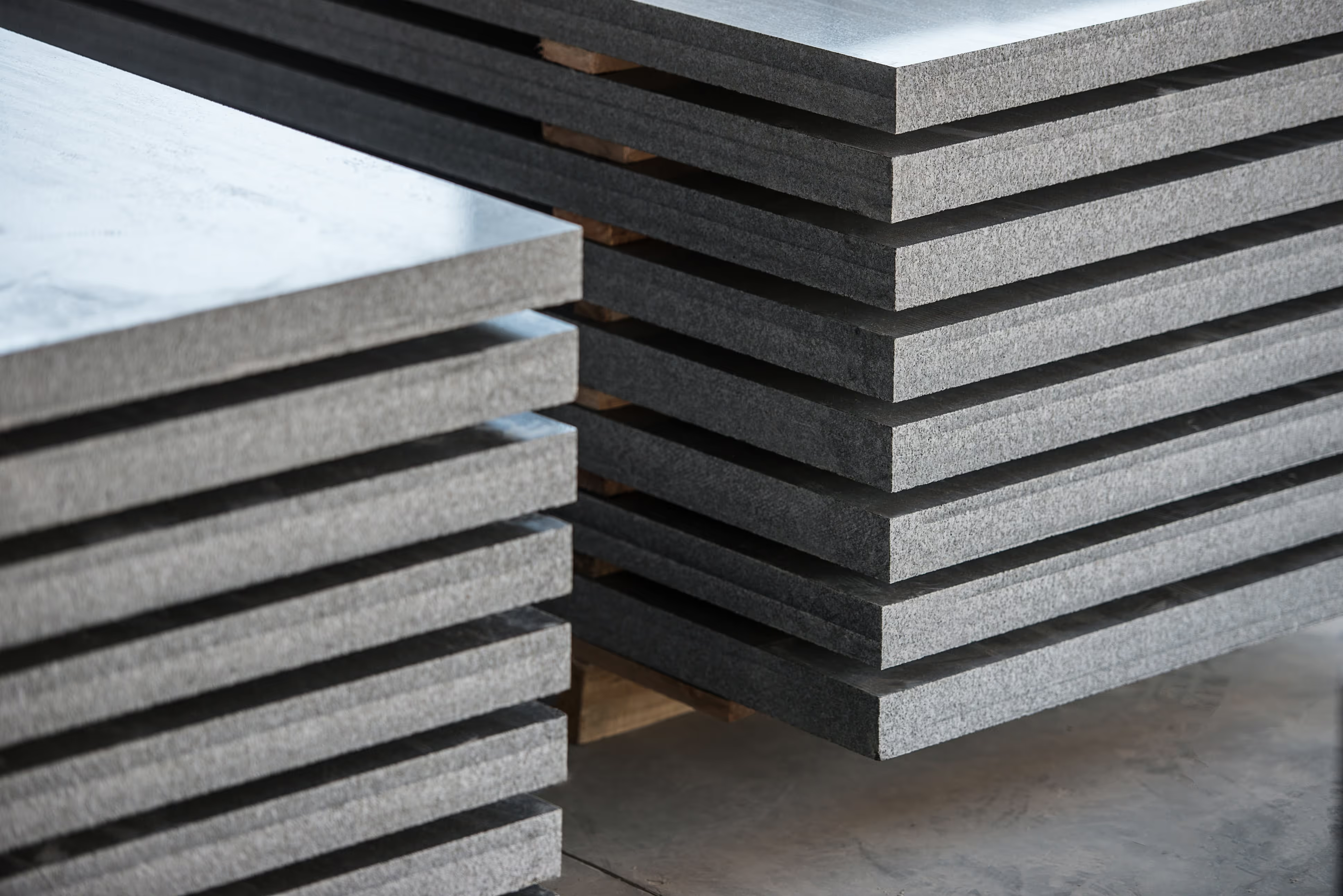
- 20 mm granite tiles weigh approximately 54 kg/m². A pallet of 600 x 600 x 20 mm tiles covers approximately 15-20 m² and weighs 800-1,100 kg.
- Slabs weigh 140-160 kg each (typical 2,400 x 600 x 20 mm slab).
- Ensure site access for delivery vehicles. A standard granite delivery uses a flatbed truck with a crane or forklift for offloading.
- Coordinate delivery timing with site readiness. Do not accept granite delivery to a site where the installation area is not prepared — granite stored on an unprepared site for extended periods is vulnerable to damage.
On-Site Storage
- Store granite on a level, hard surface (concrete slab or compacted hardstanding).
- Keep pallets shrink-wrapped until installation to protect from dust, paint, and site debris.
- Slabs must be stored vertically in an A-frame or slab rack. Never lay slabs flat and stack them — the bottom slab will crack under the load.
- Protect granite edges and polished surfaces from impact by other trades. Corner guards and edge protection tape are inexpensive insurance against chipping.
- Do not store granite where it can be stained by rust (from adjacent steel), paint, or chemical spills.
Coordinating with Specialist Installers
Natural stone installation should be carried out by specialist stone tilers or cladding contractors, not general tilers. The specialist installer needs:
- Prepared substrate — Level screed, waterproofing complete (if applicable), movement joints marked
- Setting-out plan — Tile layout approved by the architect, joint positions confirmed, threshold details resolved
- Material on site — Full quantity, inspected for defects, laid out in the installation sequence
- Protection programme — After installation, the granite must be protected from damage by subsequent trades (painting, joinery, electrical). Cover with breathable protection board — never use plastic sheeting directly on fresh stone installation as it can trap moisture.
Common Mistakes to Avoid
- Ordering too late — Natural stone has longer lead times than manufactured tiles. Order at the start of the project, not when the floor is ready.
- Using the wrong adhesive — Standard cement-based tile adhesive will fail with natural stone. Specify polymer-modified flexible adhesive rated for the stone type and application.
- Ignoring movement joints — Natural stone floors crack if movement joints are omitted. Follow standards: perimeter joints at all walls, intermediate joints at 6 m centres (interior) or 3 m centres (exterior).
- Not protecting installed stone — A single drop of paint, a misplaced angle grinder spark, or a piece of rebar dragged across the floor can damage the stone. Protection protocols are essential.
- Accepting incomplete specifications — If the spec doesn't define the stone, finish, format, and thickness, resolve it before ordering. Assumptions lead to disputes.
ANG's Support for Contractors
Afrika National Granite supports contractors with:
- Technical advice on material selection, substrate requirements, and installation methods
- Competitive quotations against project specifications
- Reliable lead times backed by our own production facility
- Sample provision for architect and client approval
- Delivery coordination to match your construction programme
Get in Touch
For project quotations and technical support, visit our facility at 8 Dekenah Road, Alrode, Alberton or contact our project sales team. We work with contractors across South Africa and internationally to ensure granite specifications are met on time and on budget. Contact Afrika National Granite today.